Welcome to the Milcom Monitor Post sponsored by Teak Publishing (Copyright © 2006-2023 Teak Publishing). All rights are reserved. Redistribution of these pages in any format without prior permission is prohibited. Links to individual stories are permitted without permission. The comment section on this blog is closed, but you can pass along material or comments via email MilcomMP at gmail dot com. If you submit material for this blog and want to remain anonymous, indicate that in your message.
Milcom Monitoring Post Profiles
- Home
- What are Emergency Action Messages (EAM)? Updated 20 September 2021
- UFO Milsat Program
- Fleetsatcom System
- UHF 225-380 MHz Milcom Spectrum Holes: Updated 24 July 2019
- Civilian Air Cargo/Airline/Military Call Signs
- Intl HF Aero Civ/Gov/Mil Frequency List
- USN Aircraft Modex Numbers
- University of Twente Wide Band WebSDR Netherlands
- U.S. Military ALE Addresses
- DoD Air Refueling Frequencies - Update 15 Jul 2016
- COTHEN HF Network – Last Update 23 May 2023
- Monitoring the Civil Air Patrol Auxiliary Update 10 Sep 2016
- US Coast Guard Asset Guide - Update 24 May 2023
- The Spectrum Monitor e-Zine Milcom Column Index - Update 17 January 2022
- The Milcom MT Files (1998-2013) Articles Index
Showing posts with label Israeli Air Force. Show all posts
Tuesday, December 31, 2013
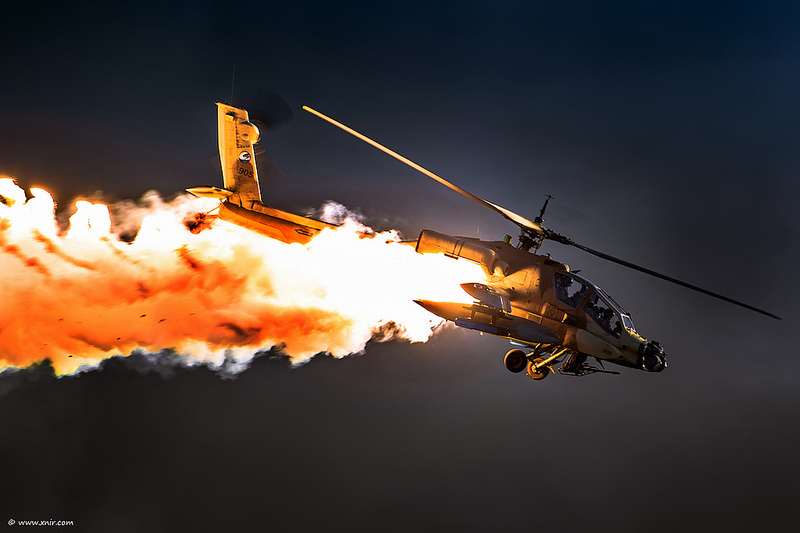
One of the Best Milair Photos of 2013 "Peteri"
I'm a photo junkie and the photo above is courtesy of The Aviationist website. Known as “Peten” (“Cobra” in Hebrew) in the Israeli Air Force, the Boeing AH-64A is an attack helicopter that Israel has extensively used in combat since 1990s.
The “Peten” in the stunning image taken on Dec. 26 by xnir can be seen salvoing flares in the dark during a demonstration flight. Image credit: Nir Ben-Yosef (xnir.com)
To all my Milcom MP readers - Happy New Year and let's hope that 2014 is better than 2013.
Tuesday, December 03, 2013
US Air Force participates in first Israeli Blue Flag exercise
by Senior Master Sgt. Dwayne Gordon, 48th Fighter Wing Public Affairs
UVDA AIR FORCE BASE, Israel -- The U.S. Air Force participated in the first Israeli Blue Flag exercise at Uvda Air Force Base, Israel, Nov. 24-28.
Blue Flag is the largest multinational aerial warfare training exercise hosted by the Israeli Air Force. The exercise included forces from the U.S., Israel, Italy, and Greece. Its objectives were to improve operational capabilities and combat effectiveness of the participating nations, and to foster combined relations, cultural understanding, and combat experience.
"It was an outstanding experience for the more than 170-person U.S. Air Force team," said Lt Col John Orchard, 492nd Fighter Squadron commander, Royal Air Force Lakenheath, England, and U.S. Air Force Blue Flag commander. "The Israelis provided an excellent training environment, which offered us the opportunity to learn from each other, and to take advantage of good airspace, surface threat replicators, and challenging scenarios. It was a real pleasure integrating with our Israeli, Italian and Greek partners who all offer unique tactical, strategic and cultural perspectives."
The exercise allowed for the partnering nations to integrate their tactical capabilities to complete a specific mission. It also further strengthened the relationship and military partnership.
"This was a very good opportunity for the participating nations to work on efficiencies, to practice becoming more logistically sound, and how to get our forces from point A, to point B," said Capt. Matthew Kuta, 492nd FS pilot, RAF Lakenheath. "It also provided us training on how to actually operate together to continue to provide stability to the area."
The U.S. Air Force deployed aircraft and support personnel from Royal Air Force Lakenheath, England, and a Combat Communications team from Ramstein Air Base, Germany. The aircraft were F-15Es from the 492nd Fighter Squadron.
Prior to the start of the exercise, the visiting nations had the opportunity to familiarize themselves with the airspace and flying procedures. The training week offered four days of flying and preparation.
"Blue Flag week one was dedicated as training and warm-up towards the actual exercise that took place during week two," said Kuta. The airspace, mission duration, and some of the procedures were a little different to us. After the training week, we were ready to go."
During the exercise, a realistic war scenario was created which employed a friendly, multinational force (Blue Force) against an enemy aggressor force (Red Force). A simulated threat environment was created which caused for the partnering forces to use careful integration and critical analysis to engage the enemy and survive. The exercise included air-to-air and air-to-surface simulated missions.
The Red Force invaded friendly airspace simulating opposing air forces tactics, attempting to engage specific targets and all approaching aircraft. Their actions caused for the Blue Force to take action and attempt to eliminate the threat. The combined force merged their tactics, techniques, and procedures to form a dominate team that effectively terminated attacks by the adversary Red Forces.
Although these partnering air forces have trained separately together before, this was the first opportunity for the Israeli Air Force to conduct a multinational exercise of this magnitude in their country.
"We successfully completed the biggest multinational exercise in Israel's history," said a senior Israeli Air Force source.
"The exercise required many preparations by air and ground crews, long before the partnering air forces landed in Israel. This has helped Israel improve its general air defense capabilities while learning together and cooperating with global allies," the source said.
The U.S. ambassador to Israel, Dan Shapiro, visited the exercise location along with a delegation of observers from different countries. The observers were able to witness some of the action to determine if their country would be interested in participating in future Blue Flag exercises. Israel plans to conduct the exercise every two years.
"Israel lives in a dangerous neighborhood," said Shapiro. "We need the best equipped, best trained forces as possible to protect our people and our security. We also need allies and we have great allies here, all training together and reinforcing a partnership that gets stronger with each passing year."
The U.S. armed forces routinely participate in training exercises with NATO and other partner nations to improve interoperability and preparedness. However, this exercise offered a unique experience for the U.S. Air Force to train in unfamiliar airspace, with great partners.
UVDA AIR FORCE BASE, Israel -- The U.S. Air Force participated in the first Israeli Blue Flag exercise at Uvda Air Force Base, Israel, Nov. 24-28.
Blue Flag is the largest multinational aerial warfare training exercise hosted by the Israeli Air Force. The exercise included forces from the U.S., Israel, Italy, and Greece. Its objectives were to improve operational capabilities and combat effectiveness of the participating nations, and to foster combined relations, cultural understanding, and combat experience.
"It was an outstanding experience for the more than 170-person U.S. Air Force team," said Lt Col John Orchard, 492nd Fighter Squadron commander, Royal Air Force Lakenheath, England, and U.S. Air Force Blue Flag commander. "The Israelis provided an excellent training environment, which offered us the opportunity to learn from each other, and to take advantage of good airspace, surface threat replicators, and challenging scenarios. It was a real pleasure integrating with our Israeli, Italian and Greek partners who all offer unique tactical, strategic and cultural perspectives."
The exercise allowed for the partnering nations to integrate their tactical capabilities to complete a specific mission. It also further strengthened the relationship and military partnership.
"This was a very good opportunity for the participating nations to work on efficiencies, to practice becoming more logistically sound, and how to get our forces from point A, to point B," said Capt. Matthew Kuta, 492nd FS pilot, RAF Lakenheath. "It also provided us training on how to actually operate together to continue to provide stability to the area."
The U.S. Air Force deployed aircraft and support personnel from Royal Air Force Lakenheath, England, and a Combat Communications team from Ramstein Air Base, Germany. The aircraft were F-15Es from the 492nd Fighter Squadron.
Prior to the start of the exercise, the visiting nations had the opportunity to familiarize themselves with the airspace and flying procedures. The training week offered four days of flying and preparation.
"Blue Flag week one was dedicated as training and warm-up towards the actual exercise that took place during week two," said Kuta. The airspace, mission duration, and some of the procedures were a little different to us. After the training week, we were ready to go."
During the exercise, a realistic war scenario was created which employed a friendly, multinational force (Blue Force) against an enemy aggressor force (Red Force). A simulated threat environment was created which caused for the partnering forces to use careful integration and critical analysis to engage the enemy and survive. The exercise included air-to-air and air-to-surface simulated missions.
The Red Force invaded friendly airspace simulating opposing air forces tactics, attempting to engage specific targets and all approaching aircraft. Their actions caused for the Blue Force to take action and attempt to eliminate the threat. The combined force merged their tactics, techniques, and procedures to form a dominate team that effectively terminated attacks by the adversary Red Forces.
Although these partnering air forces have trained separately together before, this was the first opportunity for the Israeli Air Force to conduct a multinational exercise of this magnitude in their country.
"We successfully completed the biggest multinational exercise in Israel's history," said a senior Israeli Air Force source.
"The exercise required many preparations by air and ground crews, long before the partnering air forces landed in Israel. This has helped Israel improve its general air defense capabilities while learning together and cooperating with global allies," the source said.
The U.S. ambassador to Israel, Dan Shapiro, visited the exercise location along with a delegation of observers from different countries. The observers were able to witness some of the action to determine if their country would be interested in participating in future Blue Flag exercises. Israel plans to conduct the exercise every two years.
"Israel lives in a dangerous neighborhood," said Shapiro. "We need the best equipped, best trained forces as possible to protect our people and our security. We also need allies and we have great allies here, all training together and reinforcing a partnership that gets stronger with each passing year."
The U.S. armed forces routinely participate in training exercises with NATO and other partner nations to improve interoperability and preparedness. However, this exercise offered a unique experience for the U.S. Air Force to train in unfamiliar airspace, with great partners.
Wednesday, November 21, 2012
Israeli HF Military Frequencies
Given the current hostilities over in the Middle East (Israel and the Gaza Strip), here are a few of the recently monitored HF Israeli military frequencies.
4XZ Israeli Navy Haifa
2253.0 4XZ: Israeli Navy Haifa ISR 188-110 MPSK proprietary waveform
2680.0 4XZ: Israeli Navy Haifa ISR CW VVV DE 4XZ
4331.0 4XZ: Israeli Navy Haifa ISR CW VVV DE 4XZ
4595.0 4XZ: Israeli Navy Haifa ISR CW VVV DE 4XZ
6379.0 4XZ: Israeli Navy Haifa ISR CW VVV DE 4XZ
6607.0 4XZ: Israeli Navy Haifa ISR CW VVV DE 4XZ
7857.0 4XZ: Israeli Navy Haifa ISR 188-110 MPSK proprietary waveform
7954.0 4XZ: Israeli Navy Haifa ISR 188-110 MPSK proprietary waveform
9390.0 4XZ: Israeli Navy Haifa ISR 188-110 MPSK proprietary waveform
10341.0 4XZ: Israeli Navy Haifa ISR 188-110 MPSK proprietary waveform
11153.0 4XZ: Israeli Navy Haifa ISR 188-110 MPSK proprietary waveform
13514.0 4XZ: Israeli Navy Haifa ISR 188-110 MPSK proprietary waveform
Israeli Air Force (ALE/USB)
3823.0 3865.0 4507.0 4681.0 4700.0 5048.5 5123.0 5129.0 5133.0 5209.0 5269.0 5456.0 5470.0 5478.0 5500.0 5581.0 5662.0 6224.0 6265.0 6288.0 6372.0 6487.0 6631.0 6736.0 6742.0 6840.0 6878.0 6898.0 6921.0 6925.0 6933.0 6992.0 7460.0 7467.0 7630.0 7641.5 7651.0 7778.0 7780.0 7848.0 7950.0 7957.0 7965.0 7967.0 8035.0 8063.0 8100.0 8135.0 8165.0 8234.0 8323.0 8441.0 8521.0 8541.0 8556.0 8622.0 8847.0 8858.0 9135.0 9219.0 9227.0 10614.0 10642.0 11491.0 12143.0 12251.0 13032.0 13291.0 19223.0 19326.0 22850.0 kHz
Israeli Air Force ALE addresses:
035 CH-53-2000 118 Squadron Tel Nof AB, Israel
046 F-16D Block 30 109 Squadron Ramat David AB, Israel
082 Aircraft Unknown Squadron Aircraft
100 F-16A 140 Squadron Nevatim AB, Israel
220 F-15I 69 Squadron Hatserim AB, Israel
227 F-15I 69 Squadron Hatserim AB, Israel
420 KC-130H Kamaf 103/131 Squadron Tel Aviv-Lod AB/Ben Gurion IAP, ISR
427 C-130H Kamaf 103/131 Squadron Tel Aviv-Lod AB/Ben Gurion IAP, ISR
428 C-130H Kamaf 103/131 Squadron Tel Aviv-Lod AB/Ben Gurion IAP, ISR
436 KC-130H Kamaf 103/131 Squadron Tel Aviv-Lod AB/Ben Gurion IAP, ISR
619 F-16D 105 Squadron Hatzor AB, Israel
642 F-16D 105 Squadron Hatzor AB, Israel
651 F-16D 105 Squadron Hatzor AB, Israel
667 F-16D 105 Squadron Hatzor AB, Israel
A506 Gnd Stn
AA1 Gnd Stn 103 Squadron (C-130E/K/C-130H) Nevatim AB, ISR
AA2 Gnd Stn
AA3 Gnd Stn
AA4 Gnd Stn
AA5 Gnd Stn
AA6 Gnd Stn
AA7 Gnd Stn
AA8 Gnd Stn
AA9 Gnd Stn
AAA Gnd Stn Air Force Headquarters Tel Aviv, Israel
ACC Gnd Stn Air Force Headquarters Tel Aviv, Israel
ACCES1 Gnd Stn Air Force Headquarters Tel Aviv, Israel
AE2 Gnd Stn Air Force Headquarters Tel Aviv, Israel
AMM Gnd Stn
ARC Gnd Stn
AS5 Gnd Stn Air Force Headquarters Tel Aviv, Israel
B19 Aircraft
B28 Aircraft
B36 Aircraft
B84 Aircraft
BAA Gnd Stn
BB1 Gnd Stn 124 Squadron (UH-60A/S-70A) Palachim AB, Israel
BB2 Gnd Stn 160 Squadron (AH-1E/F) Palachim AB, Israel
BB3 Gnd Stn 161 Squadron (AH-1E/F) Ovda AB, Israel
BB4 Gnd Stn
BB5 Gnd Stn
BB7 Gnd Stn
C14 AH-1F Tsefa C 160 Squadron Palachim AB, Israel
C21 AH-1S Tsefa A 160 Squadron Palachim AB, Israel
C29 Aircraft Aircraft
C35 UH-60A Yanshuf 3 123 Squadron Aircraft
C36 Aircraft Aircraft
C44 AH-64D Saraf 113 Squadron Aircraft
C46 AH-64D Saraf 113 Squadron Hatzerim AB, Israel
C52 AH-64D Saraf 113 Squadron Aircraft
C54 AH-64D Saraf 113 Squadron Aircraft
C62 S-70A Yanshuf 123 Squadron Hatzerim AB, Israel
C79 AH-64D Saraf 113 Squadron Aircraft
C83 Tzukit FTS Hatzerim AB, Israel
DD1 Gnd Stn 103 Squadron (C-130E/K/C-130H) Tel Aviv-Lod AB/Ben Gurion IAP, ISR
DD2 Gnd Stn 131 Squadron (C-130E/K/C-130H) Tel Aviv-Lod AB/Ben Gurion IAP, ISR
DD3 Gnd Stn
DD6 Gnd Stn
DD7 Gnd Stn
DD8 Gnd Stn
DDD Gnd Stn
E69 Aircraft
GB2 Gnd Stn 131 Squadron (C-130E/K/C-130H) Tel Aviv-Lod AB/Ben Gurion IAP, ISR
GT4 Gnd Stn 131 Squadron (C-130E/K/C-130H) Tel Aviv-Lod AB/Ben Gurion IAP, ISR
GT6 Gnd Stn 131 Squadron (C-130E/K/C-130H) Tel Aviv-Lod AB/Ben Gurion IAP, ISR
K20 KC-130H Kamaf 103/131 Squadron Tel Aviv-Lod AB/Ben Gurion IAP, ISR
K22 KC-130H Kamaf 103/131 Squadron Tel Aviv-Lod AB/Ben Gurion IAP, ISR
K27 C-130H Kamaf 103/131 Squadron Tel Aviv-Lod AB/Ben Gurion IAP, ISR
K28 C-130H Kamaf 103/131 Squadron Tel Aviv-Lod AB/Ben Gurion IAP, ISR
K35 C-130H Karnaf 103/131 Squadron Tel Aviv-Lod AB/Ben Gurion IAP, ISR
K36 KC-130H Kamaf 103/131 Squadron Tel Aviv-Lod AB/Ben Gurion IAP, ISR
K45 KC-130H Kamaf 103/131 Squadron Tel Aviv-Lod AB/Ben Gurion IAP, ISR
KH1 Gnd Stn
KN1 Gnd Stn
M46 Boeing B-707 (Phalcon) 120 Squadron Tel Aviv-Lod AB/Ben Gurion IAP, ISR
M48 Boeing B-707 (EC-707 Re'em) 120 Squadron Tel Aviv-Lod AB/Ben Gurion IAP, ISR
M60 Boeing B-707 (EC-707 Re'em) 120 Squadron Tel Aviv-Lod AB/Ben Gurion IAP, ISR
M64 Boeing B-707 (EC-707 Re'em) 120 Squadron Tel Aviv-Lod AB/Ben Gurion IAP, ISR
M72 Boeing B-707 (EC-707 Re'em) 120 Squadron Tel Aviv-Lod AB/Ben Gurion IAP, ISR
M75 Boeing B-707 (EC-707 Re'em) 120 Squadron Tel Aviv-Lod AB/Ben Gurion IAP, ISR
MN1 Gnd Stn
NAK Gnd Stn
NT1 Gnd Stn
NT2 Gnd Stn
O13 Gnd Stn
R10 Aircraft
R17 Aircraft
R27 Aircraft
R67 Aircraft
RAM Gnd Stn Ramat David AB, Israel
S15 Aircraft
S19 Aircraft
S27 Aircraft
S30 Aircraft
S45 Aircraft
S53 Aircraft
SA3 Gnd Stn
T22 Aircraft
T26 Aircraft
TKM Gnd Stn
TS1 Gnd Stn
TS2 Gnd Stn
TS3 Gnd Stn
TSM Gnd Stn
TSR Gnd Stn
TYS Gnd Stn
W68 Aircraft
W69 Aircraft
W72 Aircraft
XT9 Gnd Stn
XXX Gnd Stn
Y12 Aircraft
Y14 Aircraft
Y20 Aircraft
Y22 Aircraft
Y36 Aircraft
Y37 Aircraft
Y45 Aircraft
Y50 Aircraft
Y80 Aircraft
YN1 Gnd Stn
YN2 Gnd Stn
ZM6 Gnd Stn
I will add to this frequency list as new frequencis are monitored. Any updates, corrections, and additions are always appreciated. Sent email to the address in the masthead.
Subscribe to:
Comments (Atom)


