Showing posts with label Iranian Navy. Show all posts

Monday, August 10, 2015

Russian naval fleet moored at the 4th Iranian naval zone

There is further information on this story posted this afternoon on the Washington Free Beacon website at http://freebeacon.com/national-security/russian-warships-dock-in-iran-for-war-training/

Astrakhan patrol ships "Makhachkala" & "Volgodonsk" are in Anzali, Iran.


Tehran. August 8. IRNA - On Sunday, Russian naval flotilla to enter the territorial waters of Iran and moored to the dock in the 4th naval zone, according to the Department of Public Relations of the Iranian Navy.

The expedition of the Russian Navy is aimed at strengthening the friendly relations between Iran and Russia. The report emphasized that the Caspian Sea should be a sea of ​​peace and friendship. This is the third time the Russian naval fleet comes into the territorial waters of Iran.

Earlier, in 2007 and 2014 two other Russian naval fleet had carried out such an expedition for the strengthening of the Russian-Iranian friendly relations.

Meanwhile, in 2013 the Iranian naval fleet came into the territorial waters of Russia and the port of Astrakhan.

Thursday, April 09, 2015

Iran Warships to Yemen

Blog Editor's Note: Look for Iranian Military QPSK/460/600 CF=1100 short crypto databurst traffic on the following frequencies: 5088.0 7988.0 8760.0 10415.0 10418.0 10723.0 15860.0 17382.2 kHz

Other possible Iranian freqeuncies monitored recently include
6265.0 ALE/USB
14508.0 ALE/USB/Codan traffic
16161.0 ALE/USB
The Associated Press is reporting that Iran is dispatching Iranian naval ships to Yemen coastal waters.


"Iran dispatched a naval destroyer and another logistic vessel on Wednesday to waters near Yemen as the United States quickened weapons supply to the Saudi-led coalition striking rebels there, underlining how foreign powers are deepening their involvement in the conflict.
 
"Iran's English-language state broadcaster Press TV quoted Rear Adm. Habibollah Sayyari as saying the ships would be part of an anti-piracy campaign "safeguarding naval routes for vessels in the region."

Complete story at http://hosted.ap.org/dynamic/stories/M/ML_YEMEN?SITE=AP&SECTION=HOME&TEMPLATE=DEFAULT&CTIME=2015-04-08-08-22-46

Tuesday, September 18, 2012

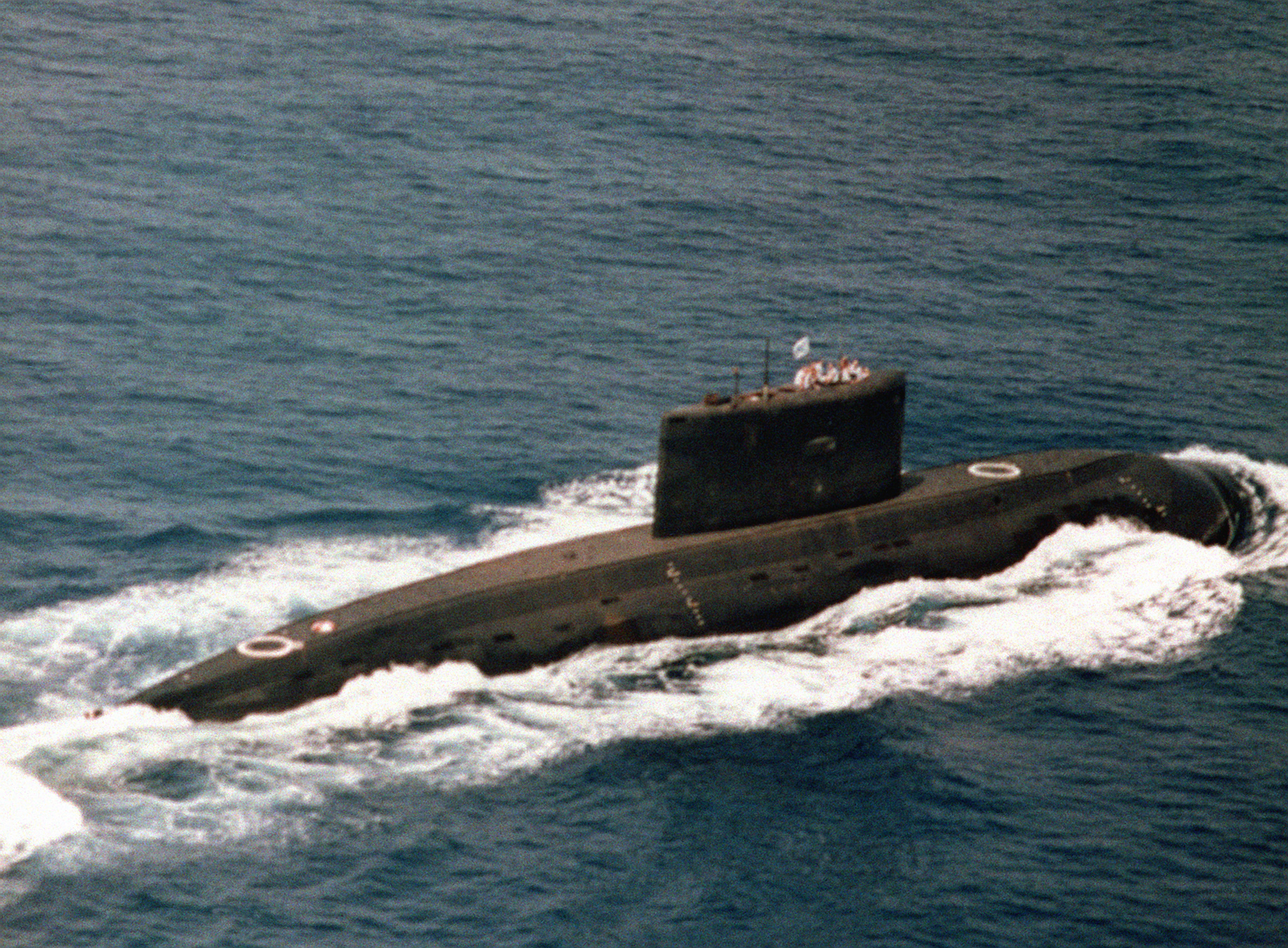
Iran deploys Russian-made submarine in Gulf

Iranian Kilo Class Submarine


The AP is reporting that Iran has deployed one of its Russian Kilo submarine to a southern Iranian post near the Straits of Hormuz. This was originally reported by Iranian State Television.

The Taregh-1 joined the Iranian fleet in the southern port of Bandar Abbas after it was overhauled earlier this year, according to the TV report. It's one of three Russian Kilo class submarines that Iran obtained in the early 1990s.

Tuesday's announcement came two days after U.S.-led naval exercises got under way in the waters of the Persian Gulf. They are the largest such maneuvers aimed at countering sea mines ever to take place in the region.

American officials insist the exercises, which include a symposium followed by at-sea maneuvers launching later this week, are defensive in nature and not directed at any particular country.

But the U.S.-led drills are seen as a response to Iranian warnings earlier this year it could close the strategic oil route in the Strait of Hormuz in retaliation for tighter Western sanctions. Tehran has since stepped back from such threats.

Friday, April 25, 2008

US Navy vs Iranian Fast Boats - Again

SS Westward Venture (Photo courtesy of Tote)

Fox News is reporting that the SS Westward Venture (a US Navy contract vessel) fired on Iranian Fast Boats yesterday (4/24). The boats were within 100 yards of the vessel and not responding to radio communications. Navy secruity detachment personnel used M16s. It is believed that the potential Iranian attackers were Iranian Revolutionary Guards.

You can check out the complete story on the Fox website at
http://www.foxnews.com/story/0,2933,352579,00.html

Friday, January 18, 2008

Port Royal and Hopper COs Discuss Incident in Strait of


MANAMA, Bahrain (NNS) -- Capt. David Adler, commanding officer of USS Port Royal (CG 73), and Capt. Jeffery James, commanding officer of USS Hopper (DDG 70), met with Middle Eastern and U.S. national media at Commander, U.S. Naval Forces Central Command/5th Fleet headquarters Jan. 13 to discuss last week's incident in the Strait of Hormuz.

Both commanding officers expressed that the Port Royal and Hopper crews were professional and followed proper procedures when they encountered five Iranian boats maneuvering erratically around the ships.

"As we felt the threat rise, we went through our cautionary steps, such as increasing radio queries and using the ship's whistle to warn the boats," Adler said. "We are very well trained in what we're doing here, and I think that we did exactly what we were supposed to do. I was very proud of the way that the crew preformed."

James pointed out that the crews' procedural actions prevented a potentially dangerous outcome.

"We stepped through our measured procedures to let the boats know who we were and what we were doing, and that we perceived their actions as threatening," James said. "We gave them the opportunity to break off, so that we didn't have to go the ultimate, which would have been deadly force."

Adler also mentioned that the U.S. Navy's regular transit through the Strait of Hormuz is to support regional stability.

"We're here with the 19 other Coalition countries to keep the sea lanes open for international traffic," Adler said.

Port Royal and Hopper are part of a routine rotation of U.S. warships to the region, and their operations are focused on reassuring regional partners of the Coalition's commitment to help set conditions for security and stability. U.S. forces maintain a naval and air presence in the region that deters destabilizing activities while safeguarding the region's vital links to the global economy.

Port Royal and Hopper are well-positioned to respond to any potential emergent situations. Their inherent capabilities will be used to train with regional partners and enhance existing cooperative relationships with an aim to support regional country's struggle against violent extremists. The ships also bring state-of-the-art command and control elements that are well suited to provide humanitarian and disaster relief support if required.

Thursday, January 10, 2008

Iranians Call Hormuz Incident 'Normal,' U.S. Begs to Differ

By Jim Garamone, American Forces Press Service

Small craft suspected to be from the Islamic Republic of Iran Revolutionary Guard Navy (IRGCN), maneuver aggressively in close proximity of the U.S. Navy Aegis-class cruiser USS Port Royal (CG 73), Aegis-class destroyer USS Hopper (DDG 70) and frigate USS Ingraham (FFG 61). All three ships were steaming in formation and had just completed a routine Strait of Hormuz transit. Coalition vessels, including U.S. Navy ships, routinely operate in the vicinity of both Islamic Republic of Iran Navy and IRGCN vessels and aircraft, without incident. U.S. Navy photo (Released)

Iranian officials called the buzzing by five Revolutionary Guard speedboats of three U.S. Navy ships "normal," but American officials insist the behavior was reckless and needlessly provocative.

The Iranian boats charged at the three warships Jan. 6 as they transited the Strait of Hormuz into the Persian Gulf.

President George W. Bush commented on the Iranian provocation during a short news conference at the White House Jan. 8.

"My message to the Iranians is simple: They shouldn't have done what they did," Bush said.

Pentagon spokesman Bryan Whitman called the Iranian action irresponsible and reckless. The Iranian armed speedboats charged at USS Port Royal (CG 73), USS Hopper (DDG 70) and USS Ingraham (FFG 61) as they steamed in international waters. One of the Iranian boats dropped boxes into the water in the path of one of the U.S. ships and radioed to the American vessels that they would explode.

"I found the action by the Iranians quite troubling, actually, and a matter of real concern," said Secretary of Defense Robert M. Gates. "This is a very volatile area, and the risk of an incident escalating is real. I think that it is a reminder that there is a very unpredictable government in Tehran. And it would be nice to see the Iranian government disavow this action and say that it won't happen again."

But Iranian officials have not been so forthcoming. Iranian senior Revolutionary Guards commander Ali Reza Tangsiri told the Mehr news agency that Iran has the right to ask any ships to identify themselves upon entering or leaving the Persian Gulf.

"It is a basic responsibility of patrolling units of the Revolutionary Guards to take necessary interception measures toward any vessels entering into the waters of the Persian Gulf," Tangsiri said.

The U.S. ships followed well-established procedures during the incident, Whitman said, adding it was fortunate that the Iranian boats peeled off before the U.S. ships had to escalate to the next level.

"Do these incidents give us the opportunity to reflect, reevaluate, readjust? They always do," Whitman said. "But I don't know of any specific measures that were deemed to be inadequate in this case."

Tuesday, January 08, 2008

Three U.S. Navy Ships Approached by Iranian Boats

By Jim Garamone, American Forces Press Service and the Navy News Service


Following a routine transit through the Strait of Hormuz, Jan. 6, three U.S. Navy ships operating in international waters in the Persian Gulf were approached by five Iranian small boats that demonstrated irresponsible confrontational behavior near the U.S. ships.

U.S. Navy ships USS Port Royal (CG 73), USS Hopper (DDG 70) and USS Ingraham (FFG 61) were steaming in formation at approximately 8 a.m. as they finished a routine Strait of Hormuz transit when five boats, suspected to be from the Islamic Republic of Iran Revolutionary Guard Navy (IRGCN), maneuvered aggressively in close proximity of the Hopper. Following standard procedure, Hopper issued warnings, attempted to establish communications with the small boats and conducted evasive maneuvering.

Coalition vessels, including U.S. Navy ships, routinely operate in the vicinity of both Islamic Republic of Iran Navy and IRGCN vessels and aircraft. These interactions are always correct on the U.S. part and reflect a commitment to accepted tenets of international law and common practice.

Three U.S. Navy vessels took evasive actions after five Iranian boats buzzed the ships transiting the Strait of Hormuz Jan. 6, Pentagon spokesman Bryan Whitman said Jan. 7.

Speaking to Pentagon reporters, Whitman called the Iranian provocation "a serious incident." The fast Iranian boats approached at "distances and speed that showed reckless, dangerous and potentially hostile intent," he said.

The incident lasted about 15 to 20 minutes, he said. The Navy ships were going into the Persian Gulf when the Iranian boats confronted them.

"Small, Iranian fast boats made some aggressive maneuvers against our vessels and indicated some hostile intent," Whitman said. "This required our vessels to issue warnings and conduct some evasive maneuvers. The U.S. Navy vessels were prepared to take appropriate actions, but there was no engagement of the vessels."

He said the speed of the Iranian boats and their distance from the U.S. Navy vessels demonstrated potentially hostile intent. Bridge-to-bridge radio communications between the Iranian vessels and the U.S. Navy ships reinforced this impression, he said.

The U.S. ships were operating in international waters within the Strait of Hormuz and followed all appropriate protocols, Whitman said. The U.S. Navy ships are USS Port Royal (CG 73), USS Hopper (DDG 70) and USS Ingraham (FFG 61).

U.S. warships will take all the precautions needed to safely transit the open waters of the strait, the Pentagon spokesman said.

"This is reckless and dangerous behavior on the part of the Iranian vessels, and it should cease immediately," Whitman added.

Typically, small boats such as these are under command of Iranian Revolutionary Guards, U.S. Navy officials said.

All U.S. warships transiting the open seas are prepared to take action should their ship or crews be threatened, Whitman noted. The U.S. ships "did take appropriate action in terms of maneuvering and communicating, and were prepared to take further action if necessary," he said.

The Defense Department will work with White House and State Department officials to come up with the appropriate way to address the incident with the Iranian government, Whitman said.

Iranian boats took 15 British sailors engaged in United Nations-sanctioned operations in the northern Persian Gulf on March 23.