Here is another round of Mode-S/ADS-B intercepts logged from here on the radio ranch in WNC. All dates/times are UTC.
AE06D9 163561 00000000 2012-09-24 21:57:08 UC-12F United States USMC | VMR DET MIRAMAR [KNKX] 1510 27000
477FF3 03 --- 2012-09-24 21:53:24 C-17A Hungary NATO
AE01BD 84-0131 SPAR865 2012-09-24 21:17:29 C-21A United States USAF | 375AW | 457AS [KADW]
AE2935 78-23140 --- 2012-09-24 21:07:04 C-12 United States ---
AE1175 02-1103 RCH649 2012-09-24 21:02:57 C-17A United States USAF | 62AW [KTCM]
AE49C4 09-9208 RCH9208 2012-09-24 20:37:10 C-17A United States USAF | 437AW [KCHS]
AE03FB 84-0143 --- 2012-09-24 19:37:03 C-12U United States USARMY
AE07EC 96-0002 RCH896 2012-09-24 19:05:24 C-17A United States USAF | 437AW [KCHS]
AE151A 166377 --- 2012-09-24 18:51:04 C-37B United States USN | VR-1 [KADW]
AE11D2 71-1407 SNTRY40H 2012-09-24 18:41:16 E-3B United States USAF | 552ACW [KTIK]
AE06E4 163836 --- 2012-09-24 17:59:28 UC-12F United States USNAVY
AE04AC 99-0103 --- 2012-09-24 17:40:46 UC-35a1 United States USARC | B/2-228 AVN (TA) [KMGE]
AAEC74 10-0256 --- 2012-09-24 17:24:37 C-12V1 United States US Army | B/6-52 AVN (TA) DET-1 [KFTK]
AE1211 03-0726 --- 2012-09-24 17:24:21 UC-35C United States USARC | 2-228 AVN
AE010F 94-1569 BOXR063 2012-09-24 17:19:36 C-38A United States DC ANG | 113Wg | 201AS [KADW]
ADFC65 90-0404 --- 2012-09-24 16:48:41 T-1A United States USAF | 12FTW | 99FTS [KRND]
AE01BD 84-0131 SPAR865 2012-09-24 16:25:44 C-21A United States USAF | 375AW | 457AS [KADW]
AE06D9 163561 00000000 2012-09-24 16:24:47 UC-12F United States USMC | VMR DET MIRAMAR [KNKX]
AE03FB 84-0143 00000000 2012-09-24 15:56:03 C-12U United States USARMY
AE148B 92-3290 --- 2012-09-24 15:53:21 E-8C United States GA ANG | 116ACW [KWRB]
ADFCF8 95-0044 --- 2012-09-24 15:51:31 T-1A United States USAF | 14FTW | 48FTS
ADFE2B ------ --- 2012-09-24 15:01:39 HU-25D United States ---
A6FAA1 N549PA --- 2012-09-24 14:55:25 LEARJET 35 United States Phoenix Air Group (EMS) [KVPC] 3541 35225
AE10CD 165511 --- 2012-09-24 14:48:40 T-39G United States USN | TW-6 | VT-86 [KNPA]
AE049B 61-0313 --- 2012-09-24 14:42:33 KC-135R United States AFRC | 916ARW | 77ARS [KGSB]
A9A74E N721AL --- 2012-09-24 14:23:38 DHC-8-402 United States US DOJ | FBI HQ [KHEF]
AE4EB4 168430 --- 2012-09-24 14:21:08 P-8A United States ---
AE4EB4 168430 --- 2012-09-24 12:53:01 P-8A United States ---
AE04AD 99-0104 --- 2012-09-24 11:14:45 UC-35a1 United States USARC | A/2-228 AVN (TA) [KWRI ]
AE138C 04-3144 GLEAN37 2012-09-24 10:53:44 C-130J-30 United States USAF | 19AW | 48AS [KLRF] 1522 25000
AE07E0 94-0066 RCH134 2012-09-24 04:38:04 C-17A United States USAF | 62AW [KTCM] 7230 37000
AE20C8 07-7187 RCH270 2012-09-24 00:51:48 C-17a United States USAF | 437AW [KCHS]
AE1196 03-3113 --- 2012-09-24 00:27:23 C-17A United States MS ANG | 172AW | 183AS [KJAN]
AE1196 03-3113 E33113 2012-09-24 00:05:32 C-17A United States MS ANG | 172AW | 183AS [KJAN]
Tuesday, September 25, 2012
Lancers, Falcons share South Dakota skies
 |
| An F-16 Fighting Falcon assigned to the South Dakota Air National Guard’s 175th Fighter Squadron thunders skyward at Ellsworth Air Force Base, S.D., Sept. 18, 2012. The 114th Fighter Wing’s F-16s shared the flightline with Ellsworth’s resident B-1 bombers Sept. 17 to 21. (U.S. Air Force photo by Airman 1st Class Hrair H. Palyan/Released) |
by Airman 1st Class Hrair H. Palyan, 28th Bomb Wing Public Affairs
ELLSWORTH AIR FORCE BASE, S.D. (AFNS) -- The skies above Ellsworth Air Force Base, S.D., are routinely filled with B-1 bombers, but during Sept. 17 to 21, base bombers shared the airspace and ramp area with several South Dakota Air National Guard F-16s during a Guard training exercise.
The 114th Fighter Wing Fighting Lobos headquartered in Sioux Falls, S.D., came to Ellsworth for their 2012 Live Drop exercise.
"We're not allowed to use live ammunition for training purposes around Sioux Falls because we share airspace with a civilian airport," said Master Sgt. Shawn Greer, 114th Logistics Readiness Squadron first sergeant. "Ellsworth was instrumental in allowing us to utilize their resources for our fighters to complete their annual requirements."
Prior to touching down at Ellsworth with more than 90 Airmen and six F-16 Fighting Falcons, Capt. Steve Schultz, 175th Fighter Squadron F-16 pilot, said he visited Ellsworth in July to complete a site survey and ensure the base was capable of accommodating the group during the exercise.
"Luckily for us, the 37th Bomb Squadron is deployed to Southwest Asia," Schultz said, who previously participated in the Air National Guard's 2007 Live Drop exercise at Ellsworth. "We were able to land on Monday and immediately set up our operations for the week."
Schultz said he flew with four other F-16s to the Utah Test and Training Range Sept. 18, and successfully conducted long-range strike missions. He noted that at the completion of the exercise, aircrews were able to validate F-16 tactics, techniques and procedures used during long-range strike missions.
"It was great training for our new pilots," Schultz said. "We met our goal in hitting times over targets as precisely as possible. Things get a lot more serious when you fly with live ammunition, but because we practiced how we play, we were able to persevere."
With the culmination of the exercise, South Dakota Airmen from both sides of the state united to accomplish a true feat of total force.
Greer added that he appreciates how Ellsworth Airmen stepped up to ensure F-16 aircrews and support personnel had everything they needed to accomplish their mission.
"We came together as an Air Force team, not individual units or squadrons," Greer said. "I'm thankful for all the professionalism Ellsworth Airmen demonstrated."

Monday, September 24, 2012
Mode-S/ADS Milcom Intercepts 19/23 Sep 2012 - Btown NC
Here is another round of Mode-S/ADS-B intercepts logged from here on the radio ranch in WNC. All dates/times are UTC.
AE49C4 09-9208 RCH9208 2012-09-23 23:19:43 C-17A United States USAF | 437AW [KCHS] 1055 29500
AE2EDC 166095 --- 2012-09-23 21:27:21 T-6B United States ---
AE173B 06-3841 --- 2012-09-23 19:44:51 T-6A United States USAF 7241 19975
AE014C 63-8025 EXPO82 2012-09-23 19:40:51 KC-135R United States USAF | 22ARW [KIAB] 1035 37000
AE089B 00-3574 --- 2012-09-23 19:25:15 T-6A United States USAF 3522 20050
AE0154 63-8045 --- 2012-09-23 19:18:58 KC-135R United States USAF | 6AMW | 927ARW 6241 37000
ADFCF5 95-0041 --- 2012-09-23 18:10:29 T-1A United States USAF | 14FTW | 48FTS
A6D6D9 N54PA --- 2012-09-23 16:10:12 Lear 36 United States PHOENINXAIR
ADFD0C 95-0064 --- 2012-09-23 15:31:04 T-1A United States USAF | 14FTW | 48FTS
AE148E 94-0284 PHENOM6 2012-09-19 03:32:54 E-8C United States GA ANG | 116ACW [KWRB]
AE12B4 65-0993 CHAIN92 2012-09-19 03:27:27 MC-130P United States USAF | 58SOW | 550SOS [KIKR] 1200 6400
AE1294 89-0283 TALON15 2012-09-19 03:27:23 MC-130h United States USAF | 1SOW | 15SOS [KHRT] 1200 5800
AE12B4 65-0993 CHAIN92 2012-09-19 03:06:41 MC-130P United States USAF | 58SOW | 550SOS [KIKR] 1200 6400
AE1294 89-0283 TALON15 2012-09-19 03:05:43 MC-130h United States USAF | 1SOW | 15SOS [KHRT] 1200 5800
AE1294 89-0283 TALON15 2012-09-19 02:28:41 MC-130h United States USAF | 1SOW | 15SOS [KHRT] 1200 5800
AE1199 03-3116 RCH670 2012-09-19 00:09:07 C-17A United States MS ANG | 172AW | 183AS [KJAN]
Saturday, September 22, 2012
USS Anzio Launches Air-to-Air Missile During UNITAS
By Mass Communication Specialist 3rd Class (SW) Frank J. Pikul, U.S. Fourth Fleet Public Affairs
Caribbean Sea (NNS) -- The Ticonderoga- class guided-missile cruiser USS Anzio (CG 68) conducted a standard missile (SN-2) launch and a live fire gunnery exercise during a drone exercise supporting UNITAS Atlantic 53-12, Sept. 21, which is being hosted by U.S. Fourth Fleet.
The missile launch was the first to be done on Anzio in nine years and was part of a larger subject matter expert exchange with other UNITAS participants.
"It was a challenge to coordinate this intricate operation with so many different ships," said Lt. Julio A. Nilsson, the operations officer aboard Anzio. "My job was to make sure everyone was on the same page so we could execute this as quickly and safely as possible. It takes teamwork to accomplish any kind of mission whether it be subject matter exchanges or the real thing."
The type of missile used for the exercise was a SM-2/RIM-66 and was used to fire at a drone aerial target launched from the Oliver Hazard Perry-class guided-missile frigate USS Underwood (FFG 36).
"My job is to make sure that our guns work properly and the missile launches," said Lt. Cmdr. Jonathan M. Griffin, the combat systems officer aboard Anzio. "It takes plenty of planning and hard work [goes] into firing off these weapons, especially when we haven't fired a missile off the ship in nearly a decade."
Once launched the missile locked on and hit the fast moving drone destroying it.
"We accomplished our mission today because the end result was a dead drone," said Griffin. "This shows the importance of the planning and years of training that we receive that culminate in moments like these."
UNITAS Atlantic 53-2012 is a U.S. and South America-sponsored international naval exercise. This is the 53rd year partner nations have participated in UNITAS, which stands for "unity" in Latin, making it the longest ongoing maritime exercise in the region.
Thirteen warships from Brazil, Canada, Colombia, Dominican Republic, Mexico, the United States and the United Kingdom and observers from France, Jamaica, Panama and Peru are participating in the exercise, which will run from, Sept. 17 though September 28, 2012 in the west Caribbean and associated areas.
UNITAS is designed to train each naval force in a variety of maritime scenarios, with each operating as a component of a multinational force to provide the maximum opportunity to improve interoperability. The exercise develops and sustains relationships that improve the capacity of our emerging and enduring partners' maritime forces to achieve common desired effects. This annual exercise fosters friendly, mutual cooperation and understanding between participating navies.
Commander U.S. Naval Forces Southern Command / U.S. Fourth Fleet supports U.S. Southern Command joint and combined full-spectrum military operations by providing principally sea-based, forward presence to ensure freedom of maneuver in the maritime domain, to foster and sustain cooperative relationships with international partners and to fully exploit the sea as maneuver space in order to enhance regional security and promote peace, stability, and prosperity in the Caribbean, Central and South American regions.
Ships Sortie for At-Sea Phase of UNITAS Atlantic
By Lt. Stephanie Homick, U.S. Naval Forces Southern Command & U.S. 4th Fleet Public Affairs
KEY WEST, Fla. (NNS) -- Thirteen ships representing the seven countries participating in the Atlantic Phase of UNITAS 2012 sortied to their operating area in the Caribbean, Sept. 20.
After spending a few days in port in Key West, Fla. preparing for the exercise through planning meetings, ships from Brazil, Canada, Colombia, the Dominican Republic, Mexico, the United Kingdom and the U.S. Navy and U.S. Coast Guard departed the Mole Pier on the Truman Waterfront throughout the day.
"Meeting all the new people from all the different countries - it was fun to talk to them, hear their stories and I think it's going to be fun to work with them in the exercise now after having met with them in all the meetings and spending some time with them," said Lt. Matthew Bornemeier, a pilot embarked aboard USS Underwood (FFG 36). After leaving the pier, each ship completed a simulated channel transit and then rendezvoused at a predetermined location in the Caribbean. The afternoon comprised of each ship's air department conducting deck landing qualifications.
"It's one of those skills that's a perishable skill," said Bornemeier of the deck landing qualifications. "If you don't continue to practice, you become a little rusty and it's something we do all the time...to maintain our proficiency. It's a challenging exercise and we do it every time we take off and land."
The afternoon concluded with an air defense exercise, the purpose of which is to assess each ship's combat information center in air plotting and anti-air warfare radio telephone procedures.
"An air defense exercise tests a unit's capability to detect, track and engage an air target," said Lt. Lori Rose, Underwood's operations officer. "It flexes combat's ability to conduct anti-air warfare."
Sept. 20 is the first day of the eight-day at-sea phase of the 53rd iteration of UNITAS Atlantic.
UNITAS is the longest running and largest maritime exercise in this hemisphere. The 12-day exercise will entail a variety of operations intended to enhance interoperability between the partner nations.
USS Anzio Kicks-off Exercise in Caribbean
By Lt. j.g. Lauren Gaidry, USS Anzio Public Affairs
KEY WEST, Fla. (NNS) -- Guided-missile cruiser USS ANZIO (CG 68) moored in Key West, Florida, Sept. 20, the kick off location for UNITAS 53, a two-week multinational interoperability training exercise off the coast of Florida and in the Central Caribbean.
The word "UNITAS", Latin for 'Unity'. UNITAS is designed to train participating forces in a variety of maritime scenarios to test command and control of forces at sea, while operating as a multinational force to provide the maximum opportunity to improve interoperability.
Ships and staff from 11 different countries, including the United States, will be participating. The United States ships and aircraft will spend the two weeks operating with ships and helicopters from Brazil, Canada, Colombia, the Dominican Republic, Mexico, and the United Kingdom as well as staff members from France, Jamaica, Panama, and Peru both in port and at sea. The ships and their crews will be working together to complete tactically challenging training throughout the exercise. The end goal is to promote continued interoperability between the countries and enhance relationships through mutual cooperation and teamwork amongst nations.
"The number one mission [of UNITAS] is to continue to operate together in exercise so that we are able to do so in crisis... it is a huge investment in tackling our common maritime challenges," said Capt. John M. Dorey, commanding officer, USS Anzio, during a shipboard brief on the exercise.
During the exercise, each ship will be paired with a 'sister ship' to promote international relationships and build trust. USS Anzio has been partnered with the Colombian ship ARC Antioquia (FM 53) for the exercise. Selected officers and chief petty officers will be involved in social and professional activities with their counterparts from participating nations, strengthening the bonds of understanding and friendship. Sailors from Anzio will also be participating in a Habitat for Humanity community engagement project. A program called "Shipriders", gives Sailors the opportunity to get underway on foreign ships, and be completely immersed in the shipboard life and culture of the other ship throughout the entirety of UNITAS.
UNITAS is the longest running and largest maritime exercise in this hemisphere. The 12-day exercise will entail a variety of operations intended to enhance interoperability between the partner nations.
COMUSNAVSO/COMFOURTHFLT supports U.S. Southern Command joint and combined full-spectrum military operations by providing principally sea-based, forward presence to ensure freedom of maneuver in the maritime domain, to foster and sustain cooperative relationships with international partners and to fully exploit the sea as maneuver space in order to enhance regional security and promote peace, stability, and prosperity in the Caribbean, Central and South American regions.
Fifth-generation formation
 |
| An F-35A Lightning II joint strike fighter from the 33rd Fighter Wing at Eglin Air Force Base, Fla., and an F-22A Raptor from the 43rd Fighter Squadron at Tyndall Air Force Base, Fla., soar over the Emerald Coast Sept. 19, 2012. This was the first time the two fifth-generation fighters have flown together for the Air Force. (U.S. Air Force photo/Master Sgt. Jeremy T. Lock) |
EGLIN AIR FORCE BASE, Fla. (AFNS) -- An F-35A Lightning II joint strike fighter and an F-22A Raptor flew together for the Air Force for the first time Sept. 19 over Florida's Emerald Coast.
The two fifth-generation fighters took off from Eglin Air Force Base, Fla., where the F-35A is stationed with the 33rd Fighter Wing. The F-22 is with the 43rd Fighter Squadron at Tyndall Air Force Base, Fla.
KC-46 enters critical design review phase
by Senior Airman Tabitha N. Haynes, Air Force District of Washington
WASHINGTON (AFNS) -- The Air Force KC-46A program director described the critical development phases of the next-generation refueling aircraft during the 2012 Air Force Association Air and Space Conference and Technology Exposition in Washington, D.C., Sept. 18.
Maj. Gen. John F. Thompson, program executive officer for Tanker Programs, Air Force Life Cycle Management Center, Wright-Patterson Air Force Base, Ohio, said that while KC-46's preliminary aircraft design review is complete, additional steps must be taken to develop a final aircraft design that meets system requirements.
Thompson added that 18 months into the aircraft development program the KC-46A is on track for critical design review in the fourth quarter of next year.
"There is a possibility in any program to have 50 number one priorities; I have never believed in that concept," Thompson said. "I will have a lot of number two and ... number three priorities, but my number one priority ... is to successfully get through the critical design review next year."
The aircraft configuration will advance, Thompson explained, from the commercial Boeing model 767-200ER aircraft to a Boeing model 767-2C Provisioned Freighter variant before final modification into a military certified KC-46 tanker, Thompson explained.
Select design features will allow the aircraft to carry out its "multi-role capabilities," including cargo transportation, passenger transportation and patient transportation (in addition to its primary role of aerial refueling)," Thompson added.
The KC-46 aircraft features an improved refueling system with 212,000 pounds of fuel delivery capabilities, capability to receive fuel in flight, 65,000 pounds of cargo carrying capability, passenger aero-medical capabilities, and engines each producing 62,000 pounds of thrust.
"Our goal is one program, one plan," Thompson said. "We are actually bending metal on this aircraft -- it is not just a paper design anymore."
Currently, testing has begun for the KC-46. Testing to date includes live fire and system integration lab testing.
"From a sustainment and supportability standpoint ... our goal is to go to 100 percent organically managed sustainment on this weapon system," Thompson said.
This means the Air Force may partner with industry for certain sustainment repair activities, but will remain in the lead for management purposes.
Despite the work that still remains in the KC-46 development, 18 next-generation refuelers are scheduled to join the fleet by 2017, Thompson said, adding that a total of 179 KC-46 aircraft are slated to be delivered by 2027.
Friday, September 21, 2012
U.S. Navy Ships Depart For Joint Warrior Exercise 12-2
By Mass Communication Specialist 2nd Class (SW/AW) Foster Bamford, Navy Public Affairs Support Element West
USS GETTYSBURG, At Sea (NNS) -- Two U.S. Navy ships, led by Commander, Destroyer Squadron (COMDESRON) 26, departed from the U.S. for Scotland, Sept. 17.
The ships will take part in the Joint Warrior 12-2 exercise with allied navies. Joint Warrior is a coalition exercise designed and led by the Joint Tactical Exercise Planning Staff (JTEPS) in the United Kingdom.
Sailors from guided-missile destroyer USS Mitscher (DDG 57), guided-missile cruiser USS Gettysburg (CG 64), Helicopter Maritime Strike (HSM) 46 Detachment 2 and U.S. maritime support reconnaissance patrol aircraft from Experimental Evaluation Test Squadron (VX) 1, Patrol Squadron (VP) 9 and VP 10 and fleet replenishment oiler USNS Leroy Grumman (TAO 195) will play a role in the exercise, which is intended to improve interoperability between allied navies and prepare them for possible joint exercises in the real world.
"Allied and coalition operations are the standard when units deploy," said Capt. Nelson Castro, commander of COMDESRON 26. "This exercise provides a venue for our Sailors to practice and learn NATO operating procedures."
Joint Warrior is the United Kingdom's advanced naval certification course and is on par with a U.S. Joint Task Force Exercise. The exercise is a multi-national training event for allies in a maritime environment. It aims to improve interoperability and prepare forces for combined exercises. There are 12 countries participating in Joint Warrior including the U.S. and the United Kingdom. Those countries are Denmark, Netherlands, Estonia, France, Spain, Norway, Brazil, Germany, Canada, Sweden, and Belgium.
"Many of the allied units involved in Joint Warrior exercises will be the same units our ships will see on deployment," said Castro. "This familiarity allows for the development of trust. All nations benefit from open commerce in the maritime common. Our Navy deployed forward supports the movement of goods worldwide, which affects everyone."
Joint Warrior is a two-week exercise that begins in early October. It involves sea, ground and air assets from participating allied and NATO forces and aims to foster a spirit of teamwork between allied nations.
Wednesday, September 19, 2012
Mode-S/ADS Milcom Intercepts 18 Sep 2012 - Btown NC
Here is another round of Mode-S/ADS-B intercepts logged from here on the radio ranch in WNC. All dates/times are UTC.
AE148E 94-0284 PHENOM6 2012-09-18 23:19:51 E-8C United States GA ANG | 116ACW [KWRB]
AE093D 01-0301 --- 2012-09-18 23:00:36 UC-35a1 United States US Army | OSACOM PATD [KADW] 5623 36100
AE0531 69-0011 RCH148 2012-09-18 22:50:43 C-5A United States TN ANG | 164AW | 155AS [KMEM] 7002 36000
A8597B N637TW CMB515 2012-09-18 22:44:08 Boeing 767-33AER United States Ryan Intl Airlines 2156 37000
ADFD7D 91-0513 --- 2012-09-18 22:25:04 C-26D United States SC ARNG |OSACOM DET-24
AE11E3 77-0356 SNTRY60H 2012-09-18 21:51:34 E-3B United States USAF | 552ACW [KTIK]
A31A9F N3 --- 2012-09-18 20:57:53 C560 United States FAA
A5A043 N4614N --- 2012-09-18 20:39:47 550 United States US Bureau of Immigration and Customs Enforcement
AE11E1 77-0353 SNTRY01H 2012-09-18 18:56:15 E-3B United States USAF | 552ACW [KTIK]
ADFDE8 94-6703 TORCH 77 2012-09-18 18:10:59 C-130H United States IL ANG | 182AW | 169AS [KPIA]
AE015B 58-0104 HAPPY61 2012-09-18 15:57:38 KC-135R United States IL ANG | 126ARW | 108ARS [KBLV]
A570F0 N45NA --- 2012-09-18 13:28:08 DC-9-33F United States US DOE | NNSA 5763 34000
ADFED1 85-1263 --- 2012-09-18 12:41:46 C-12U United States OSACOMDet.56PR-ArNG [TJIG]
A5D4AA N475LC N475LC 2012-09-18 12:02:33 Gulfstream IV United States L-3 Info Systems 2472 36025
A6EBC5 N545PA --- 2012-09-18 11:51:46 Lear 36A United States PHOENINXAIR
AE07DD 93-0603 RHINO96 2012-09-18 07:53:37 C-17A United States AFRC | 445AW | 89AS [KFFO]
Afghanistan: When the Moon Sets, Watch Out

Courtesy Michael Yon Online Magazine
Last Friday night, the moon phase left Afghanistan in near total darkness. Even with clear skies, the enemy knew that at the brightest moment, the moon would only appear as an irrelevant orange sliver. Such times are called “red illumination,” or “red illum.” Planning calendars in Afghanistan highlight periods of red illum because they hamper aviation.
Even though this is the year 2012, and the Curiosity Rover is beaming images from Mars more than four decades after astronauts first trod on the lunar surface, the moon phase remains important when planning operations. The moment that the nighttime attack on Camp Bastion was reported, the moon phase could have been safely guessed without looking up.
In every respect, Southern Afghanistan is a dark part of the world. Without moonlight, most villages are black at night. The brightest places in the country are our bases. Cultural lights present little danger to Taliban moving at night. Our air assets, including our aerostat balloons, are often their biggest concern.
This war is mature. The enemy knows us, and we know them. After 11 years, the Taliban realizes that most helicopter traffic ceases during red illum. Most birds will only fly for urgent MEDEVAC, or for special operations. The enemy closely observes our air traffic. Operations slow under red illum, so air traffic declines, and the chances of being spotted by roving aircraft are reduced.
There is a misconception that UAVs (unmanned aerial vehicles) such as Predators can detect everything. They cannot. Their field of vision is like looking through a toilet paper roll. The UAVs are great for specific targets, such as watching a house, but imagine patrolling. It is like trying to visually swat mosquitoes using no ears, no sense of touch, and only the ability to look through a toilet paper roll. You will get some, and miss many.
We only have enough UAVs to cover small splotches of the country, and there are bases, roads, operations, and targets spread throughout Afghanistan and elsewhere that need watching. The enemy can spoof observers by using a “pattern of life” (POL) for camouflage. So even if our UAV operators see apparently unarmed natives moving, it is no guarantee of early detection.
Our UAVs over Afghanistan fly with their strobes flashing to avoid collisions. If a Predator or Reaper crashes into a commercial airliner because it was flying blacked out while staring at the ground, that is a problem. The enemy can see our UAVs from miles away.
A key realization: the enemy uses cheap night vision gear in the form of cameras that have night functions. When our IR lasers, our IR strobes, our IR illumination or our IR spotlights are radiating, they can easily be seen using cheap digital cameras. I recently told this to some Norwegian soldiers, who were as surprised as our soldiers to learn it. I learned this from the enemy, not from our guys. The Taliban even use smart phone cameras to watch for invisible lasers. The enemy in Afghanistan has been caught using cameras for night vision. It is just a stroke of common sense: I have been doing it for eight years since I noticed an IR laser one night in Iraq.
A Norwegian trooper explained that one dark night in Afghanistan, they got ambushed with accurate but distant machinegun fire. When they turned off their IR strobes, the fire ended. When they turned the IR strobes back on, the fires resumed. When they turned them off for good, it was over.
Many of our people believe that the enemy does not use night vision. There was a time when this was true, but the war has matured and this is now false. If your firefly is strobing on your helmet, or if you are carrying a cracked IR chemlight, do not be surprised if you take accurate fire during a black night. When JTACs mark targets with IR lasers, or when aircraft such as Predators lase for Hellfire shots or for target ID, they look like purple or green sunbeams through night vision optics and they are crazy bright. You cannot miss them.
To maximize chances of success for an assault such as that at Bastion last Friday, the Taliban know that it is best to start early, on a moonless night, just after red illum has begun. Other Afghans engaged in normal masking movements can provide POL camouflage. The enemy knows that only “Terry Taliban” is skulking around after midnight, so they start early when possible.
By 7PM last Friday, the night was very dark, and by 8PM, it was thick and black, making it a perfect time to close in on the target. Camp Bastion would appear lit up like Las Vegas, standing alone, glowing like a giant bubble of light in the “Desert of Death.” On the darkest nights, the lights of Bastion sometimes reflect orange off the clouds above, and they can be seen for miles around, causing Afghans to ask why the base glows like the morning sun, yet they do not have a drop of electricity. The days of goodwill and hope are over.
During periods of utter darkness, many of our light-intensifying systems are useless. There is not enough light for them to work with, which is why many aircraft do not fly during red illum. This also affects ground troops whose systems likewise do not have enough light to intensify, and it reduces their air cover, and thus all air and ground operations.
Last Friday was dark without infrared spotlights, or IR illumination fired from cannons and mortars. It is not always a good idea to fire those around major airbases. And besides, the spotlights and illum rounds have limitations and cannot see around contours. Thermal imagers work during complete darkness but they cannot see into hidden gullies. Ground surveillance radar (GSR) and other sensors are of limited use, especially when the enemy uses masking POL. All of these systems work together, and they can be helpful, but they can be foiled through experience and subterfuge, especially when our forces are complacent in the armored cocoons of the mega-bases.
Camp Bastion is set far back in the desert as a security precaution. Approaches can be seen for miles. Consulting Google Earth and other imagery might lead you to believe that there is no approach that cannot be observed. This is true when the air assets are up, and it is true up close whether the aerial surveillance platforms are up or not. But the desert is not flat like a billiard table. We all know what water and wind can do to terrain. The surface is closer to a waffle than to a pancake.
I scouted around Camp Bastion more than six years ago, before the camp was up and running, and since that time I have flown low-level there on many occasions. Many ripples and folds provide cover from direct observation from the base perimeter. The micro-terrain might not be obvious from Google Earth or from maps, but there are dead-space approaches that locals can use. Afghans have long been expert at traveling unseen in what appears to be wide-open territory. This is one of their strengths, and it has been described in accounts of war after war. Just as navies can hide in the open seas, Afghans can hide in treeless deserts, unless aircraft or roving patrols detect them.
The Taliban’s major vulnerability is our mastery of the air, but if they can negate it, we are approaching tactical equality because they have home turf advantage, and they have lived there since antiquity. Local Afghans have had six-years since Bastion was built to map ingress and egress routes, and to probe ISAF defenses and reactions.
This morning, four days after the attack, ISAF HQ in Kabul announced that they had arrested one of the Taliban leaders behind Friday’s attack. According to ISAF, they nabbed him in Nad ‘Ali district. This district is a green zone about sixteen miles from Camp Bastion. Some of the closest built-up areas contiguous to Nad ‘Ali are just a handful of miles away from Camp Bastion. If the enemy were coming to shoot rockets or mortars at Bastion with the intention of escaping, the hazard would be high, depending on ISAF rules of engagement. But attackers who are prepared for a one-way trip have demonstrated that they can achieve success.
Last Friday, a few hours after sunset, the Taliban struck at about 10PM. They killed two US Marines, one of them a commanding officer, and they wiped out roughly 8 percent of our Harrier jet force. Harriers are no longer manufactured, so these aircraft cannot be replaced. Scratch one squadron, and now the military must reallocate aircraft to cover the deficit.
The enemy fooled all of our high-tech gadgetry with training, observation, intelligence, terrain, planning, rehearsal, and audacity, using basic military tactics that were perfected long before anyone reading this was born. Persistence and luck was also a key factor: the Taliban have attempted similar attacks at different bases in the past with poor results. The Taliban only have to be lucky once. We have to be lucky all of the time.
The Taliban destroyed six jets, damaged two more possibly beyond repair, leaving Marine VMA-211 squadron with only two aircraft, and they killed the squadron commander.
All of this by Taliban who likely never served in any military. If they did serve, they joined up, they got some good training, and then they put it to use.
Multinational Ships Get Underway for UNITAS Atlantic, Conduct Air Defense Exercise
 |
| The Royal Navy destroyer HMS Dauntless (D 33) gets underway for the annual UNITAS Atlantic Phase maritime exercise hosted by U.S. 4th Fleet and conducted in the western Caribbean Sea. Multinational ships from ten partner nations departed Naval Air Station Key West for the exercise. (U.S. Navy photo by Lt. Cmdr. Corey Barker/Released) |
By Lt. Cmdr. Corey Barker, U.S. 4th Fleet Public Affairs
CARIBBEAN SEA (NNS) -- Naval forces from Brazil, Canada, Colombia, Dominican Republic, Mexico, the United Kingdom and the United States departed Naval Air Station Key West Sept. 20 and conducted air defense exercises to begin the at-sea phase of the Atlantic Phase of UNITAS, an annual multinational exercise hosted by Commander, U.S. 4th Fleet.
Thirteen warships are conducting operations in the Atlantic Ocean and Western Caribbean through Sept. 28. UNITAS trains the participating forces in a variety of maritime scenarios to test command and control of forces at sea, while operating as a multinational force to provide the maximum opportunity to improve interoperability.
Shortly after departing Naval Air Station Key West, F-5N Freedom Fighter attack aircraft from VAW-111 adversary squadron tested the ship's air defense capabilities.
"This was a very important evolution as it was the first time the multinational ships were able to assemble at sea and work as a team to defend the task group from aerial threats," Capt. Ace VanWagoner, commander, Combined Task Group 138.20 said. "The adversary airplanes flew threatening approaches towards the task group and the ships were able to respond quickly and successfully defended themselves," he said.
This year's Atlantic Phase will include a live-free exercises and a Navy Standard Missile (SM-2) launch against remote control aerial targets launched from the flight deck of frigate, USS Underwood (FFG 36).
"While the overarching goal of the exercise is to develop and test command and control of forces at sea, training in this exercise will address the spectrum of maritime operations," Commander, U.S. 4th Fleet, Rear Adm. Sinclair Harris said.
"Specifically, there will be high-end warfare scenarios addressing electronic warfare, anti-air warfare and air defense, anti-submarine warfare, anti-surface warfare, and maritime interdiction operations," he said.
UNITAS develops and sustains relationships to improve the capacity of our partners' maritime forces. This annual exercise fosters friendly, mutual cooperation and understanding between participating navies. The participating ships have swapped crews as part of a subject matter expert exchange. USS Anzio (CG 68), the UNITAS flagship, embarked personnel from Peru, Brazil, Mexico, France and Canada.
Peleliu Amphibious Ready Group, 15th Marine Expeditionary Unit Depart for Deployment
By Mass Communication Specialist 2nd Class Dominique Pineiro, Navy Public Affairs Support Element West
SAN DIEGO (NNS) -- More than 4,000 Sailors and Marines assigned to the Peleliu Amphibious Ready Group (ARG) and the 15th Marine Expeditionary Unit departed San Diego for deployment Monday, Sept. 17.
The Peleliu ARG, composed of Peleliu, amphibious transport dock ship USS Green Bay (LPD 20) and amphibious dock landing ship USS Rushmore (LSD 47), is commanded by Capt. Mark T. Sakaguchi, commander, Amphibious Squadron 3.
Prior to deploying, the ARG completed a myriad of workup exercises, amphibious squadron/Marine expeditionary unit integration, a composite training unit exercise and a certification exercise to prepare for deployment.
During deployment, the Peleliu ARG will be expected to accomplish a variety of missions supporting the Navy's maritime strategy including combat missions, humanitarian assistance, counter-piracy and promoting peace and stability in the regions it enters.
"We're prepared for everything, from humanitarian relief, disaster relief, maritime support operations up to full scale combat," said Sakaguchi. "Whatever the situation is our leaders give us the tasking, we'll respond."
The ships in the ARG hosted a large number of family and friends on board prior to their departure.
"This is my first deployment, and I never thought it would be so hard to leave my wife behind for so long," said Aviation Ordnanceman Airman Joshua Quinones, assigned to Peleliu. "I'm sad, but this is what I signed up for."
Tuesday, September 18, 2012
Chinese General: Prepare for Combat

From an article by Bill Gertz on The Washington Free Beacon
China’s most powerful military leader, in an unusual public statement, last week ordered military forces to prepare for combat, as Chinese warships deployed to waters near disputed islands and anti-Japan protests throughout the country turned violent.
Gen. Xu Caihou, vice chairman of the Central Military Commission, considered the most senior military political commissar, said Friday that military forces should be “prepared for any possible military combat,” state run Xinhua news agency reported.
Heightened tensions over the Senkakus come as Defense Secretary Leon Panetta arrived in China Monday.
You can read the rest of this fascinating article on the Beacon website at
http://freebeacon.com/chinese-general-prepare-for-combat/
Iran deploys Russian-made submarine in Gulf
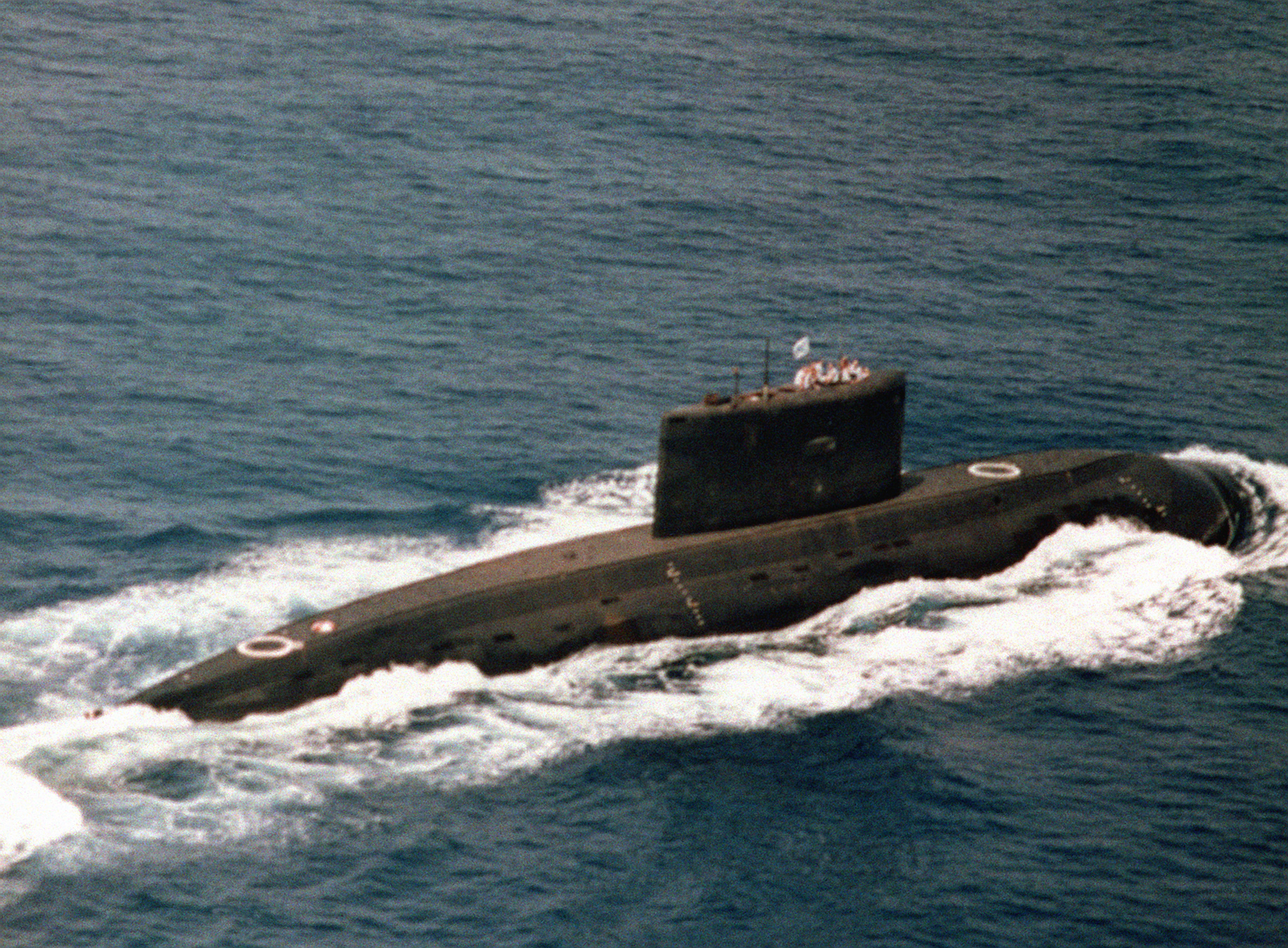
The AP is reporting that Iran has deployed one of its Russian Kilo submarine to a southern Iranian post near the Straits of Hormuz. This was originally reported by Iranian State Television.
The Taregh-1 joined the Iranian fleet in the southern port of Bandar Abbas after it was overhauled earlier this year, according to the TV report. It's one of three Russian Kilo class submarines that Iran obtained in the early 1990s.
Tuesday's announcement came two days after U.S.-led naval exercises got under way in the waters of the Persian Gulf. They are the largest such maneuvers aimed at countering sea mines ever to take place in the region.
American officials insist the exercises, which include a symposium followed by at-sea maneuvers launching later this week, are defensive in nature and not directed at any particular country.
But the U.S.-led drills are seen as a response to Iranian warnings earlier this year it could close the strategic oil route in the Strait of Hormuz in retaliation for tighter Western sanctions. Tehran has since stepped back from such threats.
Mode-S/ADS Milcom Intercepts 17 Sep 2012 - Btown NC
Here is another round of Mode-S/ADS-B intercepts logged from here on the radio ranch in WNC. All dates/times are UTC.
A5F07F N482EV --- 2012-09-17 22:56:06 Boeing 747-212B United States Evergreen International 2614 38000
AE0179 84-0140/84-0134 COUGR73 2012-09-17 22:38:13 C-21A United States USAF | 375AW | 458AS [KBLV]
AE0811 00-0175 BOE75 2012-09-17 20:32:06 C-17A United States USAF | 62AW [KTCM]
AE1EC5 166064 V115 2012-09-17 19:52:49 T-6B United States USN| TAW-5 6665 19850
AE11E8 79-0002 SNTRY60H 2012-09-17 19:22:01 E-3B United States USAF | 552ACW [KTIK]
AE093D 01-0301 --- 2012-09-17 18:59:40 UC-35a1 United States US Army | OSACOM PATD [KADW]
AE04AD 99-0104 90104 2012-09-17 16:53:19 UC-35a1 United States USARC | A/2-228 AVN (TA) [KWRI ] 2051 34850
AE0368 63-8013 --- 2012-09-17 16:34:46 KC-135R United States NH ANG | 157ARW | 133ARS [KPSM]
AE0368 63-8013 SLUFF61 2012-09-17 16:05:03 KC-135R United States NH ANG | 157ARW | 133ARS [KPSM]
AE07AA 59-1520 BOLT12 2012-09-17 15:44:17 KC-135T United States USAF | 6AMW | 927ARW
AE146F 07-7177 E77177 2012-09-17 01:34:05 C-17A United States USAF | 436AW | 3AS [KDOV]
00000A Various --- 2012-09-17 01:03:49 Various Various --- 3512 26675
AE4EB2 168428 --- 2012-09-17 00:30:24 P-8A United States VP-30
Monday, September 17, 2012
Mode-S/ADS Milcom Intercepts 16 Sep 2012 - Btown NC
Here is another round of Mode-S/ADS-B intercepts logged from here on the radio ranch in WNC. All dates/times are UTC.
AE4E05 02 C102 2012-09-16 23:43:38 C-37A United States USCG | CGAS Washington [KDCA]
AA90A0 N780BA 0I TI45 2012-09-16 22:17:02 B-747-409 United States Evergreen International 1527 37000
AA90A0 N780BA GTI TI45 2012-09-16 22:17:02 B-747-409 United States Evergreen International 1527 37000
AA90A0 N780BA GTI4532 2012-09-16 22:17:02 B-747-409 United States Evergreen International 1527 37000
AE1198 03-3115 RULER80 2012-09-16 22:10:16 C-17A United States MS ANG | 172AW | 183AS [KJAN]
AE4A60 166696 CNV4383 2012-09-16 21:56:37 C-40A United States USNR | VR-58 [KNIP] 7111 41000
AE4A11 10-0??? --- 2012-09-16 20:59:41 C-12U United States ---
AE4A0F 10-0??? --- 2012-09-16 20:39:41 C-12U United States ---
AE016F 84-0077 SPAR721 2012-09-16 20:10:43 C-21A United States USAF | 375AW | 457AS [KADW]
ADFED1 85-1263 --- 2012-09-16 19:26:58 C-12U United States OSACOMDet.56PR-ArNG [TJIG]
ADFD09 95-0061 --- 2012-09-16 18:19:03 T-1A United States USAF | 14FTW | 48FTS
A31E95 N30SM --- 2012-09-16 17:40:20 King Air B300 United States STATE OF MISSISSIPPI
AE1152 165992 --- 2012-09-16 17:33:55 T-6A United States USN | TW-6 [KNPA]
AE016F 84-0077 SPAR721 2012-09-16 16:17:27 C-21A United States USAF | 375AW | 457AS [KADW]
AE02CC 90-9108 VADER 08 2012-09-16 15:01:03 C-130H United States AFRC | 910AW | 757AS [KYNG]
ADFCFA 95-0046 --- 2012-09-16 14:20:37 T-1A United States USAF | 14FTW | 48FTS
AE1146 165980 --- 2012-09-16 13:15:25 T-6A United States USN | TW-6 [KNPA]
Saturday, September 15, 2012
Armada of British naval power massing in the Gulf as Israel prepares an Iran strike
A copyrighted story by Sean Rayment, Defence Correspondent on The Telegraph website
An armada of US and British naval power is massing in the Persian Gulf in the belief that Israel is considering a pre-emptive strike against Iran’s covert nuclear weapons programme.
 (The Strait of Hormuz is only 21 miles wide at its narrowest point Photo: ALAMY)
Battleships, aircraft carriers, minesweepers and submarines from 25 nations are converging on the strategically important Strait of Hormuz in an unprecedented show of force as Israel and Iran move towards the brink of war.
Western leaders are convinced that Iran will retaliate to any attack by attempting to mine or blockade the shipping lane through which passes around 18 million barrels of oil every day, approximately 35 per cent of the world’s petroleum traded by sea.
A blockade would have a catastrophic effect on the fragile economies of Britain, Europe the United States and Japan, all of which rely heavily on oil and gas supplies from the Gulf.
The Strait of Hormuz is one of the world’s most congested international waterways. It is only 21 miles wide at its narrowest point and is bordered by the Iranian coast to the north and the United Arab Emirates to the south.
You can read the rest of the story by clicking here.
An armada of US and British naval power is massing in the Persian Gulf in the belief that Israel is considering a pre-emptive strike against Iran’s covert nuclear weapons programme.
(The Strait of Hormuz is only 21 miles wide at its narrowest point Photo: ALAMY)Battleships, aircraft carriers, minesweepers and submarines from 25 nations are converging on the strategically important Strait of Hormuz in an unprecedented show of force as Israel and Iran move towards the brink of war.
Western leaders are convinced that Iran will retaliate to any attack by attempting to mine or blockade the shipping lane through which passes around 18 million barrels of oil every day, approximately 35 per cent of the world’s petroleum traded by sea.
A blockade would have a catastrophic effect on the fragile economies of Britain, Europe the United States and Japan, all of which rely heavily on oil and gas supplies from the Gulf.
The Strait of Hormuz is one of the world’s most congested international waterways. It is only 21 miles wide at its narrowest point and is bordered by the Iranian coast to the north and the United Arab Emirates to the south.
You can read the rest of the story by clicking here.
Air Force begins testing newest AEHF satellite

by Scott Prater, 50th Space Wing Public Affairs
SCHRIEVER AIR FORCE BASE, Colo. (AFNS) -- Following a four-month journey, the second Advanced Extremely High Frequency satellite reached geosynchronous orbit Aug. 27.
The event is significant to the 4th Space Operations Squadron here because nearly 100 squadron members are now heavily involved in testing the vehicle.
The Space and Missile Systems Center in Los Angeles will continue to hold satellite control authority of AEHF-2 during the testing phase, then transfer satellite control authority to the 14th Air Force and 4th SOPS at a later date.
"During this testing phase, some capabilities require the use of AEHF-1, a 4th SOPS asset, hence the reason for the involvement of 4th SOPS personnel," said Lt. Col. Alistair Funge, 4th SOPS director of operations. "Our engineering shop, led by Maj. Yingwai Chan, is involved in day-to-day testing, coordinating ground support system time with the 22nd Space Operations Squadron and keeping leadership informed of ongoing activities."
First Lt. Peter Lusk explained that this testing is important not only for AEHF-2, but for the Milstar/AEHF constellation in general because of AEHF's expanded communications capability and performance compared to legacy Milstar satellites.
"Advanced Extremely High Frequency-1 has been cross linked in the Milstar constellation since 2011; however, now that there is a second AEHF satellite, we can use the full capabilities of their cross links," Lusk said.
As next generation communications satellites, AEHF vehicles hold eight times the capacity of Milstar vehicles.
The testing phase will present its own obstacles and challenges, but 1st Lt. Kathleen Giegler, 4th SOPS payload engineer, explained that doing so while the satellite is on orbit represents a vital step toward gaining operational acceptance.
"It's almost impossible to test these types of satellites on the ground because of how they'll be cross linked together and how they will interact in space," Giegler said. "It promises to be a new experience for all involved. But one thing is certain, once AEHF-2 is fully operational, the survivable secure and jam resistant communications for the U.S. military and national leadership will have received a significant upgrade."
While 4th SOPS crews work with their counterparts at SMC and contractor Lockheed Martin to test the vehicle, the teams also must integrate AEHF-2 into the Milstar/AEHF constellation.
"This transition process worked well with AEHF-1 and we expect it to be just as smooth with AEHF-2," Funge said. "This way, 4th SOPS crews and engineering support staff will also get hands-on experience with AEHF-2 during these activities. Throughout the test period, 4th SOPS members will monitor the constellation using our in-band Advanced Satellite Mission Control Subsystem and Space-Ground Link System as well as perform routine and test related operations."
Four satellites are currently planned to complete the AEHF constellation. The third AEHF satellite is tentatively scheduled for launch in 2013.
Mode-S/ADS Milcom Intercepts 14 Sep 2012 - Btown NC
Here is another round of Mode-S/ADS-B intercepts logged from here on the radio ranch in WNC. All dates/times are UTC.
AE0197 84-0137 JOSA342 2012-09-14 22:37:03 C-21A United States USAF | 375AW | 457AS [KADW]
AE4EB2 168428 --- 2012-09-14 22:35:34 P-8A United States VP-30
ADFCE9 94-0138 --- 2012-09-14 21:31:13 T-1A United States USAF | 14FTW | 48FTS
AE1199 03-3116 RCH3116 2012-09-14 21:04:09 C-17A United States MS ANG | 172AW | 183AS [KJAN] 5617 37000
AE143A 166715 --- 2012-09-14 20:40:42 UC-35D United States USMC | VMR-1 [KNKT]
AE10D7 165521 --- 2012-09-14 20:37:30 T-39G United States USN | TW-6 | VT-86 [KNPA]
ADFED0 85-1262 PAT1262 2012-09-14 20:37:16 C-12U United States USARMY (OSACOM Det25 TNArNG)
A9A1FB N72J --- 2012-09-14 20:31:08 BEECH 65-A90-1 US DYNAMIC AVIATION
A486EA 73091 --- 2012-09-14 20:11:13 Dornier 328 United States USAF | 27SOW | 524SOS [KCVS]
ADFD05 95-0057 --- 2012-09-14 19:58:47 T-1A United States USAF | 14FTW | 48FTS 2074 28000
AE189C 05-0932 AVLON73 2012-09-14 19:45:44 C-40C United States AFRC | 932AW | 73AS [KBLV] 3504 34000
AE4A0F 10-0??? --- 2012-09-14 19:42:44 C-12U United States ---
ADFC96 92-0341 --- 2012-09-14 18:41:28 T-1A United States USAF | 12FTW | 99FTS [KRND] 7116 24000
A07FBD N131JN --- 2012-09-14 18:37:20 PC-12/45 United States USAF | 27SOW | 318SOS [KCVS]
AE10D7 165521 --- 2012-09-14 18:32:26 T-39G United States USN | TW-6 | VT-86 [KNPA]
AE093B 00-1052 R01052 2012-09-14 18:18:17 UC-35B United States US Army | OSACOM PATD [KADW] 5634 33000
AE02CC 90-9108 VADER 08 2012-09-14 18:10:05 C-130H United States AFRC | 910AW | 757AS [KYNG] 5747 20000
AE11DA 75-0560 SNTRY60H 2012-09-14 15:56:50 E-3B United States USAF | 552ACW [KTIK] 6214 29000
ADFE95 95-0096 --- 2012-09-14 15:49:26 C-12R+ United States USARMY
AE2F9B 168069 OTIS51 2012-09-14 15:17:47 KC-130J United States USMC | VMGR-252 [KNKT]
AE04DE 57-2597 SODA81 2012-09-14 14:31:48 KC-135R United States TN ANG | 134ARW | 151ARS [KTYS]
AE04DE 57-2597 SODA81 2012-09-14 13:29:39 KC-135R United States TN ANG | 134ARW | 151ARS [KTYS]
AE1481 166764 OTIS52 2012-09-14 13:22:41 KC-130J United States USMC | VMGR-352 [KNKX]
AE1363 163045 --- 2012-09-14 01:48:20 EA-6B United States USNAVY
Subscribe to:
Posts (Atom)