Showing posts with label The Spectrum Monitor. Show all posts

Thursday, August 15, 2019

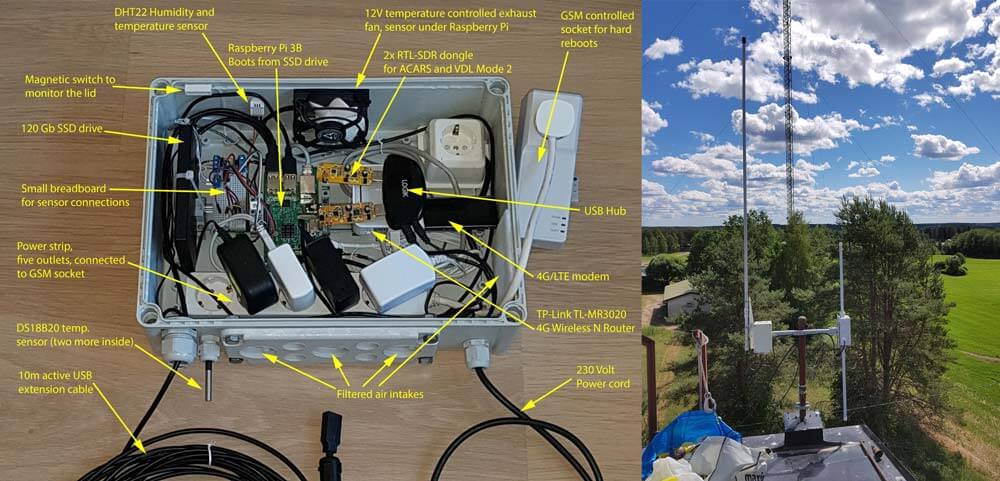
Setting up a remote ADS-B/ACARS/VDL2 and ATC Voice Monitoring Station

I have had a major interest in monitoring ADS-B signals for a number of years now. Longtime readers of the Milcom MP blog know that I post all my mil intercepts daily on here. It is a fascinating part of the mil monitoring hobby.


In the August 2019 TSM Milcom column (available at https://www.thespectrummonitor.com/), I cover the latest info on the January 1, 2020 implementation by the FAA of ADSB Out.

Now RTL-SDR.com has a nice article posted this morning on setting up a remote ADS-B, ACARS, VDL2 and ATC voice monitoring station using a LTE connection at https://www.rtl-sdr.com/a-remote-ads-b-acars-vdl2-and-air-traffic-control-voice-monitoring-station-with-lte-connection/.

A remote ADS-B, ACARS, VDL2 and Air Traffic Control Monitoring Station.

Wednesday, August 14, 2019

The Milcom Files - TSM Edition - Now Available on Amazon


As it always seems to be the case, recent world events continue to draw many radio listeners into their radio shacks to tune in on the action using their shortwave radios. software defined radios, and programmable VHF/UHF scanners. In many cases monitoring the HF/VHF/UHF radio spectrum offers the radio hobbyist an opportunity to hear what is really going on behind the scenes without the filters imposed by news media outlets.

Most radio listeners quickly learn that when the world has a crisis, disaster or tensions rise between countries, the military will usually be the first organization called upon to intervene. It pays to monitor military frequencies when international events heat up. Monitoring the military can offer some of the most productive and rewarding listening you will ever experience using your radio. The good news is you do not have to live close to a military installation to hear these communications. But you do need to learn where and when to tune in military communications.

Mention the words "Monitor the Military" and most radio hobbyists will immediately think of military air shows, military aircraft flybys or a whole a host of other activities that can be heard via radio frequencies. There is a big radio frequency spectrum out there to monitor if you know where to listen, you can eavesdrop on some of the most fascinating radio communications you will hear on a scanner or shortwave radio.

Larry Van Horn N5FPW, has been a radio hobbyist for more than 55 years listening to world events and monitoring military radio communications. He has spent over 33 years documenting activity in the military radio spectrum in his monthly Satellite, Utility World, and Milcom (Military Communications) columns in the pages of Monitoring Times, Satellite Times, and The Spectrum Monitor magazines. During this time, he has published a treasure trove of military communication monitoring information.

All his early MT columns have been published into two eBooks by his company Teak Publishing. The first two books in the Milcom Files series cover his columns published in Monitoring Times and have previously been published at Amazon. Book one of The Milcom Files covers the columns published from 1998 to 2006 and sells for US$5.99 at https://www.amazon.com/gp/product/B077NN7RQ5. Book Two covers the period 2007 to 2013 and sells for US$6.99 at https://www.amazon.com/gp/product/B077NQXH3C.

Teak Publishing is pleased to announce the release of their latest Kindle eBook -- The Milcom Files – The Spectrum Monitor edition by this Amazon bestselling author.

In 2017 Larry joined the Spectrum Monitor writing staff as he continues to chronicle military monitoring in his new monthly TSM Milcom column. Now for the first time, he is publishing all his monthly TSM Milcom columns at Amazon.

This eBook incorporates the first two years of his TSM Milcom columns written from September 2017 to the end of 2018. These columns have documented HF military frequencies (both foreign and US), and VHF/UHF spectrum military frequencies, mostly for U.S. based monitors. This third book in the series has more than 53,400 plus words, and over 200 pages of frequencies, call signs, monitoring tips, and how-to style articles.

Information includes military satellite frequencies, U.S. FAA Air Route Traffic Control Center frequencies, military base profiles, foreign military HF frequencies, airshow frequencies and flight demonstration teams, radio listening equipment, and antennas, and a lot more.

As an extra bonus to buyers of this new edition, they will get his exclusive 2019 TSM Air Show Monitoring Guide published in the March 2019 edition of Spectrum Monitor as part of this new eBook.

This The Milcom Files - TSM Milcom edition eBook is available now on Amazon at https://www.amazon.com/dp/B07RN1ZGLJ/ for US$4.99.

If you are interested in monitoring military communications and own a scanner, shortwave radio, or have an Internet connection for web software defined radio (SDR) monitoring, the Milcom Files TSM 2017-2018 is a must reference on your radio shack shelf.

This book is being released internationally. Amazon customers in the United Kingdom, Germany, France Spain, Italy, Japan, India, Canada, Brazil, Mexico and Australia can order the eBook from Amazon websites directly servicing these countries. All other countries can use the regular Amazon.com website.

You do not need to own a Kindle reader to read Amazon eBook publications. You can read any Kindle book with Amazon’s free reading apps. There are free Kindle reading apps for the Kindle Cloud Reader, Smartphones (iPhone, iTouch, Android, Windows Phone and Blackberry); computer platforms (Windows XP, Vista, 7 and 8 and Mac); Tablets (iPad, Android and Windows 8), and, of course, all the Kindle family of readers including the Kindle Fire series. A Kindle eBook allows you to buy your book once and read it anywhere. You can find additional details on these apps at this link on the Amazon website at www.amazon.com/gp/feature.html?ie=UTF8&docId=1000493771.

For additional information on this and other Teak Publishing radio hobby books monitor the company sponsored Internet blogs – The Military Monitoring Post (http://mt-milcom.blogspot.com/), The Btown Monitor Post (http://monitor-post.blogspot.com/) and The Shortwave Central (http://mt-shortwave.blogspot.com/) for the availability of additional eBooks that are currently in production.

Information on other publications by the author is available on the author’s page at Amazon http://www.amazon.com/-/e/B00G1QMO4C.

Friday, August 09, 2019

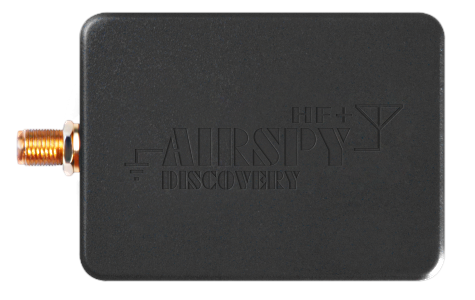
Airspy HF+ Discovery Coming to Btown

The first review is in and you can read it at https://www.fenu-radio.ch/Airspy_HF-Plus_Discovery-en.htm.

Airspy HF+ Discovery

I have one of the new Airspy HF+ Discovery SDRs on order and looking forward to putting through its paces. I will pin a "First Look" review in a future edition of The Spectrum Monitor (TSM) and a more in-depth review in the Winter edition of Teak Publishing's Global Radio Guide.

Will try to utilize several of the various software packages with this unit in the GRG review.

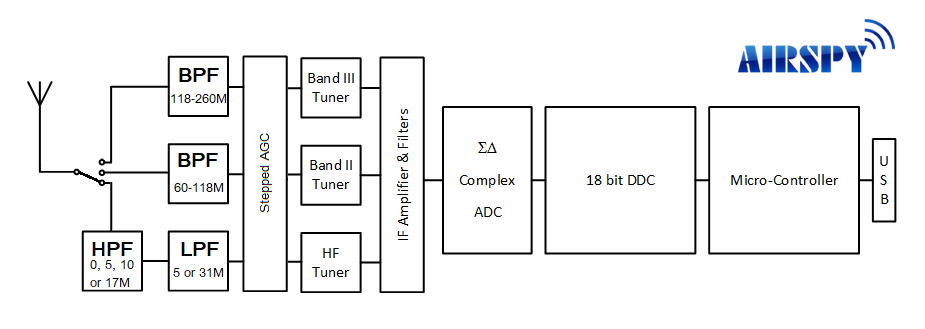
Airspy HF+ Discovery Architecture

In the meantime. I have been on the Airspy Online SDR net using a prototype based in Europe. So far, very impressed, especially its noise handling capability that will be welcomed here in Btown.


Saturday, May 25, 2019

The Milcom Files a #1 New Release and "Best Deal"


I am very pleased to report that our new The Milcom Files TSM 2017-2018 eBook at Amazon is a #1 New Release in Military Technology and a first for our company Teak Publishing, a Honey "Best Deal." US$5 gets you 16 months of my Milcom column published from Sep 2017 to Dec 2018 in the pages of The Spectrum Monitor. If you miss the old Monitoring Times or Popular Communications magazine, then you need the publication that replaced both of them The Spectrum Monitor. get your subscription at https://www.thespectrummonitor.com/. In the meantime get your Amazon "Best Deal,"  The Milcom Files Series 3, TSM 2017-2018 for just one Lincoln at https://www.amazon.com/dp/B07RN1ZGLJ/.

Friday, June 29, 2018

Monitoring the Hurricane Hunters and More During the Hurricane Season


The July issue of The Spectrum Monitor is going to be released today and my monthly Milcom column will have detailed coverage of frequencies and call signs used by the US Government/Military agencies to study, track and report on hurricanes and tropical systems. It includes the latest information on the US Air Force and NOAA Hurricane Hunters.

It has been almost a decade (2008 in Monitoring Times magazine) since my last article on this subject so I had a lot of updates and information to share.

Yesterday, Curt Phillips shared with the Tarheel Scanner Group a list of Amateur Radio frequencies you can monitor during the hurricane season. With possible tropical activity developing off the southeast US coast or Gulf of Mexico in the next few days, my TSM list and this ham radio frequency list from Southgate should be helpful to stay informed.


From Southgate

On the IARU Region 1 site Greg Mossop G0DUB reports on the amateur radio nets that may be active during the Atlantic Hurricane Season June 1 to November 30

So it is time to remind the wider Amateur Radio community that the following frequencies may be in use by nets in North and Central America to track and deal with the consequences of these severe weather events. Radio Amateurs in Region 2 play their part in gathering and distributing information for the weather and emergency services as they do every year.

Radio Amateurs in Region 1 are reminded it is possible to cause unintentional QRM to these nets so please listen carefully if operating near these frequencies:

Belize: 7.177MHz
Caribbean Emergency & Weather Nets (CEWN): 3.815 & 7.162 MHz
Caribbean Emergency: 14.185 MHz
Central America: 7.090 & 3.750 MHz
Cuba: 3.720, 3.740, 7.110 and 7.120 MHz
Eastern Caribbean Narrow Band Emergency System Net: 7.036 MHz USB (Olivia & MT63)
Guatemala: 7.075 MHz
Mexico: 3.690, 3.693(Alternative), 7.060 & 14.120 MHz
Nicaragua: Main Frequencies 3.798, 7.098, 14.298 MHz Alternate Frequencies 3.898, 7.108, 14.198MHz
Panama: 7.085 MHz
Republica Dominicana: 3.780, 7.065 (Main), 14.280 MHz

USA:
Maritime Mobile Service Net: 14.300 MHz
Salvation Army Team Emergency Radio Network (SATERN): 14.265 MHz
Hurricane Watch Net: 14.325 MHz (day) 7.268MHz (Night)
National Hurricane Centre ( WX4NHC ) 14.325MHz

Other local emergency communications groups may also activate if a hurricane approaches their area and those frequencies would be announced at the time.  Thanks to the National Societies and Emergency Communications Groups of IARU Region 2 for updating their frequency information.

IARU Region 1 http://iaru-r1.org/

http://www.southgatearc.org/news/2018/june/atlantic-hurricane-season-ham-radio-nets.htm#.WzT9i9JKjIU

You can get you copy of the July TSM issue that will include my column (electronic pdf format) from Spectrum Monitor for only $3 at https://www.thespectrummonitor.com/. Even better you can get a full year subscription to TSM for only US$24 and never miss any of my monthly Milcom columns. TSM is the only full spectrum radio hobby magazine in the US marketplace.

If you monitor radio you need a TSM subscription.


Wednesday, April 04, 2018

Annual Mlcom Air Show Monitoring Guide


I have received several emails asking about where to find the latest issue of my annual air show monitoring guide of frequencies and more. In case you missed it or you are looking for my Annual Air Show Monitoring Guide, look no further than the lasted issue of The Spectrum Monitor e-zine (March 2018). You can get your copy for $3.00 on the TSM website at https://www.thespectrummonitor.com/.

While you are at it get a monthly subscription to TSM and never miss a great issue or my new monthly Milcom column. You can see a complete index of all my TSM milcom columns on this blog at http://mt-milcom.blogspot.com/p/the-spectrum-monitor-e-zine-milcom.html.

Don't miss a single issue of TSM or you will miss a lot!


Saturday, February 27, 2016

The Spectrum Monitor Review of the International Call Sign Handbook, 4th Edition

Blog Editor Note: This is a review of my new e-book that appeared in the May edition of The Spectrum Monitor e-zine. The Spectrum Monitor ® is published monthly by Ken Reitz KS4ZR at 1403 Holland Creek Road, Louisa, Virginia 23093. You can order your subscription to TSM at http://www.thespectrummonitor.com/.

New International Call Sign Handbook: Government and Military EditionBy Larry Van Horn N5FPW
Teak Publishing $6.99
Fourth Edition Kindle e-book 608 pages
Reviewed by Ken Reitz KS4ZR

Anyone who had read Monitoring Times magazine over the last few decades will be familiar with the topic of government and military radio call signs that appeared every month in the Milcom column, written by Larry Van Horn N5FPW. While MT ceased publication with the December 2013 issue, Larry maintained his interest in this subject and has just released the massive fourth edition of the International Call Sign Handbook (Government/Military Edition).

And, if you’ve been reading Hugh Stegman and Mike Chace-Ortiz’s columns in TSM, you’ll know that there are hundreds of frequencies on which you might hear any of these call signs. You can’t tell the players without a scorecard and Larry’s just published the definitive call sign scorecard.

At more than 600 pages, he has left nothing out. And, if you are not familiar with this fascinating subject, he includes a thorough tutorial on the subject to bring you up to speed. Call signs for every branch of the US military, known and arcane federal agencies, and many nongovernmental organizations are also listed. He has also included international call signs for other countries.

You’ll also learn how to set up your listening post to be able to monitor Mode-S ADS/B, a data stream that is sent automatically by most civilian and military aircraft, that IDs each craft as it comes within communications reach of your receiver; a hobby within the air monitoring hobby. Larry includes active links to all the websites you’ll need to go to for software downloads and detailed instructions on tuning in.

It’s difficult to emphasize what a bargain this book is: $6.99 (that was the cost of one issue of Monitoring Times, if you could find it on the bookstore shelves!) for 600 pages of military and federal call signs (in its last year the entire MT magazine was only 62 pages each month and the Milcom column was only two pages each month!).
This book has an active Table of Contents that makes finding your way around in this enormous publication a breeze.

The International Call Sign Handbook is available only as a Kindle e-publication, but you don’t need a Kindle product, iPad, or smartphone to read this publication. Any desktop or laptop computer can display any Kindle e-book. Just download the free app for your device, order the book and start reading. Go here to find out more about Kindle apps: https://www.amazon.com/gp/digital/fiona/kcp-landing-page?ie=UTF8&ref_=kcp_pc_mkt_lnd

Go here to buy or read a sample of this book: http://www.amazon.com/International-Call-Sign-Handbook-Government-ebook/dp/B00VV7NR1U/ref=zg_bs_tab_pd_bsnr_2

And, while you’re at it, check out the other publications released recently by Teak Publishing (also found on the TSM Bookshelf):

Teak Publishing 2015 Air Show Guide (By Larry Van Horn)
International Shortwave Broadcast Guide (By Gayle Van Horn)

QSLing the World (By Gayle Van Horn)
And, don’t forget Larry and Gayle’s excellent blogs for up to date information on shortwave listening and military communications:

Milcom Monitoring Post http://mt-milcom.blogspot.com and Shortwave Central http://mt-shortwave.blogspot.com

Monday, October 14, 2013

The Spectrum Monitor Website Has Gone Live!

We just received this press release from the managing editor of The Spectrum Monitor magazine.
 
The Spectrum Monitor is a monthly electronic magazine that delivers full-spectrum coverage of amateur radio, longwave and shortwave listening, public service scanning, AM/FM/TV broadcasting, satellites, WiFi radio, vintage radio and more. The Spectrum Monitor is a follow-on publication to Monitoring Times and is not associated with Grove Enterprises or Bob Grove. TSM’s columnists and feature writers come directly from the pages of Monitoring Times, bringing readers an in-depth look at every segment of the radio frequency spectrum.
     Each month TSM readers will get reviews of the latest receivers, antennas, software and accessories needed to explore the spectrum, with tips for beginners and advanced hobbyists alike.
     The Spectrum Monitor is available in PDF format that can be read worldwide on any desktop, laptop, iPad®, Kindle® Fire, or other device capable of opening a PDF file. The January 2014 issue will be available for download from http://www.thespectrummonitor.com/ on December 15, 2013. Charter subscribers can sign up now and save!

     Special charter subscriber rate: $20 for twelve issues. After December 15, 2013, annual rate: $24 for twelve issues. Individual monthly issues will be available for $3 each. You can sign up on the magazine's secure website to become a charter subscriber. Mastercard™, VISA™ and Discover™ cards are accepted. Outside the U.S.? Contact editor@thespectrummonitor.com for subscription instructions.
 
The website is now gone live and can be viewed at the URL above.