Showing posts with label Northrup Grumman. Show all posts

Thursday, January 02, 2014

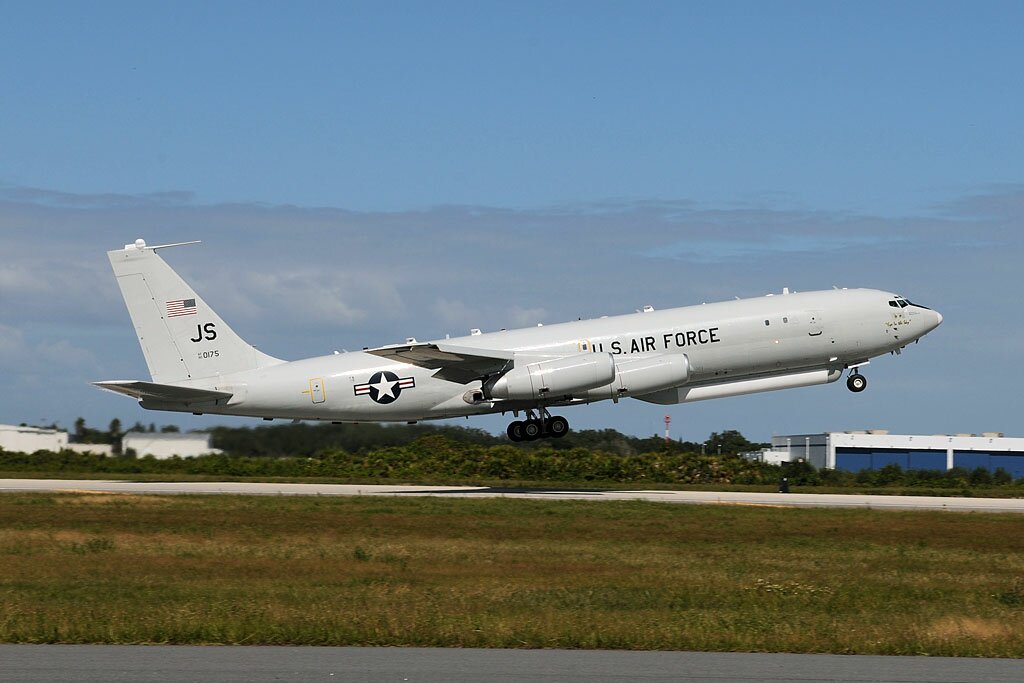
E-8C JStars Testbed Retired


AirForces Daily is reporting that Northrup Grumman has retired their E-8C testbed aircraft Serial number 90-0175.

Friday, December 06, 2013

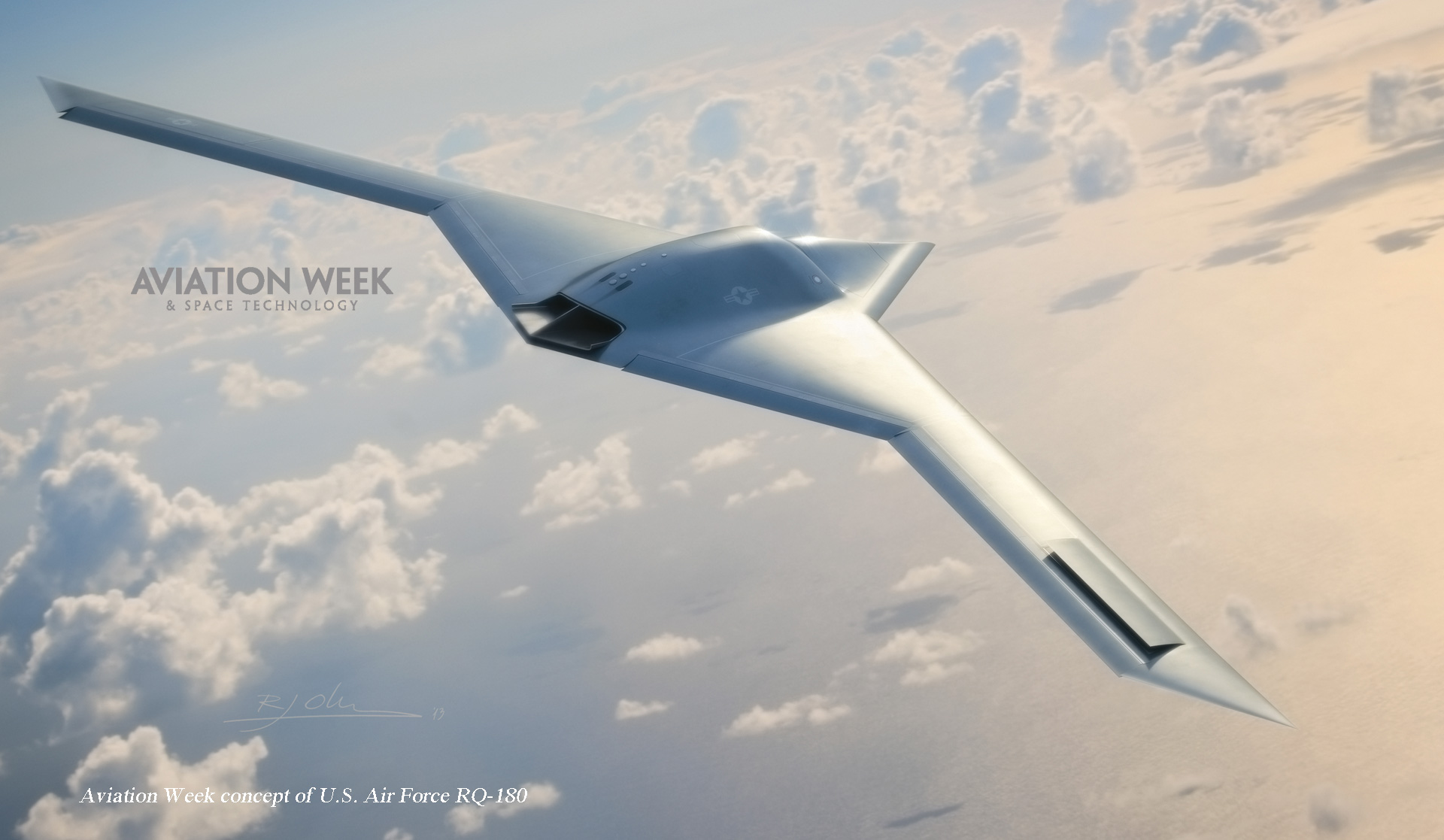
AV Week reveal new large flying wing the RQ180


By Amy Butler and Bill Sweetman, sUAS News

A large, classified unmanned aircraft developed by Northrop Grumman is now flying—and it demonstrates a major advance in combining stealth and aerodynamic efficiency. Defense and intelligence officials say the secret unmanned aerial system (UAS), designed for intelligence, surveillance and reconnaissance (ISR) missions, is scheduled to enter production for the U.S. Air Force and could be operational by 2015.

Funded through the Air Force’s classified budget, the program to build this new UAS, dubbed the RQ-180, was awarded to Northrop Grumman after a competition that included Boeing and Lockheed Martin. The aircraft will conduct the penetrating ISR mission that has been left unaddressed, and under wide debate, since retirement of the Lockheed SR-71 in 1998.

Click here to read the rest of this story on the uUAS website

Original story on the Av Week website

Tuesday, June 26, 2012

Northrop Grumman Awarded Contract to Modify E-6Bs

SAN DIEGO (GlobeNewswire via COMTEX) -- The U.S. Navy has awarded Northrop Grumman Corporation a $44.3 million contract to integrate high-speed, secure communications and networking systems on an E-6B Mercury aircraft, part of the Take Charge and Move Out (TACAMO) strategic communications relay mission.

Navy E-6B TACAMO aircraft provide survivable and reliable airborne command, control and communications between the president of the United States, secretary of Defense, and U.S. strategic and nonstrategic forces.

With the Block II Modification, the E-6B aircraft will be able to connect to secure U.S. Department of Defense networks at high data rates while still in flight. The upgrade will enable users on board the aircraft to access mission-essential, near-real-time information from worldwide sources without impacting the operational performance of the aircraft.

"Northrop Grumman's innovative approach to integration allows the government to rapidly field emerging technologies for vital defense missions such as TACAMO within existing budget constraints," said Claude Hashem, vice president of network communications systems for Northrop Grumman Information Systems. "The Block II Modification will provide the E-6B community with superior networking capability that enables a significant increase in operational capability."

Northrop Grumman will design and produce networking and communications systems, first integrating the systems into the E-6B Systems Integration Laboratory and then on a single E-6B aircraft. Under the contract, awarded by the Naval Air Systems Command, Northrop Grumman will also provide testing, logistics and training to support operational fielding.

The Navy intends to field the enhanced capability to the entire fleet of E-6B aircraft through a follow-on contract. Navy E-6B aircraft are used to conduct both the TACAMO and U.S. Strategic Command Airborne Command Post missions.

SOURCE: Northrop Grumman Corp.

Wednesday, April 23, 2008

Navy Awards Northrop Grumman Unmanned Aircraft System Contract


The Department of the Navy announced today that the Northrop Grumman Corp. has been awarded the system development and Demonstration (SDD) contract for the Broad Area Maritime Surveillance Unmanned Aircraft System (BAMS UAS).

The BAMS UAS contract award is the culmination of a year-long source selection process since the Navy received industry proposals in May 2007. The $1.16 billion cost-plus-award-fee contract is to develop a persistent maritime intelligence, surveillance and reconnaissance (ISR) data collection and dissemination capability that fulfills the maritime war fighter's requirement for continuous battle-space awareness. The BAMS UAS will be developed using Northrop Grumman's RQ-4N platform.

"This announcement represents the Navy's largest investment in unmanned aircraft systems to date. The extraordinary efforts leading to this announcement have helped the BAMS UAS program begin to develop a persistent ISR capability never before available to the fleet," said Capt. Bob Dishman, program manager for the BAMS UAS program. "This is a significant milestone for the BAMS UAS program, concluding a deliberate and meticulous source selection process that adhered to stringent Federal Acquisition Regulation and Naval Air System Command source selection processes and documentation requirements."

The BAMS UAS is an integral part of the maritime patrol and reconnaissance Force. As an adjunct to the P-8A Multi-Mission Maritime Aircraft, the BAMS UAS will provide persistent maritime and littoral intelligence, surveillance and reconnaissance to joint forces and fleet commanders worldwide. This capability will enhance battle-space awareness, improve force projection capabilities and protect and defend the fleet and the nation.

Tuesday, March 04, 2008

Tanker contract award announced


WASHINGTON (AFPN) -- Secretary of the Air Force Michael W. Wynne and Vice Chief of Staff of the Air Force Gen. Duncan J. McNabb announced the selection of Northrop Grumman as the winner of the KC-X competition for development and procurement of up to 179 tanker aircraft for approximately $35 billion.

The initial contract for the newly named KC-45 is for the system design and development of four test aircraft for $1.5 billion. This contract also includes five production options targeted for 64 aircraft at $10.6 billion.

"The tanker is the number one procurement priority for us right now," General McNabb said. "Buying the new KC-45A is a major step forward and another demonstration of our commitment to recapitalizing our Eisenhower-era inventory of these critical national assets. Today is not just important for the Air Force, however. It's important for the entire joint military team, and important for our coalition partners as well. The KC-45A will revolutionize our ability to employ tankers and will ensure the Air Force's future ability to provide our nation with truly Global Vigilance, Reach, and Power.

"It is the first step in our critical commitment to recapitalize our aging fleet to move, supply and position assets anywhere. In this global Air Force business, the critical element for air bridge, global Intelligence, surveillance and reconnaissance and global strike is the tanker," he said.

The KC-45A will provide significantly greater air refueling capabilities than the current fleet of Eisenhower-era KC-135 Stratotankers it will begin replacing. For example, it will be able to refuel Air Force and Navy aircraft on every flight. These aircraft have different systems for receiving fuel and today, KC-135s must be set up for one or the other before takeoff.

The KC-45A will be equipped for both systems on every flight and also will have connections for wing pods. When wing pods are installed, it can refuel two probe-equipped aircraft, such as those flown by Navy and many allied aircrews, at the same time. The KC-45A can even be refueled in flight by other tankers.

The KC-45A also will have defensive systems that allow it to go into dangerous environments that tanker aircrews currently have to avoid. It will also supplement the airlift fleet by carrying cargo, passengers and medical patients in a secondary role.

The KC-X source selection used a "best value" determination to select a winner based on five factors: mission capability, proposal risk, past performance, cost/price and an integrated fleet air refueling assessment -- performance in a simulated war scenario. These five factors were developed after consulting with industry and were finalized prior to starting the competition. Considered together, these grading criteria ensured the Air Force maximized the capability delivered to the warfighter while optimizing the taxpayers' investment.

Air Force officials followed a carefully structured process, designed to provide transparency, maintain integrity and promote fair competition. Air Force officials met with offerors on numerous occasions to gain a thorough understanding of their proposals and provide feedback on their strengths and weaknesses. Officials also provided insight into government cost estimates throughout the process instead of waiting until the post-decision debrief. The competitors indicated they've been very pleased with the degree of communication.

The evaluation team comprised experts covering a broad spectrum of specialties from acquisition to operations and was hand-picked from across the Air Force and other government agencies.

As part of the process, Air Force officials will now provide a written notice to both the selected and not-selected and offer to provide a debrief on their bid proposals. To maintain the integrity of that process, officials will be unable to provide additional information about the proposals and contract.

"Today's announcement is the culmination of years of tireless work and attention to detail by our acquisition professionals and source selection team, who have been committed to maintaining integrity, providing transparency and promoting a fair competition for this critical aircraft program," Secretary Wynne said. "Through these efforts, we believe we will provide a higher-value resource to the warfighter and the taxpayer."
Friday, November 02, 2007

Northrup Grumman to Compete for USCG NAIS Contract

Northrop Grumman Corporation announced October 29 at the U.S. Coast Guard Innovation Expo in New Orleans its intent to lead a team that will compete to design, integrate, install and test the Coast Guard's Nationwide Automatic Identification System (NAIS).

NAIS will be a two-way maritime digital communication system, which will continually transmit and receive voiceless exchange of vessel data, including vessel identity, position, speed, course, destination and other data of critical interest for navigation safety, marine mobility and maritime security. The program will focus on improving maritime security, marine and navigational safety, search and rescue, and environmental protection services. In addition, data collected by NAIS will be combined with other government intelligence and surveillance data to form a holistic view of maritime situational awareness, in part by identifying vessels still hundreds of miles offshore.

"Northrop Grumman has assembled a highly skilled and experienced team to address the entire spectrum of potential NAIS requirements, with each team member bringing to the table critical or unique capabilities to meet the Coast Guard's needs," said Mike Twyman, vice president of Northrop Grumman Mission Systems sector's Command, Control, Communications and Intelligence Systems operating unit. "Our team has been preparing for NAIS for nearly three years, and we look forward to providing the Coast Guard with the capabilities needed to reach its vision."

The Northrop Grumman team includes Allied Technology Group, Inc., Rockville, Md.; CACI International, Inc., Arlington, Va.; Washington Group International, Inc., Boise, Idaho; ICAN, Inc., Dallas; True Heading AB, Stockholm, Sweden; Broadpoint, Inc., New Orleans; and GTSI Corp., Chantilly, Va.