Showing posts with label US Marine Corps. Show all posts

Wednesday, June 12, 2019

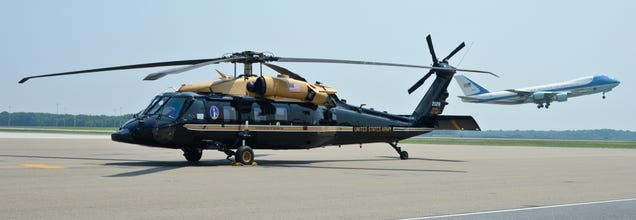
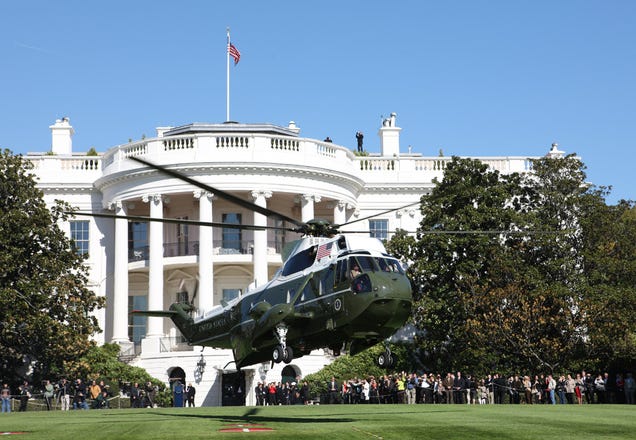
Sikorsky gets contract to build six presidential helicopters

Navaltoday.com is reporting that Sikorsky has received a $542 million contract to build six VH-92A helicopters for the presidential lift mission.

“The team has efficiently leveraged a proven platform with cutting edge government mission systems for rapid agile development of the next helicopters to fly Presidential missions,” said James F. Geurts, assistant secretary of the Navy for research, development, and acquisition.
The VH-92A is expected to achieve initial operational capability in late 2020. It will increase performance and payload over the current presidential helicopters, VH-3D and VH-60N, that have been serving over 40 years.s

Tuesday, October 02, 2018

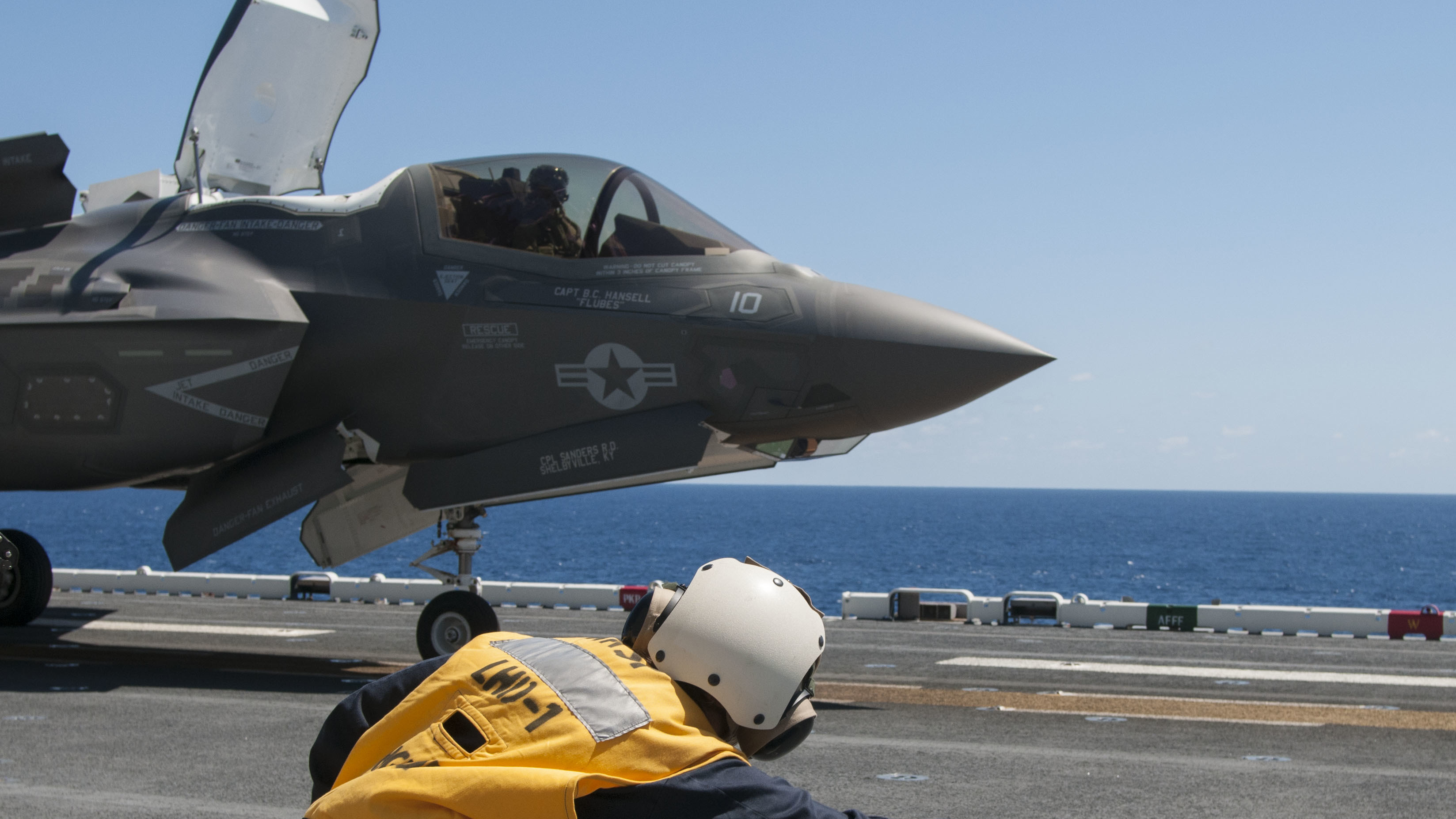
F-35B conducts first combat strike from USS Essex

NavalToday.com is reporting that in a milestone for the F-35 Joint Strike Fighter program, a Marine Corps F-35B flying from amphibious assault ship USS Essex carried out its first combat strike.

The strike took place on September 27 in the US Central Command area of responsibility in support of Operation Freedom’s Sentinel in Afghanistan.

During this mission, the F-35B conducted an air strike in support of ground clearance operations, and the strike was deemed successful by the ground force commander.''

“The F-35B is a significant enhancement in theater amphibious and air warfighting capability, operational flexibility, and tactical supremacy,” said Vice Adm. Scott Stearney, commander, US Naval Forces Central Command. “As part of the Essex Amphibious Ready Group, this platform supports operations on the ground from international waters, all while enabling maritime superiority that enhances stability and security.”

The 13th Marine Expeditionary Unit (MEU) is the first combat-deployed MEU to replace the AV-8B Harrier with the F35B Lightning II. The F-35Bs from Marine Fighter Attack Squadron 211 are currently embarked on the Wasp-class amphibious assault ship USS Essex (LHD 2) as part of Essex Amphibious Ready Group.

Friday, June 29, 2018

U.S. Marine Corps moves forward with F-35 transition

By Courtesy Story, Headquarters Marine Corps

Rear Adm. Cynthia Thebaud, commander of Expeditionary Strike Group Two takes the shooter stance while she launches an F-35B Lightning II off the flight deck of USS Wasp, on the Atlantic Ocean, May 26, 2015. Wasp, with VMFA-121 and VMFAT-501 embarked, is underway conducting the first phase of operational testing for the F-35B aircraft, which will evaluate the full spectrum of F-35B measures of suitability and effectiveness in an at-sea environment.


Marine Fighter Attack Squadron 121 (VMFA-121), based in Yuma, Arizona, was the first squadron in military history to become operational with an F-35 variant after completing years of developmental and operational testing, followed by an intensive Operational Readiness Inspection (ORI). This ORI, which included a capstone surge day, demonstrated that the aircraft and squadron have successfully met all IOC criteria.

"Marine Corps IOC for the F-35B is a significant accomplishment, but we will not stop to celebrate. In addition to aggressively continuing to mature this platform, we will further refine the operational concepts that allow us to fully leverage this transformational capability,” said Gen. Joseph Dunford in a July 2015 statement, when he was serving as Commandant of the Marine Corps. "It is capable of conducting close air support, offensive and defensive counter air, air interdiction, assault support escort and armed reconnaissance as part of a Marine Air Ground Task Force, or in support of the Joint Force."

Dunford added that the F-35B's ability to conduct operations from expeditionary airstrips and sea-based carriers provides our nation and its allies with our first 5th generation strike fighter, which will transform the way the Navy-Marine Corps team fights as a Marine Air-Ground Task Force

The Marine Corps has a program of record to procure 353 F-35Bs and 67 F-35Cs, for a total of 420 aircraft. As the future of Marine Corps tactical aviation, the F-35 will eventually replace three legacy platforms: the AV-8B Harrier, the F/A-18 Hornet, and the EA-6B Prowler. The transition is scheduled to be complete for active duty

Marine Corps aviation squadrons in fiscal year 2031. It is not a one-for-one swap. Because of the enhanced capabilities of the F-35, this strike fighter will replace a significantly greater number of legacy aircraft.

“The performance of VMFA-121, and the entire Marine Corps F-35B team over the past several years, has reinforced my feeling that we not only have great Marines in this program, but that we are giving them the right aircraft,” said Lt. Gen. Jon Davis, Deputy Commandant for Aviation. 

Harrier squadrons will gradually transition to F-35 squadrons over the next 11 years. The planned sundown for the AV-8B is in 2026. This is, however, subject to review, assessment and final decision in 2019.

Marine Corps Hornet squadrons will gradually transition to F-35 squadrons over the next fifteen years. The planned sundown for the Marine Corps F/A-18 is in 2030. As with the Harrier, this is subject to review, assessment and final decision in 2019.

The four EA-6B squadrons at Cherry Point, North Carolina will begin retiring their Prowlers at the rate of one squadron per year, beginning in 2016.

“We intend to extract maximum value and service life out of our Harriers, Hornets and Prowlers,” added Davis.

The U.S. Marine Corps has trained and qualified more than 50 Marine F-35B pilots and certified about 500 maintenance personnel to assume autonomous, organic-level maintenance support for the F-35B.

VMFA-121's recent operational status will be followed by Marine Attack Squadron 211 (VMA-211), an AV-8B squadron, which is scheduled to receive their first F-35Bs in 2016, and become fully operational within two years. In 2018, VMFA-122, an F/A-18 squadron in Beaufort, South Carolina, will begin conducting its transition to the F-35B. Another Hornet squadron, VMFA-115, will start transitioning to the F-35 in early 2020. VMA-311 is scheduled to follow suit later that year.

The F-35’s fifth-generation air superiority preserves U.S. national security and ensures optimum international security across the globe as integrated coalition operations enable the U.S., United Kingdom, Italy, the Netherlands, Turkey, Canada, Australia, Denmark, Norway, Japan, Israel and South Korea to fight shoulder-to-shoulder with an unrivaled first-look, first-shot, first-kill capability.

Monday, August 31, 2015

These Elite Military Helicopter Units Fly Washington's Power Players

Washington D.C. is a fast moving place, and for those in the very top echelons of power, both time and security trump cost efficiency when it comes to transportation. The Department Of Defense has trio of helicopter squadrons ready to fly these VIPs around the region, and to safety should something catastrophic ever occur.


The three squadrons covered are the US Army 12th Aviation Battalion, the US Air Force 1st Helicopter Squadron, and the US Marine Corps HMX-1 VIP Transport Squadron.


Excellent article written by Tyler Rogoway at http://foxtrotalpha.jalopnik.com/these-elite-military-helicopter-units-fly-washingtons-p-1704260996

Wednesday, October 01, 2014

Breaking News: America will deploy more than 2300 Marines in the Middle East

The MV-22 is well suited for the crisis response task force as it can carry around 24 combat-equipped troops, similar to most assault helicopters, but is much faster and has far greater range. Source: Bell-Boeing and Jane's Defense Weekly website
The National Iraqi News Agency is reporting the following this morning on their website:

BAGHDAD / NINA / Pentagon announced its intention to deploy a rapid reaction force of the Marine Corps in the Middle East, will not be linked to ongoing operations in Iraq.

Pentagon spokesman, John Kirby said in a press statement that "the Marine Corps / Marines / intends to deploy rapid reaction force of 2300 elements in the Middle East, with several aircrafts, adding that its mission is to intervene at the outbreak of crises in the region." / End

In a related story on the Jane's Defense Weekly website headlined:-

USMC stands up Middle East response force by Daniel Wasserbly, Washington, DC - IHS Jane's Defense Weekly

The US Marine Corps (USMC) has established a new special purpose task force for US Central Command (CENTCOM) that includes 2,300 marines and aircraft based throughout the region, Pentagon spokesman Rear Admiral John Kirby announced on 30 September.

Special Marine Air Ground Task Force Central Command (SPMAGTF-CENT) is meant to provide a long-range rapid reaction force to serve the CENTCOM commander, and is based on a smaller SPMAGTF-Crisis Response (SPMAGTF-CR) that was created in Moron, Spain, last year to cover Africa.

Rest of the story at http://www.janes.com/article/43882/usmc-stands-up-middle-east-response-force

Friday, October 04, 2013

F/A-18 Hornets land at Lajes Field

U.S. Air Force Maj. Joseph Okasinski, 65th Operations Support Squadron deputy commander, and Lt. Col. Richard Steele, 65th OSS commander, walk to greet U.S. Marine Corps F/A-18 Hornet pilots Oct. 2, 2013, at Lajes Field, Azores. The pilots are from Marine Fighter Attack Squadron 115 and are on their way home to Marine Corps Air Station, Beaufort, S.C. (U.S. Air Force photo by Guido Melo/Released)
U.S. Marine Corps F/A-18 Hornets from Marine Fighter Attack Squadron 115 landed Oct. 2, 2013, at Lajes Field, Azores. The Marines will take crew rest and refuel before they depart to their home station at Marine Corps Air Station, Beaufort, S.C.

Monday, August 05, 2013

Boxer Becomes First West Coast Ship to Deploy with Osprey

By Mass Communication Specialist 2nd Class Kenan O'Connor / Boxer Amphibious Ready Group Public Affairs
PACIFIC OCEAN (NNS) -- Sailors and Marines aboard amphibious assault ship USS Boxer (LHD 4) will become the first West Coast crew to deploy with the MV-22 Osprey this fall.

Marine Medium Tiltrotor Squadron (VMM) 166 (Reinforced) is embarked on Boxer as a part of the 13th Marine Expeditionary Unit (MEU), and will deploy with a complement of 12 Ospreys.

The Osprey is intended to replace the CH-46E Sea Knight, the platform the Marine Corps has used since the Vietnam War. The Osprey can carry more combat troops and has a further flight range than the Sea Knight.

"The incorporation of the MV-22 Osprey greatly expands our area of influence, and increases the speed with which the Marine Air Ground Task Force (MAGTF) Commander is able to respond to crises and mass forces on the Objective," said Maj. Frank Garner, 13th MEU air officer. "The unique flight capabilities of the Osprey provides unprecedented advantage to warfighters, allowing Marine Expeditionary Unit (MEU) Mission Essential Tasks (METs) to be accomplished more efficiently, while enhancing Marine Expeditionary Unit/Amphibious Ready Group (MEU/ARG) relevance in Combatant Commander (COCOM) Theaters," he added.

The Osprey is a tilt rotor aircraft flown by the U.S. Marine Corps, which utilizes vertical short takeoff and landing (V/STOL) capabilities. Until recently, the Osprey has seen limited use aboard large deck ships due to its unique design and the modifications required for large deck amphibious ships.

Although Boxer will be the first West Coast ship to deploy with Ospreys, the USS Bataan (LHD 5), stationed in Norfolk, became the first ship overall to deploy with Ospreys in an amphibious environment in 2009.

The crew members aboard Boxer and VMM-166 have trained in several technical areas, such as airframes, hydraulics and avionics, electrical systems, maintenance control to prepare for Boxers upcoming deployment.

"The biggest challenge is the amount of training that we had to accomplish," said Cpl. Neal Helfrey, a flight line mechanic attached to VMM-166. "Half the squadron hasn't deployed before, so the most difficult thing was putting all this training into the timeframe allotted."

The Boxer Amphibious Ready Group (ARG) is underway off the coast of Southern California completing a Certification Exercise (CERTEX). CERTEX is the final evaluation of the 13th MEU and Boxer ARG prior to their Fall deployment and is intended to certify their readiness to conduct integrated missions across the full spectrum of military operations.

Thursday, September 13, 2012

Marine FAST Force to Libya

WASHINGTON — WASHINGTON - Some 50 U.S. Marines headed to Libya on Wednesday to reinforce security at U.S. diplomatic facilities in the aftermath of an attack in the eastern city of Benghazi that killed the U.S. ambassador and three other Americans, officials said.

The Marines are members of an elite group known as a Fleet Antiterrorism Security Team, or FAST, whose role is to respond on short notice to terrorism threats and to reinforce security at U.S. embassies. They operate worldwide. The contingent that was dispatched to Libya was based in Spain.

The officials who disclosed the plan to send the Marines spoke on condition of anonymity because they were not authorized to speak publicly. The Marines were headed initially to the U.S. embassy in Tripoli, not to Benghazi.

Several officials said the U.S. military was making no other moves to deploy troops, ships or aircraft in response to Tuesday’s attack. A second Marine FAST element was standing by in Spain but had no orders to move, officials said.

U.S. embassies, particularly in major countries and in unstable or less secure nations, usually have a resident contingent of Marine security guards. Early indications were that there were not at the U.S. consulate in Benghazi. A consulate is a branch office in major cities outside the capital. These guards work under the supervision of the senior diplomatic officer at an embassy.

The main role of Marine security guards is to protect classified national security documents, according to the website of the Marine Corps Embassy Security Group, which administers the security guard mission from a Marine base in Virginia. Their secondary role is to protect U.S. citizens and U.S. government property in the event of an emergency.

The Marines began their security guard mission in 1948. They are trained at the Marine Security Guard School.

In rare cases, the Marines send a Fleet Antiterrorism Security Team, or a portion of the team, to reinforce security at embassies. They were sent to Africa, for example, in response to the 1998 terrorist attacks on the U.S. embassies in Kenya and Tanzania. A FAST group also provided security aboard a Navy hospital ship in New York following the 9/11 attacks.

Thursday, August 23, 2012

Bonhomme Richard ARG Embarks 31st Marine Expeditionary Unit

By Mass Communication Specialist 2nd Class Michael Russell, Amphibious Squadron 11 Public Affairs
OKINAWA, Japan (NNS) -- More than 2,200 Marines assigned to the 31st Marine Expeditionary Unit (MEU) embarked aboard the Bonhomme Richard Amphibious Ready Group (ARG) at White Beach Naval Facility Aug. 20.

The 31st MEU embarked aboard the ARG to conduct amphibious operations in the Western Pacific aboard amphibious assault ship USS Bonhomme Richard (LHD 6), amphibious dock landing ship USS Tortuga (LSD 46) and amphibious transport dock USS Denver (LPD 9).

"Bringing the Marines and Navy together to conduct this training is very benificial," said Cmdr. John Barnett, commanding officer of amphibious dock landing ship USS Tortuga (LSD 46). "We will deploy to various spots around the Western Pacific to do bilateral and multilateral training to help develop relationships with our counterpart navies and Marine Corps throughout the area of responsibility."

The MEU is comprised of a logistics combat element, an aviation combat element, command element and ground combat element.

Upon arrival of the 31st MEU aboard Bonhomme Richard ARG, all of the required assets needed to conduct amphibious assaults, raids, noncombatant evacuations and humanitarian assistance are in place.

Planning before an embarkation is crucial for both the Navy and the Marines.

"I think pre-planning is the most important part of an embarkation," said Lt. Douglas McIntosh, Amphibious Squadron (PHIBRON) 11. "During an embarkation, there are thousands of individual moving parts that must be sequenced properly or the embarkation can go from a quick evolution to being very chaotic."

Some of the training evolutions that will take place aboard Bonhomme Richard, Tortuga and Denver include amphibious integration exercise (AIT), certification exercise (CERTEX) and amphibious landing exercise (PHIBLEX).

AIT is a training exercise designed to strengthen the MEU's amphibious assault capabilities. CERTEX is an exercise to test the Marines amphibious assault skills that they learned during AIT. PHIBLEX is an annual joint exercise conducted by the Navy and Marine Corps with the Republic of the Philippines navy and Marine Corps.

"Marines are definitely living up to their name," said Gunnery Sgt. Antonio Serrano, PHIBRON 11, combat cargo assistant. "Marines are supposed to fight from land, air and sea. Jointly, Marines and the U.S. Navy are able to execute amphibious operations via helicopters or landing craft to provide rapid response to any country."

The 31st MEU, ARG, PHIBRON 11 and Naval Beach Unit 7 all team up to create one of the most flexible forces in the Asia-Pacific, which is capable of accomplishing numerous missions anywhere in the world.

The Bonhomme Richard ARG is currently operating in the 7th Fleet Area of Operation and reports to the Commander, Amphibious Force 7th Fleet, Rear Adm. Jeffrey A. Harley, who is headquartered in Okinawa, Japan.

Friday, August 17, 2012

15th MEU, Peleliu ARG Set Sail for CERTEX

By Cpl. John Robbart III, 15th Marine Expeditionary Unit Public Affairs

SAN DIEGO (NNS) -- After more than eight months of rigorous training in preparation for a deployment across the Western Pacific, the 15th Marine Expeditionary Unit and the Peleliu Amphibious Ready Group are beginning the final certification exercise (CERTEX) Aug 15.

The MEU already conducted two other at-sea periods that focused on skill sets pertaining to the missions a MEU may face while forward deployed. However, CERTEX is different than previous exercises. Marines and Sailors will not know what to expect and will have to react to scenarios quickly using the Marine Corps' Rapid Response Planning Process to prepare for the missions the unit will execute.

"As we enter the final stage of our training cycle, the MEU and ARG are fully prepared to respond as America's 911-force in readiness," said Col. Scott D. Campbell, commanding officer, 15th MEU. "The training up to this point has been realistic, purposeful and very demanding on our Marines and Sailors. They have proven themselves time and again, and they are ready to complete the certification process and move forward to answer our nation's call."

The two-week evolution will also be the final iteration the blue-green team will conduct together before their deployment this fall. During the past few months, the Peleliu Amphibious Ready Group and the 15th MEU have formed a cohesive unit capable of mission planning within a constrained six-hour requirement.

"The Peleliu Amphibious Ready Group has rigorously trained for the many missions that we could face on deployment," said Capt. Mark Sakaguchi, commander, Amphibious Squadron 3. "The partnership and skills our blue-green team have developed ensure the Peleliu ARG and 15th MEU are ready to operate forward over a wide range of military operations."

In addition to an unknown training schedule, the MEU staff will also be accompanied by counterparts from other MEUs. They will assess the 15th MEU's capabilities and prepare for future deployments through observation.

CERTEX qualifies the MEU to deploy, and it is also another chance for the Marines and Sailors to get more repetitions of training before conducting actual missions.

"Repetitions equal proficiency," said Campbell. "The more opportunities we have to practice what we do, the more it will make us a stronger, more formidable force."

The MEU is embarked on the Peleliu ARG that consists of amphibious assault ship USS Peleliu (LHA 5), amphibious transport dock USS Green Bay (LPD 20) and amphibious dock landing ship USS Rushmore (LSD 47).

By the end of CERTEX, the commanding general of I Marine Expeditionary Force, Lt. Gen. Thomas D. Waldhauser, is expected to give the approval for the 15th MEU to conduct its deployment to the Western Pacific.

Wednesday, August 15, 2012

Pentagon Eyes New Air Force One

The Aero News Network is reporting this morning that the U.S. Air Force is looking at replacing the Boeing 747-200B "VC-25A" aircraft which serve as Air Force One when the President is on board. The acquisition program was authorized late last week by Undersecretary of Defense for Acquisition Frank Kendall. The authorization also reportedly includes new Marine One helicopters as well.

Bloomberg Business Week reports that the current VC-25A aircraft entered into service in 1990 with an expected service life of 30 years. That would put them at the end of their service in another 8 years.

According to a memo leaked by a source who wished to remain anonymous, the program will first focus on a market analysis of performance requirements. That information will be reviewed by the joint chiefs, and will form the basis for a decision whether to sole-source from Boeing, or open a competitive bid.

The plan outlined by Kendall looks for an RFP to be submitted to the aircraft industry in 2015. The contract for the new AF-1 could be let as early as 2016.

The Pentagon will also look into the feasibility of replacing the helicopters designated "Marine One" when the President is on board. The Marine Corps currently flies VH-3D Sea Kings or the newer, smaller VH-60N "WhiteHawk" helicopters when transporting the President. A contract for a new VH-71 helicopter was terminated in 2009 prior to President Obama's inauguration by then-Defense-Secretary Robert Gates due to cost overruns and delays. In the memo outlining the AF-1 replacement strategy, Kendall also calls for an RFP to be issued to the helicopter industry in 2013, with a target date for a contract to be in place by 2014 for an undetermined number of aircraft.

FMI: www.defense.gov

Friday, July 13, 2012

Army National Guard Soldiers take part in Operation Golden Cargo, move ammunition thousands of miles


By Army Sgt. Daniel Haun and Army Staff Sgt. Gary Witte, 300th Mobile Public Affairs Detachment

WINNEMUCCA, Nev. - Soldiers from the Army National Guard took to the road recently with other troops from the Army, Navy and Marine Corps Reserves as part of Operation Golden Cargo, a logistics operation designed to move ammunition to military installations throughout the United States.

The operation involved more than 2,000 service members and marked a real-world opportunity to put their training to use.

"It provides a real-world mission for the soldiers to accomplish," said Army Capt. Robert L. Blankenship, commander of Headquarters and Headquarters Company, 329th Combat Support Sustainment Battalion, which took care of troops as they came through Winnemucca. "It's not just a training exercise. There's cargo to be moved. There's Soldiers to be taken care of and there's a logistical side to all of it."

A few miles away outside Winnemucca is an asphalt-covered Department of Transportation yard, converted into a staging area where service members exchange trailers loaded with ammunition.

By transferring the cargo from one truck to another driven by service members from a different unit, the operation maximizes safety and keeps the shipment moving. Soldiers are only allowed to drive a limited number of hours before they have to stop and rest.

Army Pvt. Phil C. England, of Payson, Ariz., a truck driver with the Arizona Army National Guard’s 1404th Transportation Company, began checking his vehicle after arriving at the staging area. He said he has only been with his unit about four months.

"It's all new stuff," he said of the operation. "It's a completely fresh environment. Nothing that I'm used to."

The newness extends to England's vehicle -- a Palletized Loading System truck -- a type he had never driven before Golden Cargo.

"It's a bit of a learning curve, but it was good," he said.

Other Soldiers were also enthusiastic about the start of the operation. Army Sgt. Hannah Wilson, also a truck driver with the 1404th Trans. Co., said this is her first annual training with the unit.

"I'm looking forward to getting my driving time in," she said. "Getting on the road."

Almost 200 soldiers at any given time are expected to stay at the National Guard armory in Winnemucca, where they are provided a necessary break from the road. They sleep on cots in the gym-like drill hall and are fed using a dining facility run by the 729th Transportation Company, an Army Reserve unit out of Fresno, Calif.

The facility and local operations are handled by the Soldiers from Headquarters and Headquarters Company, 329th CSSB, in Parsons, Kan. The real-world operation serves as a way for its Soldiers to practice their skills in making sure the troops are provided for.

"It puts a little bit of motivation behind what we're trying to do, because if somebody drops the ball then a Soldier's not getting taken care of," Blankenship said. "And that's what we're about -- taking care of soldiers."

Meanwhile, similar activities are underway at Blue Grass Army Depot in Lexington, Ky., as the exercise kicks off.

"Golden Cargo is the simple movement of ammunition out of the Blue Grass Army Depot here in Lexington, Ky., to other depots within the United States," said Lt. Col. David Gayle, battalion commander of the South Carolina Army National Guard’s 1050th Transportation Battalion and Task Force Wildcat. "The purpose is to move ammunition to other depots for shipment to other parts of the United States Central Command to support the war fight for overseas contingency operations," he said.

Gayle, a Blythewood, S.C., native, emphasized the importance of ammunition movement training taking place across several state lines.

"It's important because we're supporting the war fight and supporting the Joint Munitions Command,” he said. “It's more or less the culminating event for Guard and Reserve units: they do a lot of drill weekends throughout the year and this is the culminating event that brings it all together," said Gayle.

As Task Force Wildcat begins operations, Gayle underscored the need for safety considerations.

"The biggest thing they need to do is to be safe. They need to look out for each other, watch for the hazards, and be able to mitigate those hazards," he said.

Spc. Jeremy Gullo, a Buffalo, N.Y., native and movement control specialist with the 888th Movement Control Team out of Providence, R.I., said he hoped to use these skills in preparation for mobilization.

"I am hoping to do more of my military occupational specialty,” he said. “I just reclassified one week ago. I am hoping to get real in-depth with it and learn what I can for this mobilization. I think this is going to be an excellent mission and I am looking forward to doing what I can do."

Army Staff Sgt. Brenden Wells, from Philadelphia, another 888th MCT member, also emphasized the importance of this training leading up to mobilization.

"We are a mobilizing unit so we'll also be conducting pre-mobilization in between our missions. We're just ensuring that all convoys are taking the proper safety guidelines to make sure they are following all the requirements," said Wells.

"I hope the mission goes successfully that all the soldiers gain even more expertise and knowledge," he said.

Thursday, April 26, 2012

Iwo Jima ARG, 24th MEU Complete Strait of Gibraltar Transit

By Mass Communication Specialist 2nd Class Jamica Johnson, Amphibious Squadron 8 Public Affairs

STRAIT OF GIBRALTAR (NNS) -- The Iwo Jima Amphibious Ready Group (ARG) and the 24th Marine Expeditionary Unit (MEU) completed their transit of the Strait of Gibraltar, April 24.

The Iwo Jima ARG, transiting the Strait of Gibraltar, includes Amphibious Squadron 8 (PHIBRON), USS Gunston Hall (LSD 44), USS Iwo Jima (LHD 7) and USS New York (LPD 21).

The Strait of Gibraltar is the entrance to the Mediterranean Sea from the Atlantic Ocean and is significant because it is the second busiest waterway in the world and one of five major choke points. The others include Strait of Malacca, Strait of Hormuz, Panama Canal and Suez Canal. New York, on her maiden deployment, now joins the ranks of many other historical ships that have navigated the Strait of Gibraltar, marking the first time she has officially entered the Mediterranean.

"The Strait transit is symbolic because it shows we aren't in the Atlantic any longer," said Cmdr. William C. Herrmann, New York's commanding officer. "Everyone on board is a little saltier now, for many, seeing the Rock of Gibraltar is something they will always remember."

"The historical relevance for our transit is quite significant," said Capt. Mark Scovill, commodore of the Iwo Jima ARG. "It not only shows the transition from the Atlantic to the Mediterranean, the evolution from not salty to salty Sailors, but it bridges a gap of time between us and history. So many have passed through these straits for example, Commodore Bainbridge and Lt. Decatur during our war with the Barbary pirates."

As well as being the first transit for the New York, for a lot of Sailors in the ARG, the experience is new as well.

"Before coming in the Navy, I would always hear the term 'join the Navy, see the world,' now going through the straits and being able to say I was a part of the Iwo Jima 2012 deployment is surreal and an honor," said Personnel Specialist 3rd Class Antonio Gagliardo, a Sailor aboard Iwo Jima.

To prepare for the two hour evolution, the ship's navigation department must plan the entire trip with exact precision, taking several elements into account.

"The first thing we do in preparation for this is take a look at the charts. We make sure in advance that we understand all the symbols, the weather and climatology. We then lay the track and come up with a speed and a plan for the transit," said Lt. Cmdr. Mark MacNamara, Iwo Jima's navigator. "In total, prior to the evolution, it takes 10 to 12 hours to prepare."

When executing special sea-and-anchor and navigational evolutions, the safe transit of the ship and her crew is a vital element in the planning process.

"Because we were passing through such a major choke point, the ships and the MEU combined forces to execute the protective stance known as Defense of the Amphibious Task Force (DATF)," said Scovill. "Although it was not a high threat level area, we prepared as such, so if there comes a day when we need to be at a higher alert level, we've already sharpened that skill set."

The level of readiness for a Navy ship transiting the Strait of Gibraltar could not be more secure if not for the presence of the Marine Corps.

"Transiting the Straits of Gibraltar aboard a U.S. Navy warship is a special honor for Marines," said Commanding Officer of the 24th MEU, Col. Frank Donovan, embarked aboard Iwo Jima. "We were founded in 1775 to operate aboard the ships of the Continental Navy. Our forefathers sailed through these Straits toward sea and land battles against the British, French and the Barbary pirates. Then, like today, the Navy and Marine Corps team was instrumental in protecting America's overseas interests and keeping the world's shipping lanes open for commerce."

The Gunston Hall was also in a ready-state for any type of action she may have encountered during her transit.

"The entire Navy and Marine Corps team aboard Gunston Hall did a fabulous job during the Strait of Gibraltar transit," said Gunston Hall's Commanding Officer Capt. Andy J. Loiselle.

"We were impressed with the professional mariners we encountered and were ready to respond to any contingency that occurred. The crew got to see some amazing sights and very much looks forward to a closer view on our return to homeport."

Now in Mediterranean waters, the Iwo Jima ARG/ 24th MEU team assumes the watch, of keeping the waterways safe, acting as responsible ambassadors ashore and promoting a global force for good.

"We are in Sixth Fleet now," said Capt. Grady Banister, Iwo Jima's commanding officer. "We've worked together, done the training and our Blue/Green team is prepared and on standby to carryout any mission we are tasked with."

The Iwo Jima ARG with the embarked 24th MEU is currently deployed in support of maritime security operations and theater security cooperation efforts in the U.S. 6th Fleet area of responsibility.

Saturday, April 21, 2012

Iwo Jima ARG, 24th MEU Complete African Lion

Three landing craft air cushion (LCAC) assigned to Assault Craft Unit (ACU) 4 operate in the coastal waters of Agadir, Morocco while deployed with the multipurpose amphibious assault ship USS Iwo Jima (LHD 7). The Iwo Jima Amphibious Readiness Group is deployed and participating in Exercise African Lion 2012, a bilateral exercise between U.S. and Moroccan forces, in the U.S. 6th Fleet area of responsibility. (U.S. Navy photo by Mass Communication Specialist 1st Class Heather W. Hines/Released)

By Mass Communications Specialist 2nd Class Jamica Johnson, Amphibious Squadron 8 Public Affairs

USS IWO JIMA, At Sea (NNS) -- The 24th Marine Expeditionary Unit (MEU)in conjunction with the Iwo Jima Amphibious Ready Group (ARG completed joint and bilateral exercise CJCS Exercise African Lion 2012, April 17.

The exercise between the Kingdom of Morocco and the U.S. military services served as integrated field training for the ARG/MEU team, prior to arriving at their operational station for deployment 2012.

"This exercise gave us a chance to do a couple of things," said Col. Frank Donovan, 24th MEU commanding officer. "We set sail on deployment across the Atlantic, straight into a large scale exercise where we were able to hone our abilities of ship-to-shore, ship-to-objective maneuvering, air and surface operations with the blue-green team, doing bi-lateral operations with the Moroccans, in turn, developing partners and allied relationships. It was a great way to start a deployment."

The Joint Task Force (JTF), led by Marine Forces Africa (MARFORAF), were designated as JTF-MOROCCO and a Task Force (TF) led by 14th Marine Regiment, 4th Marine Division were designated as TF-African Lion, giving the exercise great historical and operational importance, being one of the first times an ARG/MEU team has been carried out as an all land based operation.

"This year's exercise was unique in two ways," said Lt. Cmdr. Mike Fabrizio, PHIBRON 8's operations officer. "First, Morocco was one of the first countries to acknowledge American independence when initially becoming a country, so we have had long historical ties with them. The importance of the IWO ARG /24 MEU team's participation in African Lion is that, in previous years, the exercise participants were all land based. This was the first year when a sea based MEU, operating from an ARG at sea, participated in the exercise."

The preparation for the large scale bi-national exercise was concurrent with the ARG/MEU team's work up cycle for deployment. It took various levels of planning and acute attention to detail. Some planners from PHIBRON 8 and 24th MEU met with planning teams in the U.S. 6th Fleet area of responsibility as early as Aug. 2011.

"It took a lot of rapid planning and planning adjustments to be able to take advantage of opportunities to operate in a very foreign environment," said Donovan. "To prove that the skill-set we have does work and at the end we were able to meet, train with and establish a relationship with our partners, the armed forces of Morocco was an amazing opportunity."

In order to accomplish missions of the 24th MEU, USS Iwo Jima (LHD 7), USS Gunston Hall (LSD 44) and USS New York (LPD 21)executed a combined total of 38 ship-to-shore movements. This included 24 landing craft air cushion (LCAC's) movements and 14 amphibious assault vehicle (AAV's) landings in order to transport the Marines and their equipment. Also, 51 vehicles were moved ashore aboard the LCACs for the Marines to accomplish their mission in the exercise.

Along with the sense of achievement and accomplishment in the air, is the weighted and despondent feeling in the hearts of many on board.

"I think the ARG/MEU team did a great job. It was a great balance of what we trained for," said Donovan. "We were able to pick up where we left off in our pre-deployment training and continue on. The tough part is, obviously, we had a crash during the exercise and you can't go without always thinking about the families and condolences, thoughts and prayers that we need to continue for them back home."

"I do not think you can overstate how important our relationship with Morocco is to our national security," said Capt. Mark H. Scovill, commander of Iwo Jima ARG. "This is a key ally, and we need to prove we are inter-operable with them, especially in view of their strategic location."

The Straits of Gibraltar, separating the Kingdom of Morocco and Spain, is 7.7 nautical miles wide and thousands of merchant and U.S. Navy ships pass through annually. This location is of the utmost strategic importance in the region for the freedom, safety and security of world-wide merchant shipping and U.S. Navy ships transiting.


The ARG/MEU team set aside time during the operation to honor and grieve their fallen brothers-in-arms, assuring each other that although the mission would go on, their memory would be celebrated and not forgotten.

"Losing men makes it very hard to think about how dangerous this job is," said Donovan. "It also provides us an opportunity to step back and say, are we focused and diligent enough, while doing my job on the daily basis to ensure the best chance for success and safety during the mission? It shows how every single day we must show incredible levels of courage, honor strength and skill, in every task."

By the conclusion of African Lion, more than 87 bi-lateral training events and demonstrations had been achieved with the Royal Moroccan and U.S. military. In total, more than 345 flight hours had been logged. For both surface and air movements, more than 70 people had been transported with more than 600 items, totaling more than 45,000 pounds between the shore and ships, including food and parts for aircraft, ships and vehicles.

"This was a great way to warm up before a long deployment. It was very successful and very rewarding in a lot of cases," said Donovan.

The Iwo Jima ARG with the embarked 24th MEU is currently deployed in support of maritime security operations and theater security cooperation efforts in the U.S. 6th Fleet area of responsibility.

Wednesday, March 28, 2012

Iwo Jima Amphibious Ready Group, 24th Marine Expeditionary Unit Deploy

By Mass Communication Specialist Seaman Apprentice Scott Youngblood, PHIBRON 8 Public Affairs

NORFOLK, Va. (NNS) -- More than 4,000 Sailors and Marines from the Iwo Jima Amphibious Ready Group (IWO ARG) and 24th Marine Expeditionary Unit (24 MEU) departed for deployment from Norfolk and Camp Lejeune, N.C., March 27.

The team got underway as part of a regularly scheduled deployment to support Maritime Security Operations, provide crisis response capability, increase theater security cooperation and provide forward naval presence in the 5th and 6th Fleet areas of operation.

The IWO JIMA ARG/24 MEU is comprised of Amphibious Squadron (PHIBRON) 8, multipurpose amphibious assault ship USS Iwo Jima (LHD 7), amphibious transport dock USS New York (LPD 21), and amphibious dock landing ship USS Gunston Hall (LSD 44); Battalion Landing Team, 1st Battalion, 2nd Marine Regiment (BLT 1/2); Aviation Combat Element, Marine Medium Tiltrotor Squadron 261 (Reinforced); Logistics Combat Element, Combat Logistics Battalion 24.

In preparation for deployment, the IWO JIMA ARG/24 MEU underwent a six-month work up cycle that included successful completion of an Amphibious Squadron/Marine expeditionary unit integration (PMINT), a composite training unit exercise (COMPTUEX) and a certification exercise (CERTEX).

"Due to around-the-clock training and an aggressive work up schedule, we have no doubt in our minds that we are ready and capable for the missions ahead," said Commander PHIBRON 8, Capt. Mark H. Scovill.

The IWO ARG/24 MEU provides the combatant commander a versatile sea-based force that can be tailored to a variety of missions, including quick reaction crisis response options in maritime, littoral and inland environments in support of U.S. policy.

"We are extremely proud of the seamless integration of Sailors and Marines and their above-and-beyond performance for the certifications preparing the ship for deployment," said Commanding Officer USS Iwo Jima (LHD 7), Capt. Grady T. Banister.

As the ARG/MEU team sails toward the eastern horizon, the blue-green unit focuses its sights on defending our Nation and prevailing in the face of adversity with strength, determination and dignity.

"My expectation for the ARG/MEU team during deployment is to work together like we trained to complete any and all missions," said Deputy Commander PHIBRON 8, Capt. Arturo M. Garcia.

Wednesday, February 08, 2012

Wasp, ESG-2 Begin Bold Alligator "D-Day" Operations

By Mass Communication Specialist 2nd Class (SW) Drae C. Parker, USS Wasp Public Affairs

USS WASP, At Sea (NNS) -- Amphibious assault ship USS Wasp (LHD 1) started "D-Day" operations Feb. 6 as Exercise Bold Alligator switches from its initial stages into full exercise combat operations.

"D-Day" marks the transition to land operations, where more than 3,600 Marines, Sailors and Coast Guardsmen representing 11 countries will begin to take back beaches in Virginia and North Carolina during a complex training scenario in which parts of the United States belong to hostile forces.

"This was the first day," said Lt. Cmdr. George Pastoor, lead planner for Bold Alligator. Pastoor added that the strike group will continue putting people on the beaches over the next few days.

Bold Alligator is the largest amphibious exercise conducted by U.S. forces in the last decade and since it is based on real-world situations, the exercise will run in real time and will not end until the mission is complete.

Wasp is serving as the flagship of Expeditionary Strike Group (ESG) 2 for the exercise, and the ship's crew spent the past few days loading the equipment and personnel necessary to conduct well deck and flight deck operations.

"We are here to train like we fight," said Rear Adm. Kevin D. Scott, ESG-2 commander, in a ship-wide address over the ship's intercom system. "I know we are ready; to not only learn but to strike. Give it everything you've got and we will be victorious."

While Wasp handled command and control operations during the first day of D-Day operations, its crew will launch landing craft, air cushions and amphibious assault vehicles along with coordinating efforts with international forces and carrying out normal day-to-day evolutions.

"It's the most amphibious operations the ship's done in two years," said Boatswain's Mate 1st Class (SW/EXW) Joseph Costa, a member of Wasp's well deck control crew. "This allows the junior Sailors to see how their efforts contribute to the ship's larger mission."

The overall exercise involves 24 ships at sea conducting operations as well as numerous synthetic ships and personnel that aid in the overall training.

Pastoor said Bold Alligator involved a huge planning effort that went on for a year, starting in January 2011. The future plan for Bold Alligator is to switch between live and synthetic exercises each year.

"We worked hard for this," said Pastoor. "When you see all the ships in their place and ready to go, all the planning is worth it."

Wasp began Bold Alligator Jan. 30 and is expected to continue in the scenario until Feb 12.

Bold Alligator Exercise Takes Fight to the Shore

By Mass Communication Specialist 1st Class (SW/FMF) Chad V. Pritt, USS Kearsarge Public Affairs

USS KEARSARGE, At Sea (NNS) -- Four months to the day before the 68th anniversary of the landing at Normandy, the Navy and Marine Corps team conducted another historic amphibious operation.

Exercise Bold Alligator 2012, the largest amphibious exercise in the past 10 years, culminated Feb. 6 with a D-Day landing on the beaches of Camp Lejeune, N.C.

Amphibious craft and thousands of U.S. Marines and British and Canadian commandos deployed from multiple ships to the shores of North Carolina following a week at sea practicing all facets of amphibious operations. The exercise's scope and scale were last seen during the opening days of Operation Iraqi Freedom.

"This type of an amphibious operation occurred at the start of the war as we brought forces over into the [Arabian] Gulf off the coast of Kuwait, in about this size of a task force," said Marine Col. Scott S. Jensen, commanding officer of Marine Air Group (MAG) 29. "The difference being, is once we got there we offloaded onto the shore and our command and control shifted into a friendly country, and we reset ourselves land-based and were ready to support the combatant commander."

Landing craft air cushions and amphibious assault vehicles delivered Marines and coalition forces from the United Kingdom and Canada from amphibious assault ship USS Kearsarge (LHD 3) to the beach in a mock amphibious landing. The exercise is a revitalization of amphibious capabilities and re-investment in the Navy-Marine Corps team.

Marines from Regimental Landing Team 2, MAG 29, 2nd Marine Regiment, and British and Canadian commandos embarked Kearsarge Jan. 23 through Feb. 3 in preparation for the landing. The combined nature of the exercise allowed the U.S. and its partners to share amphibious tactics.

"A lot of times we say, 'oh they're coming to learn our tactics, techniques and procedures,'" said Jensen. "But I think these are smart people from great countries who bring a lot to the table from what they've learned, and we're seeing a lot of that sharing."

While the exercise is the largest in 10 years, the ability to launch an aggressive amphibious assault has always been a capability the Navy and Marine Corps have maintained.
"What a lot of people don't realize, is that the assault on Afghanistan was launched from the sea, to 700 miles inland," said Capt. Peter Pagano, commander, Amphibious Squadron 4. "Those initial forces from amphibious ships and aircraft carriers, kicked off OEF (Operation Enduring Freedom)."

The importance of amphibious capability lies not only with a tactical edge, but also a logistical need to provide from the sea. Sea basing, the maritime services' revolutionary power projection doctrine, provides American and coalition forces the ability to sustain a fighting force anywhere in the world.

"There are a lot of places around the world that just don't have the infrastructure or the political position to allow a huge American force to fly in and operate," Jensen said. "There aren't many places with capabilities in the world that can match what we see in this team."

Bold Alligator began Jan. 30 and will continue until Feb. 12 afloat and ashore, in and around North Carolina and Virginia.

Wednesday, February 01, 2012

Kearsarge Departs for Bold Alligator 2012

By Mass Communication Specialist 1st Class (SW/FMF) Chad V. Pritt, USS Kearsarge Public Affairs

USS KEARSARGE, Atlantic Ocean (NNS) -- The amphibious assault ship USS Kearsarge (LHD 3) departed Naval Station Norfolk Jan. 30 to participate in Exercise Bold Alligator 2012.

Bold Alligator 2012 is taking place over a two-week period and is a multi-national joint effort hosted by the U.S. Navy and Marine Corps to strengthen core competencies in the areas of amphibious operations and bi-lateral cooperation.

The Kearsarge Amphibious Ready Group (ARG), as part of Expeditionary Strike Group (ESG) 2, joins 2 Marine Expeditionary Brigade (2 MEB), the Enterprise Carrier Strike Group, units from Navy Expeditionary Combat Command, and various ships and units from foreign partners.

"Our allies will be as equally engaged as we are during the exercise," said Capt. Dorian F. Jones, Kearsarge commanding officer. "We will have land, sea and air units from eight countries as we strive to develop bi-lateral relationships and execute the CNO's (Chief of Naval Operations) Maritime Strategy as it pertains to maritime security cooperation."

The exercise, which will be the largest of its kind in a decade, will consist of live, virtual and constructive scenarios, and will showcase the full spectrum of amphibious capabilities.

"It's a revitalization of the Navy and Marine Corps amphibious expeditionary tactics," said Jones. "It's about re-invigorating the Navy and Marine Corps interoperability and our culture of combined operations from the sea."

While the end result of the exercise will be a strengthened ability to respond to man-made and natural crises around the world, the broader purpose is to showcase the advantages of sea basing. Sea basing is the ability for theater commanders to project power ashore without relying on shore-based infrastructure. Amphibious forces thereby limit the vulnerability and sustainment requirements for shore-based personnel.

"As we learned in Haiti, and historically in other operations, a prepositioned amphibious ready group becomes a force multiplier," said Jones, referring to the humanitarian relief operations in that country following a 7.0 magnitude earthquake two years ago. "Our quick response to a limited engagement in Libya was also due to sea basing. It's a concept that works in practice, and our ability to train to those expectations with our partners is what sets us apart from our enemies."

Bold Alligator 2012 is scheduled to conclude Feb. 12.

"The exercise will run 24 hours a day, seven days a week until all of our training objectives are met," said Jones. "We train like we fight, and I expect all of Kearsarge's Sailors will put forth their best effort to ensure the greatest success."

Wasp Sets Stage For Bold Alligator 2012

By By Mass Communication Specialist Seaman Caleb Cooper, USS Wasp (LHD 1) Public Affairs

ATLANTIC OCEAN (NNS) -- Sailors and Marines aboard the amphibious assault ship USS Wasp (LHD 1) set sail Jan. 30 to initiate the live phase of exercise Bold Alligator 2012.

Wasp is serving as the flagship for Bold Alligator, the largest amphibious exercise conducted by the Navy/Marine Corps team in the past 10 years. It is also the first live, East Coast, Expeditionary Strike Group/Marine Expeditionary Brigade-level exercise in about a decade.

"Realistic training at sea is essential to the Navy and Marine Corps' ability to train like we fight," said Capt. Gary M. Boardman, Wasp's commanding officer.

Twenty-five ships, and 20,000 Sailors, Marines and Coastguardsmen are participating in the two-week exercise, which runs through Feb. 13. Commands involved include Enterprise Carrier Strike Group (CSG), Expeditionary Strike Group 2 (ESG-2), 2nd Marine Expeditionary Brigade (MEB), Iwo Jima Amphibious Ready Group (ARG), 24 Marine Expeditionary Unit (MEU), Naval Expeditionary Combat Command (NECC) as well as coalition ships, units, and observers from 12 other countries.

Training scenarios are based on a continuum of situations that the Navy/Marine Corps team is likely to face in today's environment and are built in order to enhance the varied capabilities that allow amphibious forces to conduct forcible entry against an opposing military force; as well as crisis response, humanitarian assistance, and building partnerships.

"Exercises like Bold Alligator allow the Navy and Marine Corps team to exercise its full spectrum of expeditionary capabilities, to include working with our coalition partners, in complex environments," said Boardman.

"Bold Alligator is about building partnerships and ensuring the amphibious force is ready when called. Wasp is looking forward to leading the way as the flagship for Expeditionary Strike Group Two and 2nd Marine Expeditionary Battalion."

Wasp's underway is the culmination of weeks of certification training and ship preparations to include taking on numerous supplies, food stores, and hundreds of Marines, foreign officers and support staffs

"We have been extremely busy onloading the personnel and resources needed to conduct an exercise of this magnitude," said Chief Warrant Officer Chad Mader, Wasp's Combat Cargo Officer. "Getting everyone to work together is one of the goals of this evolution, so when we need [this force], we have the ability and knowledge to operate as one cohesive unit."

Bold Alligator 2012 serves as an opportunity to revitalize an integrated, Navy/Marine Corps approach to amphibious operations, strengthening their traditional role as fighters from the sea.

Friday, January 13, 2012

Marine Corps Welcomes First F-35B Aircraft to its Fleet

The first F-35B aircraft, the Marine Corps variant of the F-35 Lightning II, arrives at Eglin Air Force Base, Fla. The 2nd Marine Aircraft Wing's F-35 training squadron, Marine Fighter Attack Training Squadron 501, is the first Marine Corps squadron to receive F-35B aircraft. (U.S. Marine Corps photo/Released)

From 2nd Marine Aircraft Wing and Marine Corps Air Station Cherry Point Public Affairs

EGLIN AIR FORCE BASE, Fla. (NNS) -- The Marine Corps welcomed its first F-35B aircraft, the Marine Corps variant of the F-35 Lightning II, at Eglin Air Force Base, Fla., Jan. 11.

Marine pilots will receive training to fly the new aircraft and eventually deploy with them aboard Navy amphibious ships.

The F-35B, one of three variants of the Joint Strike Fighter, is a tactical fixed-wing aircraft that is to be the replacement for aging jets within the Marine Corps. 2d Marine Aircraft Wing's F-35 training squadron, Marine Fighter Attack Training Squadron 501, is based at Eglin AFB and is the first Marine Corps squadron to receive F-35B aircraft.

Marine test pilot Maj. Joseph T. Bachmann delivered the first aircraft to Eglin AFB. A second F-35B is scheduled to be delivered as well. The aircraft will be used for pilot and maintainer training at the F-35 Integrated Training Center.

"The Marine Corps has to be ready to fight across the spectrum of war; a force that is most ready when the nation is least ready. The F-35B gives us the capability to do just that," said Maj. Gen. Jon M. Davis, commanding general of 2nd MAW.

The F-35B, a short takeoff and vertical landing fighter, is slated to replace the Marine Corps' F/A-18 Hornet, AV-8B Harrier and EA-6B Prowler. It will provide multi-role, fifth-generation capabilities in the form of one common tactical fixed-wing aircraft, reducing maintenance costs while ensuring the Marine Corps maintains the tactical aircraft dominance required to deter potential adversaries and protect the nation's interests.

The F-35B supports the Marine Corps' tactical and operational needs for close air support in austere conditions and locations that may be inaccessible to traditional fighters. Thanks to its short takeoff and vertical landing capabilities, the F-35B can operate from expeditionary airfields in remote, non-permissive environments with shorter runways, contributing to the Marine Corps' role as the nation's expeditionary force-in-readiness.

"The STOVL capability of the F-35B will enable us to deploy with the Marine Air-Ground Task Force and ensure these fifth-generation capabilities are available when needed," said Lt. Col. James B. Wellons, commanding officer of VMFAT-501. "Our mission is to conduct F-35B operations in coordination with our joint and coalition partners at Eglin Air Force Base in order to attain our annual pilot training requirement."

The F-35B surpassed 250 vertical landings this year, including 72 vertical landings and short takeoffs on the USS Wasp in October.