Showing posts with label AFSOC. Show all posts

Monday, February 12, 2018

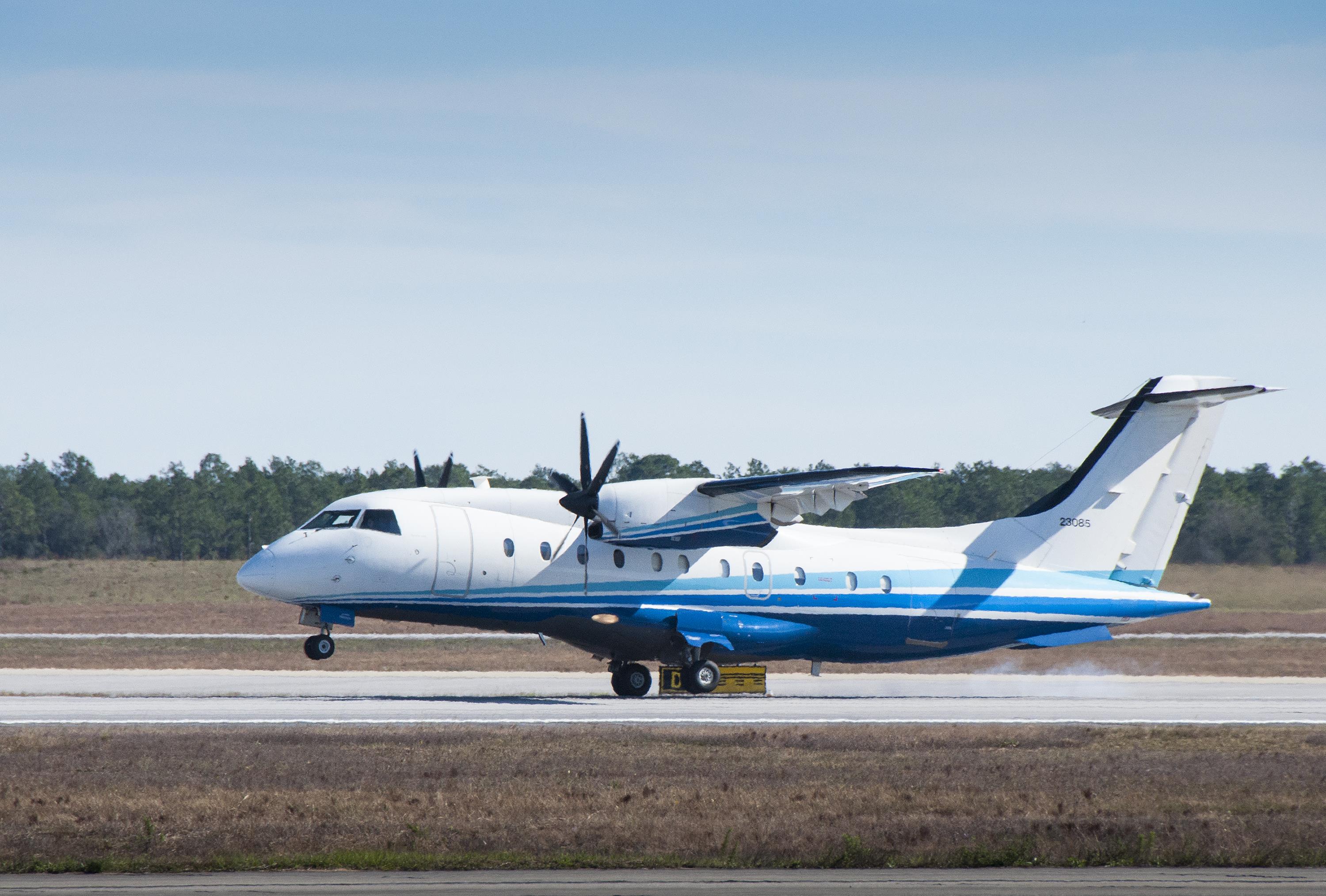
919SOW C-146 Call Signs


Couple of new AFSOC call signs, at least for me, confirmed.

C-146A Wolfhound aircraft have been moved to Duke Field in Florida under the 919SOW.

The active duty component 524SOS (aka Hounds of Heaven) are using the Hound ## call sign.
The reserve component 859SOS are using the Dingo ## call sign.

Details of the 524SOS move from Cannon AFB to Duke Field was published in an AF story at 524th SOS relocates from Cannon to Duke Field.

Details of the 859SOS standup at Duke Field was published in an AF story at 919th SOW welcomes new special operations squadron

Thursday, January 14, 2010

Air Force Special Forces Rescue Seven in Haiti Relief Efforts

By John J. Kruzel, American Forces Press Service

WASHINGTON - U.S. Air Force special force operators in Haiti have rescued seven survivors of the massive Jan. 12 earthquake that continues to wreak havoc on the country in its wake, according to Air Force officials.

News of the rescues represents a small victory in the face of what some have described as one of the greatest humanitarian emergencies in the history of the Americas.

Air Force Special Operations Forces have been manning the airport in the capital of Port-Au-Prince since about 8 p.m. yesterday, conducting airfield operations in addition to recovery and rescue efforts, said Air Force Lt. Col. Brett J. Nelson.

"Within hours of our arrival last evening, we established airfield control and have maintained that control conducting 24-hour operations at Port-Au-Prince airport," Nelson, the commander of the 23rd Special Tactics Squadron, 720th Special Tactics Group, said during a conference call with reporters today.

Air Force personnel have been engaged in operations to rescue potential survivors from collapsed buildings, he said. The colonel added that a number of Americans have been evacuated via the airport, but declined to provide an exact figure.

Nelson corrected media reports that said airport operations grinded to a halt after being saturated with aircraft. He acknowledged that operations at the airport have slowed down under the stress, with 44 aircraft crowding the space at one point today, but maintained that operations are ongoing.

Nelson also clarified that the airfield has power and is able to sufficiently light the premises to conduct night air operations.

Flanked by his national security team today, President Barack Obama elevated the humanitarian response in Haiti to the top of his priority list, enlisting the aid of government agencies and imploring Americans to extend compassion to those in need.

"I've made it clear to each of these [U.S. government] leaders that Haiti must be a top priority for their departments and agencies right now. This is one of those moments that calls out for American leadership," Obama said in remarks at the White House.

Special Ops C-130s, Teams Provide Disaster Relief

We heard heard communications from the units mentioned below on 9018.0 kHz USB, a known AFSOC frequency worldwide.

HURLBURT FIELD, Fla. - Airmen and C-130s from the Air Force Special Operations Command are continuing to provide disaster relief to the people of Haiti.

MC-130H Combat Talons and a C-130E Hercules from the 1st Special Operations Wing here landed in Port-au-Prince, Haiti, overnight and already have left the area for additional support taskings. The wing will continue to support requirements, as additional aircraft such as MC-130P Combat Shadows are en route carrying people and equipment.

In addition, two MC-130W Combat Spears from the 27th Special Operations Wing at Cannon Air Force Base, N.M., are positioned here for additional support requirements. The aircraft are transporting equipment such as generators, vehicles, fuel, food and water, and communications packages, as well as specialty teams including special operations medical units and special tactics teams.

Saturday, February 14, 2009

When pigs fly... with ospreys

by 2nd Lt. Mark Lazane, 1st Special Operations Wing Public Affairs


A CV-22 Osprey, a tilt-rotor aircraft assigned to the 8th Special Operations Squadron, prepares to take off as an A-10 Thunderbolt II flies overhead. The two aircraft flew together recently as part of training opportunity at Hurlburt Field, Fla. The 8th SOS is the only operational CV-22 squadron in the Air Force. (U.S. Air Force photo /Senior Airman Julianne Showalter)

HURLBURT FIELD, Fla. (AFNS) -- What do you get when you cross an osprey with a warthog?

For a zoologist, the question may seem preposterous.

In Air Force terms, instead of an odd looking winged-swine hybrid, the result is immense firepower and unparalleled close-air support capability for the rapid infiltration and exfiltration of troops in the battlespace.

For the first time, the tilt-rotor CV-22 Osprey and the fixed-wing A-10 Thunderbolt II, often nicknamed the Warthog, teamed up for some high-flying training recently.

"It is like having a little angel flying on your wing," said Capt. Luke Sustman, a CV-22 evaluation pilot. "Having these (A-10) pilots out here gave them a perspective of what we do and how they help us."

The affinity for their sister aircraft was mutual.

"Impressive," said Capt. Andrew Hood, an A-10 pilot from Davis-Monthan Air Force Base, Ariz., after his inaugural flight aboard a CV-22. "The Osprey definitely revolutionizes the way we fight."

Captain Hood was one of a handful of A-10 pilots aboard the Osprey as the two air frames flew and practiced with one another. Representatives from the 8th Special Operations Squadron invited several A-10 pilots to fly in the Osprey to experience the unique airframe and to learn about its unique capabilities.

According to Captain Hood, one advantage of the Osprey is that it is far superior to traditional helicopters when it comes to escorting a rescue aircraft to its intended destination, either to drop off or pick up individuals in the fight.

One large advantage the CV-22 has over traditional rotary wing assets is the speed at which it is able to operate.

"Most of the time, helicopters go kind of slow," Captain Hood said. "The CV-22 is almost as fast as we are. It's able to get to its destination a lot faster (than traditional rotary wing aircraft)."

"The CV-22 can go twice as fast and twice as far as rotary wing assets," said Tech. Sgt Erik Davis, a CV-22 flight engineer.

"Speed is a huge usage boost because the A-10 doesn't have to stay exposed as long when it's providing escort," said Maj. Mike Holder, a CV-22 evaluation pilot and the mission commander.

The 8th Special Operations Squadron at Hurlburt Field is currently the only operational CV-22 squadron in the Air Force. Because of their uniqueness, they continually look for ways to practice and familiarize themselves with other aircraft.

"We are validating everything we talk about on the ground," said Major Holder. "It's very exciting to be on the cutting edge of technology for the Air Force."

As someone who has flown helicopters in two branches of the military, Major Holder understands the benefits of having an airframe such as the CV-22 Osprey.

"We're defining tactics rather than refining them," said Major Holder, an Army AH-1 Cobra and AH-64 Apache pilot prior to joining the Air Force. "We expect to do a lot more (inter-airframe training)."

The training, although historic, was business as usual for Sergeant Davis.

"This is another capability that we've shown we can do," Sergeant Davis said. "We feel pretty confident in our training with them, but there are a lot of steps we have to take."

Major Holder is confident his aircraft could survive if called upon at any time.

"I feel we are 100 percent ready to deploy right now if needed," he said. "We recently completed our initial operating training exercise and (the aircraft) flew great. I'm excited to fly the Osprey."
Friday, February 13, 2009

Emerald Warrior demonstrates special ops capabilities

by Staff Sgt. Matthew Bates, Defense Media Activity-San Antonio

A CV-22 Osprey takes off after deploying a quick reaction force Feb. 9 during an Emerald Warrior Exercise training scenario. The quick reaction force will advance forward to identify where enemy fire came from and engage. Air Force Special Operations Command officials are hosting Emerald Warrior to train forces in combat scenarios. The exercise runs until Feb. 13. (U.S. Air Force photo/Staff Sgt. Desiree N. Palacios)

DESTIN, Fla. (AFNS) -- Air Force Special Operations Command officials hosted a field exercise at Hurlburt Field Feb. 2 through 13 designed to train forces in combat scenarios.

Called Emerald Warrior, the exercise is taking place at training grounds on Hurlburt Field and nearby Eglin Air Force Base, and focuses on training Air Force, Army and allied units in missions directly related to lessons learned from operations Iraqi Freedom and Enduring Freedom.

Operating in the late afternoon and evening hours, participating units will train in the infiltration and exfiltration of personnel and equipment, personnel recovery operations, controlling close-air support, coordinating coalition support in operations and exercising command and control elements.

"This exercise basically brings everyone together and lets them perform missions they might face while in Iraq or Afghanistan," said Lt. Col. Carlos Alvarado, an AC-130H Spectre pilot with the 1st Special Operations Group.

Several of these missions practiced include troop insertions using a CV-22 Osprey, air-ground support operations using A-10 Thunderbolt IIs and AC-130 gunships, and convoy active-defense scenarios.

"These exercises are important because they let us train like we may have to fight," said Capt. Rob Campbell, a CV-22 pilot with the 8th Special Operations Squadron. "And there are a lot of moving parts involved in operations like these. We have guys on the ground and in the air and we all have to know how to work together to get the mission done. That's what these exercises are designed to do. "

AFSOC was established in May of 1990 to provide special operations forces for worldwide deployment and is composed of highly trained Airmen who perform missions ranging from precision application of firepower to infiltration and exfiltration of special operations elements.

The command's key missions include battlefield air operations, agile combat support, information operations and specialized surveillance and reconnaissance.

Two military members deploy from an HH-60 Pave Low helicopter Feb 9 during an Emerald Warrior Exercise training scenario. Air Force Special Operations Command officials are hosting Emerald Warrior to train forces in combat scenarios. The exercise runs until Feb. 13. (U.S. Air Force photo/Staff Sgt. Desiree N. Palacios)

Tuesday, October 07, 2008

17th ASOS transitions from ACC to AFSOC

HURLBURT FIELD, Fla. -- The 17th Air Support Operations Squadron transitioned from Air Combat Command to the 720th Special Tactics Group, Air Force Special Operations Command, in a ceremony at the Hurlburt Field Air Park Oct. 1.

The 17th ASOS has 61 special operations forces Tactical Air Control Party Airmen and support personnel. The squadron will join the ranks of more than 900 special tactics combat controllers, pararescuemen, special operations weathermen and support personnel.

"The men of the 17th are the crown jewel of all TACPs- the top 10 percent of their career field," said Col. Bradley Thompson, 720th STG commander. "They are the most highly decorated TACP unit in the Air Force and have been involved in every contingency since 1983. The Air Force knows how valuable they are and we are so lucky to have our SOF brothers join us."

Among the many awards the 17th ASOS has earned are four Outstanding Unit Awards, one with valor, and the Gallant Unit Citation. The Gallant Unit Citation recognizes organizations for outstanding heroism in combat and is only second to the Presidential Unit Citation. Units must have performed with marked distinction under difficult and hazardous conditions in accomplishing its mission so as to set it apart from and above other units participating in the same conflict.

The 17th ASOS is bringing a rich history of proven combat experience and this move is beneficial to everyone involved, said Lt. Col. Christopher Cronk, 17th ASOS commander.

"Not only am I the commander of the best TACP squadron in the Air Force, but now we join the ranks of the most outstanding group in the Air Force," said Colonel Cronk. "This move is beneficial because we provide Joint Terminal Attack Controllers - JTACs - to all special operations forces and the SOF mission belongs in AFSOC."

The squadron provides terminal attack and liaison services to the 75th Ranger Regiment and its 1st, 2nd, 3rd and Regimental Special Troops Battalions, and the 1st, 3rd, 5th, 7th and 10th Special Forces Groups.

"These men have the right leadership and the right synergy and this transition was the right thing to do," said Colonel Thompson.

The 17th ASOS will remain at Fort Benning, Ga., with operational locations at Hunter Army Airfield, Ga., Fort Campbell, Ky., Fort Bragg, N.C., Fort Carson, Colo. And Fort Lewis, Wash.

Saturday, September 08, 2007

MH-53 Helicopter Crashes in Florida

Two people were injured and five were unhurt when an MH-53 Pave Low helicopter from the 20th Special Operations Squadron, Hurlburt Field, crashed near Duke Field at approximately 11:45 p.m. Sept. 7, 2007.

The aircraft was performing a routine training mission.

The Eglin fire department responded. Airman 1st Class Bradley Jordan, 20th Special Operations Squadron gunner, was transferred to Sacred Heart Hospital in Pensacola. Col. William Nelson, Air Force Special Operations Command Surgeon General's office, was transferred to Baptist Hospital in Pensacola. The remaining crew members were transferred to Eglin Hospital for evaluation.

No one on the ground was injured and no civilian property damage was caused by the accident.

A board of officers will investigate the accident. As soon as additional details become available, they will be provided.