Showing posts with label Japan. Show all posts

Sunday, January 31, 2016

More Rock amd Roll Adventures from the HFGCS Chronicles

Saturday, the U.S. Navy sent the USS Curtis Wilbur (DDG-54) warship near a disputed island in South China Sea according to various press reports. See CNN story at http://www.cnn.com/2016/01/30/asia/us-navy-south-china-sea/.
 
Pacific Ocean: The guided-missile destroyer USS Curtis Wilbur (DDG 54) transits through the Pacific Ocean with Mt. Fuji in the background. Curtis Wilbur is underway supporting security and stability in the western Pacific Ocean. (U.S. Navy photo by Mass Communication Specialist Seaman Adam K. Thomas/Released)
Any naval operation like this can be a bit dangerous especially if the three parties involved in the disputed land mass get edgy. But there is also a potential treasure trove of intelligence to be gathered.
 
And what did we have flying around the South China Sea area Saturday using call sign Tora 82 (a 4-digit call I might add)? A USAF RC-135V Rivet Joint aircraft.
 
 
And what is this aircraft used for. From the official US Air Force public fact sheet:
 
Mission The RC-135V/W Rivet Joint reconnaissance aircraft supports theater and national level consumers with near real time on-scene intelligence collection, analysis and dissemination capabilities.

Features The aircraft is an extensively modified C-135. The Rivet Joint's modifications are primarily related to its on-board sensor suite, which allows the mission crew to detect, identify and geolocate signals throughout the electromagnetic spectrum. The mission crew can then forward gathered information in a variety of formats to a wide range of consumers via Rivet Joint's extensive communications suite.

The interior seats more than 30 people, including the cockpit crew, electronic warfare officers, intelligence operators and in-flight maintenance technicians.

The Rivet Joint fleet was re-engined with CFM-56 engines with an upgraded flight deck instrumentation and navigational systems to FAA/ICAO standards. These standards include conversion from analog readouts to a digital "glass cockpit" configuration.

All Rivet Joint airframe and mission systems modifications are overseen by L-3 Communications (previously Raytheon), under the oversight of Air Force Materiel Command.

Background The current RC-135 fleet is the latest iteration of modifications to this pool of -135 aircraft going back to 1962. Initially employed by Strategic Air Command to satisfy nationally tasked intelligence collection requirements, the RC-135 fleet has also participated in every sizable armed conflict involving U.S. assets during its tenure. 

RC-135s were present supporting operations in Vietnam, the Mediterranean for Operation El Dorado Canyon, Grenada for Operation Urgent Fury, Panama for Operation Just Cause, and Southwest Asia for operations Desert Shield, Desert Storm, Enduring Freedom and Iraqi Freedom. RC-135s have maintained a constant presence in Southwest Asia since the early 1990s.

All RC-135s are assigned to Air Combat Command. The RC-135 is permanently based at Offutt Air Force Base, Neb., and operated by the 55th Wing, using various forward deployment locations worldwide. More recently, RC-135s have also supported Operation Allied Force in Kosovo, and Operation Odyssey Dawn/Unified Protector in Libya
So looks like we had Tora 82 supporting the Curtis Wilbur on Saturday in the South China Sea. Was our Saturday "Santana" Foxtrot/Skyking message directed at Tora 82?
 
Maybe!  Chief Sends


Thursday, April 10, 2014

US Sending Two Warships to Japan to Counter North Korea


According to AP Press Reports, U.S. Defense Secretary Chuck Hagel delivered a two-pronged warning to Asia Pacific nations Sunday, announcing that the U.S. will send two additional ballistic missile destroyers to Japan to counter the North Korean threat, and saying China must better respect its neighbors.

In unusually forceful remarks about China, Hagel drew a direct line between Russia's takeover of Ukraine's Crimea region and the ongoing territorial disputes between China, Japan and others over remote islands in the East China Sea.

The announcement of the deployments of additional destroyers to Japan came as tensions with North Korea spiked again, with Pyongyang continuing to threaten additional missile and nuclear tests.

In recent weeks the North has conducted a series of rocket and ballistic missile launches that are considered acts of protest against annual ongoing springtime military exercises by Seoul and Washington. North Korea says the exercises are rehearsals for invasion.

North and South Korea also fired hundreds of artillery shells into each other's waters in late March in the most recent flare-up.

The two additional ships would bring the total to seven U.S. ballistic missile defense warships in Japan, and it continues U.S. efforts to increase its focus on the Asia Pacific.

The ships serve as both defensive and offensive weapons. They carry sophisticated systems that can track missile launches, and their SM-3 missiles can zero in on and take out short- to medium-range missiles that might be fired at U.S. or allied nations. They can also carry Tomahawk cruise missiles, which can be launched from sea and hit high-value targets or enemy weapons systems from afar, without risking pilots or aircraft.

Tuesday, November 26, 2013

U.S. Directly Challenges China's Air Defense Zone (Pair of American B-52 Bombers Fly Over)


WASHINGTON—A pair of American B-52 bombers flew over a disputed island chain in the East China Sea without informing Beijing, U.S. officials said Tuesday, in a direct challenge to China and its establishment of an expanded air-defense zone.

The planes flew out of Guam and entered the new Chinese Air Defense Identification Zone at about 7 p.m. Washington time Monday, according to a U.S. official.

The official said the flight was a training mission and the bombers were not armed. The flight was first reported by The Wall Street Journal on Tuesday.

The Chinese announced over the weekend they were expanding their air defense identification zone to include the islands, known as Diaoyu in Chinese and Senkaku in Japanese. Japan also claims ownership.

For more on background see my original story at China creates air defense zone over Japan-controlled islands in East China Sea.

Sunday, November 24, 2013

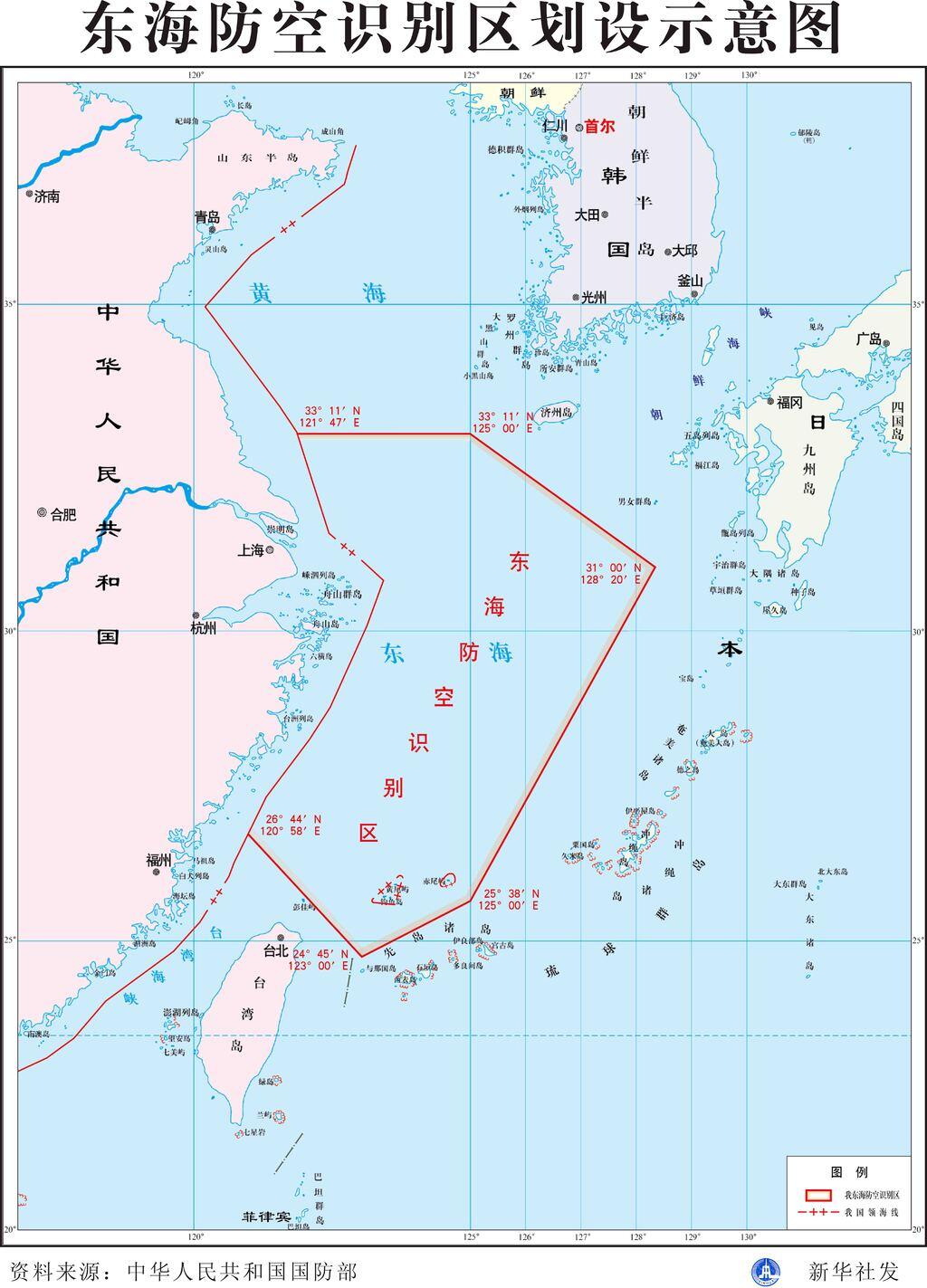
China creates air defense zone over Japan-controlled islands in East China Sea

Blog Editor's Note: This is potentially a very serious international situation in the East China Sea. This directly threatens Japan and South Korea. Keep an eye on our  @QSLRptMT and @MilcomMP twitter feeds for updates and frequency reports as we get them.


A Japan coastguard handout photo taken on November 2, 2013 shows a Chinese coast guard ship cruising near the disputed islets in the East China Sea
The French AFP news service is reporting that Beijing on Saturday announced it was setting up an "air defense identification zone" over an area that includes islands controlled by Japan but claimed by China, in a move that could inflame the bitter territorial row.


Along with the creation of the zone in the East China Sea, the Chinese defense ministry released a set of aircraft identification rules that must be followed by all planes entering the area, under penalty of intervention by the military.

Aircraft are expected to provide their flight plan, clearly mark their nationality, and maintain two-way radio communication allowing them to "respond in a timely and accurate manner to the identification inquiries" from Chinese authorities.

The outline of the new zone covers a wide area of the East China Sea between South Korea and Taiwan that includes the Tokyo-controlled islands known as the Senkakus to Japan and Diaoyous to China.

The Kyodo news service reports that the Japanese government branded the new escalation in the East China Sea as “very dangerous.”

In Tokyo, Junichi Ihara, head of the Foreign Ministry’s Asian and Oceanian Affairs Bureau, lodged a protest by phone with Han Zhiqiang, a minister at the Chinese Embassy, according to a statement issued by the ministry.

Ihara was quoted as telling Han that Japan can “never accept the zone set up by China,” as it includes the Senkakus. He further said the new zone will “escalate” already fraught bilateral ties over the uninhabited but potentially resource-rich islet chain, branding China’s move “very dangerous,” the statement said.

Later Saturday, China scrambled air force jets, including fighter planes, to patrol the new zone.

"China's armed forces will adopt defensive emergency measures to respond to aircraft that do not cooperate in the identification or refuse to follow the instructions," according to the Chinese Defense ministry.

The zone became operational as of 10:00 am Saturday (0200 GMT).

Saturday, August 03, 2013

Antenna maintenance ensures multi-service communication


Airmen 1st Class David Herrera and Monico Viloria, 374th Communications Squadron cable and antenna maintenance technicians, work together to loosen a bolt on a rotatable log periodic antenna during scheduled maintenance July 26, 2013, at the Tokorozawa Communication Site, Japan. The antennas at Tokorozawa provide communication support to a variety of Department of Defense installations including Misawa Air Base and Yokosuka Naval Base. (U.S. Air Force photo by Senior Airman Cody H. Ramirez)

Tuesday, September 18, 2012

Chinese General: Prepare for Combat

SIX CHINESE SHIPS BREACH JAPAN’S NAVAL BORDER


From an article by Bill Gertz on The Washington Free Beacon

China’s most powerful military leader, in an unusual public statement, last week ordered military forces to prepare for combat, as Chinese warships deployed to waters near disputed islands and anti-Japan protests throughout the country turned violent.

Gen. Xu Caihou, vice chairman of the Central Military Commission, considered the most senior military political commissar, said Friday that military forces should be “prepared for any possible military combat,” state run Xinhua news agency reported.

Heightened tensions over the Senkakus come as Defense Secretary Leon Panetta arrived in China Monday.

You can read the rest of this fascinating article on the Beacon website at
http://freebeacon.com/chinese-general-prepare-for-combat/

Saturday, March 19, 2011

Essex ARG, 31st MEU Arrive Off Coast of Japan

By Mass Communications Specialist 2nd Class (SW) Eva-Marie Ramsaran USS Essex Public Affairs

USS ESSEX, Sea of Japan (NNS) -- Essex Amphibious Ready Group (ARG) ships arrived off the west coast of mainland Japan in preparation to provide humanitarian assistance/disaster relief (HADR) support to the nation, March 18.

Shortly after arriving, helicopters from the 31st Marine Expeditionary Unit (MEU), conducted aerial reconnaissance of the Akita port area and surveyed available road networks and airfields to the east, for potential supply routes and staging areas near the disaster zone.

A six-man forward command element of the 31st MEU went to Matsushima, Japan, in order to coordinate initial efforts for disaster aid planning with officials already on scene.

With more than 150 amphibious vehicles and 25 aircraft, the MEU is able to provide extensive distribution services by ground and air.

"This MEU is an organization ideally suited for humanitarian assistance in a coastal region such as this," said Col. Andrew MacMannis, 31st MEU commanding officer. "We have aviation and amphibious platforms capable of rapid delivery of relief supplies, medical assistance, transportation assets and engineer equipment to an affected area, which could be of great assistance to those in need right now."

ARG ships are capable of carrying out a variety of HADR operations using helicopters assigned to the 31st MEU and the Navy's Helicopter Sea Combat Squadron 25, or amphibious craft assigned to Beach Master Unit One and Assault Craft Unit One.

"The crew is very well prepared and highly trained," said Capt. David Fluker, USS Essex (LHD 2) commanding officer. "We have reviewed and practiced our procedures to ensure we are ready to operate in this environment safely."

The ships are capable of providing fresh water, medical contingency support, search-and-rescue support, heavy lift capabilities and amphibious crafts. Combining with the efforts of the Japan Self Defense Forces (JSDF), the crew is looking forward to helping its host nation during its time of need.

"I just could not be more proud of the crew and their eagerness to be involved as they always do when it comes time to help friends, partners and allies, specifically our host nation of Japan, in their time of need," said Fluker.

Essex ARG is comprised of the forward-deployed amphibious assault ship USS Essex (LHD 2) and the dock landing ships USS Harpers Ferry (LSD 49), USS Germantown (LSD 42) and USS Tortuga (LSD 46).

USS Tortuga is in the vicinity of Ominato in northern Honshu after delivering 93 vehicles and 273 Japan Ground Self Defense Force ashore via landing craft March 17. The ship transported the soldiers and their vehicles from Tomakomai, Hokkaido, to assist with the disaster recovery efforts. The ship will also transport 5,000 bottles of water and 5,000 Meals Ready to Eat to Misawa for further distribution to people in need.

Friday, March 18, 2011

Operation Tomodachi


The Department of Defense is offering assistance following the devastating natural disasters in Japan. Operation Tomodachi (Japanese for "friendship") involves 14 U.S. Navy ships, more than 100 aircraft and thousands of U.S. service members either assisting or prepared to assist the Japanese people.

Thursday, March 17, 2011

Ships, Aircraft Support Japan Relief Effort

By Cheryl Pellerin, American Forces Press Service

WASHINGTON - Fourteen U.S. Navy ships and their aircraft and 17,000 sailors and Marines are now involved in the humanitarian assistance and disaster relief efforts in Japan, a Defense Department spokesman said here today.

Marine Corps Col. Dave Lapan said the military effort has included 113 helicopter sorties and 125 fixed-wing sorties, moving people and supplies, helping in search and rescue efforts, and delivering 129,000 gallons of water and 4,200 pounds of food.

The USS Tortuga, with heavy-lift MH-53 helicopters aboard, has completed loading 273 Japanese Ground Self-Defense Force troops, 93 vehicles and equipment for delivery tomorrow in Onimato, he said.

The USS Blue Ridge, the command ship for Navy Vice Adm. Scott R. Van Buskirk, commander of the U.S. 7th Fleet, is scheduled to arrive tomorrow and is expected to remain in the area, Lapan said.

The USS Essex, USS Harpers Ferry and the USS Germantown -- with the 31st Marine Expeditionary Unit aboard -- "will remain on the western side [of Honshu] rather than transit around to the east because of the at-sea debris field and the radiation hazard," he added.

The hazard was created by tsunami damage to reactors at the Fukushima Daiichi nuclear power plant. Some Navy airmen and sailors participating in relief missions off the aircraft carrier USS Ronald Reagan were exposed in the past few days to low-level radiation, and 17 crew members underwent decontamination procedures, Lapan said.

The Reagan and its escort ships have moved north, but remain in the vicinity, he said.

The 2,200-member expeditionary unit, Lapan said, will move to Sendai to help in cleaning up the military airport there.

The United States also has delivered two fire trucks from military bases for use by the Japanese, who have since requested more hoses and pumps.

The USNS Safeguard delivered high-pressure water pumps to Yokota Air Base for transfer to the Japanese government for use at the Fukushima power plant, 7th Fleet officials said, and four more pumps were delivered from Sasebo this afternoon.

Air Force C-17s and C-130s delivered 19 generators to Misawa Air Base for the base's power system and resupply pallets to Yokota Air Base. U.S. Pacific Command officials said both bases are recovering from the earthquake and tsunami and are supporting relief efforts in their regions.

The U.S. Army Corps of Engineers Japan District provided an administration system to help the U.S. Army Japan disaster assessment team with debris-removal efforts. The corps is working on a plan to clear debris from airfields critical to logistics and humanitarian missions, and is helping U.S. Army Japan to deliver 50,000 water bottles to disaster survivors.

VP-4 Perform SAR Missions in Support of Operation Tomodachi

By Mass Communication Specialist Seaman Steve White, Commander Fleet Activities Okinawa Public Affairs

At Sea (NNS) -- Flight crews from Patrol Squadron (VP) 4 are flying humanitarian and support missions as part of Operation Tomodachi in response to the 9.0-magnitude earthquake and subsequent tsunamis that hit northern Japan March 11.

The squadron, nicknamed the "Skinny Dragons," fly the P-3C Orion aircraft out of Okinawa and have been performing aerial search missions over the debris field off the coast of northern Japan. Japanese homes and semi-truck trailers are among the odd assortment of wreckage floating as far as 10 miles out in the Pacific.

"VP 4 has only just begun to aid in the humanitarian effort," said Lt. Matthew Welch, a pilot with VP 4. "so far we have built a pretty effective map of the debris field as well as cleared areas in the water, which enables other rescuers the ability to focus on new areas."

The squadron performed their fourth mission in the area March 14, since the quake.

"Each mission gives us the opportunity to find someone stranded at sea," said Welch. "Every single flight we are providing eyes on an area that potentially has people who desperately need our help. I think that means a lot to our crew and hopefully the Japanese people."

During the mission the flight crew searched for survivors via sight and surface-search radar. Additionally the crew sends relevant information to their headquarters regarding the location of potentially hazardous areas that could affect surface ships assisting in the relief effort.

"While we are a SAR (search and rescue) capable platform...We are also a small part of a much bigger scheme to help the victims of this disaster," said Welch.

Air Force officials use Global Hawk to support Japan relief efforts

An RQ-4 Global Hawk like the one pictured is being used to assist Japan in disaster relief and recovery efforts. (U.S. Air Force photo/Senior Airman Nichelle Anderson)

JOINT BASE PEARL HARBOR-HICKAM, Hawaii (AFNS) -- Pacific Air Forces officials are using an RQ-4 Global Hawk from Andersen Air Force Base, Guam, to assist Japan responders in disaster relief and recovery efforts, following the March 11 earthquake and the resulting tsunami off the eastern coast of Japan.

The Global Hawk, a high-altitude, long-endurance unmanned aircraft, is being used to help assess damage to towns, industrial infrastructure and other facilities affected during the earthquake and flood waters.

"The Global Hawk is an ideal ISR asset to aid in disaster relief," said Gen. Gary North, the PACAF commander. "It directly complements ongoing efforts in the region and represents how advanced technology can provide crucial and timely support to senior officials and search, recovery and disaster relief efforts."

The Global Hawk also was used for disaster relief efforts following the 7.0-magnitude earthquake that struck Haiti in January 2010, officials said. This will be the aircraft's first use in a humanitarian operation in the Pacific theater since it was permanently assigned at Andersen AFB in September 2010.

With approximately 30 hours of flight endurance, the Global Hawk provides a broad view of the situation on the ground, officials said. Its ability to survey large geographic areas also offers decision-makers and first responders near real-time information to assess damage and prioritize for local need. Its long airborne dwell capacity also assures continuous and long-lasting-support for whatever requirements Japan's government officials may require.

"The Global Hawk and the expertise offered by our Airmen further enhances the country's already robust capabilities as our Air force members work side by side with Japan's Self Defense Force professionals," General North said.

The aircraft allows the U.S. to effectively support contingencies throughout the region, demonstrating a commitment to partners throughout the Pacific, and is one part of a wide range of PACAF personnel and aircraft that are supporting the Japanese operations, officials said.

Special-ops Airmen open strategic runways for relief operations

An MC-130H Combat Talon II lands March 16, 2011, at Sendai Airport, Japan. This is the first fixed-wing aircraft to land at the airport since an earthquake and tsunami crippled much of the Japanese eastern seaboard March 11. A team of combat controllers from the 320th Special Tactics Squadron, out of Kadena Air Base, Japan, along with Japanese emergency management organizations, cleared a section of the runway and re-established the control tower to direct flights in and out of the airfield. (U.S. Air Force photo/Staff Sgt. Samuel Morse)

by Tech. Sgt. Aaron Cram, 353rd Special Operations Group

YOKOTA AIR BASE, Japan (AFNS) -- Airmen and aircraft from the 353rd Special Operations Group assisted Japanese officials in opening two key runways to support relief operations in northern Japan March 16.

Facilities and airfields at Matsushima Air Base and Sendai Airport were damaged by the 8.9-magnitude earthquake and resulting tsunami that rocked northeastern Japan March 11.

Airmen from the group, headquartered at Kadena Air Base, Japan, departed here in the early morning March 16 on a 17th Special Operations Squadron MC-130P Combat Shadow to survey and reopen the airfields. About 40 minutes later, the highly-trained aircrew was able to land the special operations aircraft at Matsushima Air Base even though the air traffic control was not up and running.

Immediately after landing, Airmen were offloading equipment and vehicles to reestablish the Matsushima Air Base and Sendai Airport runways.

Within an hour of landing at the air base, a group of combat controllers from the 320th Special Tactics Squadron were in the air control tower ready to provide air traffic control support for the airfield. Combat controllers are trained, special-operations forces and certified air traffic controllers who can establish airfields, while simultaneously conducting air traffic control, command and control, and humanitarian assistance in austere locations.

At the same time, another team of combat controllers and Japan Self Defense Force personnel drove to Sendai Airport, which is about 25 miles away from the air base, to conduct surveys and set up their air traffic control equipment.

Sendai was heavily damaged by the tsunami and littered with debris. The tsunami that hit the airport made this one of the roughest airfields from which to operate, according to the 320th STS commander.

"The surveys we conducted from the air a few days ago didn't give us the complete picture of how bad this airport was hit," said. Maj. John Traxler. "We knew there was a substantial amount of debris scattered over the airfield, but when you see it at ground level you fully understand the destruction caused here. I've worked out of several austere and damaged airfields, but this is the most devastated place I've seen."

Within hours of arriving at the airport, the combat controllers had completed their surveys, marked the useable portion of the runway, set up their equipment and provided air traffic control support to clear their first aircraft to land, an MC-130H, which carried equipment needed to establish aerial port operations and relief supplies for the surrounding areas.

The first aircraft to land at Sendai Airport also carried the 353rd SOG commander. The colonel noted the condition of the area, as well as the hard work still being put in by the combat controllers and JSDF personnel.

"Despite the total devastation, the resiliency and strength of the Japanese people was clearly evident," said Col. Robert Toth. "They have been working around the clock since the tsunami to remove debris. Because of their hard work, we were able to land here today, open the airfield, and provide assistance."

Currently, the combat controllers and Japanese officials are manning the airfields to support fixed- and rotary-wing aircraft assisting relief operations.

Tuesday, March 15, 2011

Japanese Quake HF Comm Freqs

Based on our monitoring ans some additional field reports via twitter and our monitoring team, here is the latest list of HF freqs associated with the earthquake off of the northeast Honshu coast.

Air Self-Defense Force patrol boat and rescue aircraft for Coast Guard (USB)
2130.0 2245.0 2325.0 kHz

SDF CG Search and Rescue (USB)
3151.0 kHz

J SDF Aviation administration emergency frequency (USB)
2770.5 5545.5 10335.5 kHz

J SDF/JMSDF Air Traffic Control Squadron 1 HF Net - Aircraft posit reporting/weather using YL operators (USB)
6727.0 6742.0 6751.0 8977.0 9022.0 11184.0 kHz

J SDF/US Military Search and Rescue Coordination frequency (USB)
4520.0 kHz

Search and Rescue Aircraft/ground liaison (USB)
2182.0 2618.0 2670.0 2820.0 5673.0 5680.0 5690.0 kHz

Japanese Navy XSL Slot machine (MPSK)
3058.0 3075.0 4152.5 4153.0 4231.5 4280.5 4294.5 5643.0 6249.5 6417.0 6418.9 6445.1 6446.0 6500.0 6645.0 6693.0 6738.0 8312.5 8587.5 8704.0 khz

And from Atsu, JE1TRV, A1 Club Secretary, passing along amateur radio frequencies:

"We as an amateur radio operator are gathering and exchanging emergency information on the following frequencies."

"Please kindly keep clean these freqs clear."

3525 kHz +/-5 kHz 
7030 kHz +/-5 kHz 
14100 kHz +/-10 kHz
21200 kHz +/-10 kHz
28200 kHz +/-10 kHz
50.100 51.000 and 51.500 MHz
144.100 145.000 and 145.500 MHz
430.100 433.000 and 433.500 MHz

I will update this list and roll up it up to the top of the blog as new information warrants. Will also update our twitter feed @MilcomMP.

Seventh Fleet Repositions Ships after Contamination Detected

USS BLUE RIDGE (LCC 19) - At Sea (NNS) -- The U.S. 7th Fleet has temporarily repositioned its ships and aircraft away from the Fukushima Dai-Ichi Nuclear Power Plant after detecting low level contamination in the air and on its aircraft operating in the area. The source of this airborne radioactivity is a radioactive plume released from the Fukushima Dai-Ichi Nuclear Power Plant.

For perspective, the maximum potential radiation dose received by any ship's force personnel aboard the ship when it passed through the area was less than the radiation exposure received from about one month of exposure to natural background radiation from sources such as rocks, soil, and the sun.

The ship was operating at sea about 100 miles northeast of the power plant at the time.

Using sensitive instruments, precautionary measurements of three helicopter aircrews returning to USS Ronald Reagan after conducting disaster relief missions near Sendai identified low levels of radioactivity on 17 air crew members. The low level radioactivity was easily removed from affected personnel by washing with soap and water. They were subsequently surveyed, and no further contamination was detected.

As a precautionary measure, USS Ronald Reagan and other U.S. 7th Fleet ships conducting disaster response operations in the area have moved out of the downwind direction from the site to assess the situation and determine what appropriate mitigating actions are necessary.

We remain committed to our mission of providing assistance to the people of Japan.

USS John S. McCain Gets Underway for Search and Rescue

By Mass Communications Specialist 1st Class (SW) Talley Reeve

PACIFIC OCEAN (NNS) -- The guided-missile destroyer USS John S. McCain (DDG 56) departed from Commander Fleet Activities Yokosuka on March 12, to provide humanitarian assistance in support of earthquake and tsunami relief operations in Japan as directed.

"We had just pulled into Yokosuka when I got the word to head back out and proceed north. We're now part of the search and rescue operations taking place off of the coast of Japan," said Cmdr. Matt Lehman, commanding officer of John S. McCain.

"As a member of Destroyer Squadron 15 and the George Washington Carrier Strike Group, we'll be working side-by-side with USS Ronald Reagan and other Japan Maritime Self Defense Force (JMSDF) ships, helping with any humanitarian operations that come up," he added.

McCain's mission involves using rigid-hull inflatable boats to search for anything adrift in the water and providing support for any helicopter operations by acting as a refueling station; an operation also known as "lily padding."

"I'm really proud of my guys," said Lehman. "We got the call late at night, right when we returned from an exercise and here we are again doing our thing. It's a real testament to the all the Sailors in the U.S. Navy that we can get underway in such a short period. I'm proud to be part of this operation and I know we'll do the best we can do and help everyone we can."

McCain along with the destroyers USS McCampbell (DDG 85) and USS Curtis Wilbur (DDG 54) will assist Japanese authorities off the Miyagi Prefecture of Japan to provide at-sea search and rescue recovery operations.

USS Blue Ridge readies to provide aid to Japan

By Mass Communications Specialist 3rd Class (SW) Brian A. Stone

SOUTH CHINA SEA (NNS) -- Seventh Fleet command flagship USS Blue Ridge (LCC 19) Sailors and embarked 7th Fleet staff members are preparing for humanitarian aid and disaster relief support operations while sailing toward the eastern coast of mainland Japan March 13.

Blue Ridge Sailors loaded a humanitarian aid/disaster relief (HADR) kit while moored in Singapore Friday night and set sail Saturday morning. Shortly after departing Singapore, the ship completed replenishment-at-sea operations with USNS Rappahannock (T-AO 204), receiving fuel and additional supplies.

"I'm amazed at the things we've achieved in such a short time," said Master Chief Information Systems Technician Lonnie Gillilan, who led the recent on-load preparations aboard Blue Ridge. "We've all been pulling together, no complaining. I'm very impressed."

Sailors worked past midnight Friday, loading equipment to allow Blue Ridge to provide fresh water and supplies during HADR support operations.

"It's giving me a sense of accomplishment to know that the work we're doing could help people out," said Fire Controlman 2nd Class Patrick Ramos, who helped push crates of supplies from the flight deck.

Boatswain's Mate 1st Class Jonathan Howton, a leading petty officer aboard Blue Ridge, has experience conducting HADR support operations in conditions similar to those location in Japan affected by the recent tsunami.

"I was aboard USS Iwo Jima when we provided aid to New Orleans after Hurricane Katrina," said Howton. "In a disaster situation you have to prepare for the unknown. You never know what's going to happen."

USS Blue Ridge is uniquely equipped and able to perform amphibious command and control operations and is ready to support assigned HADR relief efforts.

Saturday, March 12, 2011

Navy Units Prepare to Support Tsunami-Damaged Areas

PEARL HARBOR, Hawaii (NNS) -- U.S. Pacific Fleet ships in the Western Pacific were converging on Japan to be in the best position to help those in areas damaged by the massive earthquake and subsequent tsunami.

They include the aircraft carrier USS Ronald Reagan (CVN 76), which departed Southern California waters on March 5 for a regularly scheduled deployment to the Western Pacific and U.S. Central Command area of responsibility. Reagan is the flagship of the Ronald Reagan Carrier Strike Group, which includes USS Chancellorsville (CG 62) and USS Preble (DDG 88). All three ships were headed to Honshu's east coast. It is too early to say what they will be tasked with once they arrive.

USS Essex (LHD 2), also forward deployed to Sasebo, had just arrived in Malaysia, but is getting ready to return to Japan to rendezvous with USS Harpers Ferry (LSD 49) and USS Germantown (LSD 42) off Tokyo to prepare for any humanitarian assistance/disaster relief duties.

USS Tortuga (LSD 46), a dock landing ship that carries helicopters and landing craft to support amphibious operations, left its forward deployed port of Sasebo in Southern Japan last evening to embark MH-53 heavy lift helicopters.

USS Blue Ridge (LCC 19), the U.S. Seventh Fleet command ship, had arrived in Singapore yesterday for a port visit, but immediately changed its focus to loading humanitarian assistance/disaster relief equipment and preparing to return to Japan to provide support as directed.

"We obviously have huge sympathy for the people of Japan, and we are prepared to help them in any way we possibly can," Defense Secretary Robert Gates said in a statement. "It's obviously a very sophisticated country, but this is a huge disaster and we will do all, anything we are asked to do to help out."

Monday, September 14, 2009

U.S. plan to withdraw F-15's,F-16's from Japan?

From Japan Times: http://search.japantimes.co.jp/cgi-bin/nn20090913a1.html

The U.S. government sounded out Japan in early April about pulling out all of the approximately 40 F-16 fighters from Misawa Air Base in Aomori Prefecture, possibly beginning later this year, sources close to Japan-U.S. relations said Friday.

As part of the ongoing review of the U.S. defense strategy by the administration of U.S. President Barack Obama,the United States at the time also told Japan of an idea to remove some of the more than 50 F-15 fighters at its Kadena Air Base in Okinawa Prefecture, they said.

Both of the proposals are pending, however, as Japan has shown reluctance due to concern about the situation in North Korea and the possible impact on the realignment of U.S. forces in Japan.

Japan and the United States have agreed on realignment plans on the basis of the current composition of U.S. forces in Japan.

But consultations on the overtures may commence after the incoming administration of Democratic Party of Japan leader Yukio Hatoyama is launched this week.

The proposed cut in F-15s at Kadena could lead to a review of the stalled relocation plan for the U.S. Marine Corps' Futenma Air Station in Okinawa.

An idea for integrating the airfield functions of the Futenma base with Kadena has been surfacing intermittently within the Japanese government.

If the number of F-15 fighters is reduced as sounded out, the integration plan could emerge again because the reduction would give Kadena the capacity to accept the airfield functions of Futenma.

In May 2006, Japan and the United States agreed to relocate the airfield functions of Futenma Air Station to a less densely populated area in another Okinawa city, Nago, as part of the realignment of U.S. forces in Japan. But the plan triggered a backlash among local residents.

The proposed withdrawal of the F-16s and the cut in F-15s at Kadena would be welcomed by local communities because they would help to reduce the burden of hosting U.S. bases by cutting aircraft noise and the chance of accidents.

At the same time, however, there is concern among Japanese officials that such the moves could send the wrong message to North Korea and China at a time when Pyongyang has conducted missile and nuclear tests and Beijing is rapidly modernizing its military.

The F-16s were deployed at the Misawa base during the Cold Warin the 1980s, and some defense experts believe the planes could be used for a so-called surgical attack against North Korea now that the Cold War is over.

But some in both the Japanese and U.S. governments apparently believe that the significance of the deployment at Misawa has diminished because it is less possible to conduct such an attack.

And even if the need for a surgical strike were to arise, it could be conducted by aircraft carrier-based fighters or from Guam, they said.

A Japanese government source said next-generation F-35 fighters could be flown from Guam and stationed at Misawa on a rotational basis if the F-16s are pulled out. But full production of F-35s has not made headway, and deployment of the planes is unlikely to start for at least five years, so there could be a period where there are no U.S. fighter planes regularly stationed at Misawa Air Base.

At a news conference on April 6, U.S. Defense Secretary Robert Gates proposed ending the production of F-22 fighters. He also proposed decommissioning 250 older fighters, including F-16s.

The Foreign Ministry relayed the overtures to the Defense Ministry, but the government has decided to keep them secret, given their impact on the Japan-U.S. security alliance, they said.