Tuesday, November 14, 2006

NORAD Plans Exercise Over D.C.


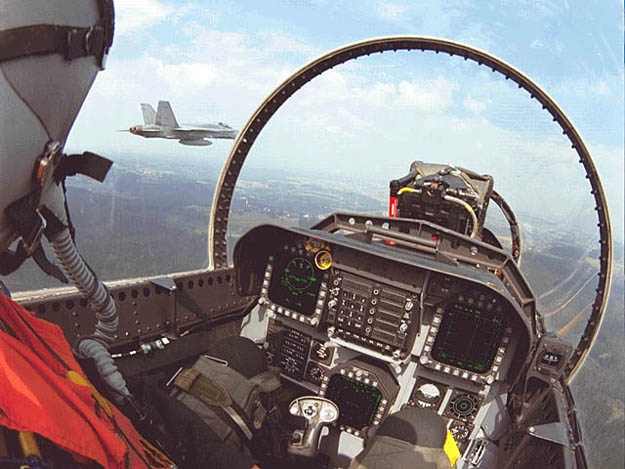
The North American Aerospace Defense Command, or NORAD, has planned some training flights that will take place above the nation's capital to test its rapid response capability.
The flights, known as Exercise Falcon Virgo 07-02, are scheduled to take place from Tuesday, Nov 14 through Thursday, Nov 16.

You can read more about this exercise at http://www.nbc4.com/news/10307019/detail.html.

Look for Guard Dog CAP activity on the following frequencies:

228.800 228.900 234.600 254.200 255.800 260.900 262.150 271.000 277.600 288.350 293.600 318.400 320.600 320.900 324.00o 360.700 362.300 364.200

As always I would appreciate any and all reports of frequencies and calls used during this exercise. You can reach me at the email address in the masthead.

Eye on the Fleet Photo of the Day


Explosive Ordnance Disposalman 1st Class Ray Kassow, left, and Explosive Ordnance Disposalman 3rd Class Chris Eichas test a satellite communication system aboard the nuclear-powered aircraft carrier USS John C. Stennis (CVN 74). Stennis is currently participating in Joint Task Force Exercise (JTFEX) off the coast of southern California. JTFEX is the third at-sea phase of John C. Stennis Carrier Strike Group's pre-deployment training cycle. U.S. Navy photo by Mass Communication Specialist 2nd Class Heidi Giacalone

Friday, November 10, 2006

USS Stennis Departs for JTFEX


USS John C. Stennis Departs San Diego for Joint Task Force Exercise From USS John C. Stennis Public Affairs

ABOARD USS JOHN C. STENNIS, Pacific Ocean (NNS) -- The USS John C. Stennis (CVN 74) Strike Group (JCSSG) departed Naval Air Station North Island Nov. 8 to conduct its Joint Task Force Exercise (JTFEX) off the coast of Southern California.

According to Commander, Carrier Strike Group 3, Rear Adm. Kevin Quinn, JTFEX is advanced level training designed to prepare JCSSG to deploy at the highest level of combat readiness.
“JTFEX is a great training opportunity,” said Quinn. “Commander, U.S. 3rd Fleet staff and Commander, Strike Force Training Pacific staff are embarked to assess our combat readiness as we progress from ready to surge, to ready to deploy.”

JTFEX marks the first time the JCSSG will conduct large-scale joint operations with the USS Ronald Reagan (CVN 76) Strike Group (RRSG). Together, they will provide a forceful military presence working to provide a secure and stable maritime environment while maintaining combat proficiencies across the spectrum of naval warfare.

JTFEX will test JCSSG’s ability to operate as a member of an international coalition to conduct major combat operations with a second carrier strike group. JTFEX will demonstrate JCSSG’s ability to plan and conduct various air warfare and maritime operations that it might face during its scheduled 2007 deployment.

As the West Coast surge-ready strike group, JCSSG would be the first to respond to any crisis.
John C. Stennis Strike Group is composed of Commander, Carrier Strike Group 3, John C. Stennis, Carrier Air Wing (CVW) 9, Strike Fighter Squadron (VFA) 154, VFA-146, VFA-147, Marine Strike Fighter Squadron (VMFA) 323,Tactical Electronic Warfare Squadron (VAQ) 138, Carrier Airborne Early Warning Squadron (VAW) 112, Sea Control Squadron (VS) 31, Helicopter Anti-Submarine Squadron(HS) 8, Destroyer Squadron (DESRON) 21, USS O’Kane (DDG 77), USS Paul Hamilton (DDG 60), USS Preble (DDG 88), USS Chicago (SSN 721), USS Antietam (CG 54), and USNS Bridge (T-AOE 10),

For the exercise, JCSSG will operate with the staff of Commander, Carrier Strike Group 7, embarked aboard Ronald Reagan. The RRSG will include CVW-14, USS Lake Champlain (CG 57), USS Momsen (DDG 92), and USS Russell (DDG 59).

HSL-49 Completes Counter-Narcotics Deployment


From the Navy Newstand:

HSL-49 Completes Counter-Narcotics Deployment
By Mass Communication Specialist Seaman Daniel A. Barker, Fleet Public Affairs Center, Pacific

CORONADO, Calif. (NNS) -- Helicopter Anti-Submarine Squadron Light (HSL) 49 returned to Naval Air Station North Island, Calif., Oct. 27 from a successful six-month counter-narco terrorism (CNT) deployment aboard USS Curts (FFG 38).

Suppporting U.S. Naval Forces Southern Command (NAVSO) on the deployment, HSL-49, Curts and Coast Guardsmen worked together to interrupt the drug supply as close to its source as feasible.

“Our primary mission was to detect and monitor drug smuggling vessels,” said Lt. Cmdr. Pete Collins, officer-in-charge of HSL-49, Det. 2. “We integrated with Curts and the U.S. Coast Guard to locate, identify and query these boats for boarding and search by our Coast Guard law enforcement team.”

“Our goal is to interdict the flow of drugs on the high seas as far from the U.S. borders as possible,” said Coast Guard Lt. j.g. Greg Rogers.

The most successful counter drug operation of this deployment resulted in the capture and transfer of personnel and 8.5 metric tons of cocaine, which has an estimated street value of $850 million.

HSL-49, Det. 2 also flew two injured detainees ashore for medical treatment, conducted a search for 10 fishermen whose boat had capsized, and transported a Sailor ashore for emergency leave.

“None of us had gone on a counter-narcotics or terrorism deployment before,” said Collins. "But we set out with three goals: make sure we all come back safely, with all digits attached. We accomplished that. Do the operations; we accomplished that. Also, meet our personal goals for training and excellence... we accomplished that as well.”For more information on HSL 49, go to www.hsl49.navy.mil.

Thursday, November 09, 2006

Milair Nationwide Frequencies Part 9

This is part 9 of our exclusive nationwide milair assignment list.

Here is a list of previous parts and the dates they appeared on this blog:
Part 1 Monday May 29, 2006
Part 2 Tuesday, June 06, 2006
Part 3 Tuesday, June 13, 2006
Part 4 Tuesday, June 20, 2006
Part 5 Wednesday, July 5, 2006
Part 6 Wednesday, July 26, 2006
Part 7 Thursday, August 24, 2006
Part 8 Thursday, September 14, 2006

270.100 Air Traffic Control -- ATIS
270.250 Air Traffic Control -- Various functions
270.275 Air Traffic Control -- Various functions
270.300 Air Traffic Control -- Various functions
270.325 Air Traffic Control -- Various functions
270.350 Air Traffic Control -- Approach/Departure Control
270.400 USAF AWACS Tadil Link
270.800 Air Traffic Control -- Various functions
271.000 NORAD Combat Air Patrols
271.100 JStars Operations
271.300 Air Traffic Control -- Various functions
271.800 USAF ATIS
271.825 AMC Special Operations Air-to-Ground
271.950 Have Quick frequency
273.450 Air Traffic Control -- Various functions
273.500 Air Traffic Control -- ATIS
273.525 Air Traffic Control -- Various functions
273.550 Air Traffic Control -- Various functions
273.575 Air Traffic Control -- Various functions
273.600 Air Traffic Control -- Various functions
273.950 USMC HMX-1 Air-to-Air
274.100 USN Carrier Air Wings Common Air-to-Air
274.400 NORAD
274.750 USAF Metro
275.100 USCG SAR Datum Marker Beacons
275.200 Civilian Contractors/Flight Test Support
275.350 USN Blue Angels Flight Demo Team
275.675 USAF F-15 Flight Demo Team Air-to-Air
275.800 Mil/Civilian Ground Control/Clearance Delivery
275.950 Aerial Refueling ACC Random Tracks CONUS
276.075 USAF JStars-AWACS Operations
276.100 Aerial Refueling ACC Random Tracks CONUS
276.300 USN ATIS
276.400 Air Traffic Control -- Various functions
276.500 Aerial Refueling Established Tracks
276.800 USAF JStars Operations
276.900 UHF Wideband
277.400 Air Traffic Control -- ARTCC
277.600 NORAD
277.800 USN Fleet Common-Tactical/Warning (Worldwide assignment)
278.000 US/Russian Military Voice Coordination
278.300 Air Traffic Control -- Various functions
278.500 Air Traffic Control -- Various functions
278.800 Air Traffic Control -- Various functions
279.000 NASA Nationwide/Space Shuttle EVA
279.400 DoD Combat Scene of Action
279.500 Air Traffic Control -- Various functions
279.525 Air Traffic Control -- Various functions
279.550 Air Traffic Control -- Various functions
279.575 Air Traffic Control -- Various functions
279.600 Air Traffic Control -- Various functions
279.625 Air Traffic Control -- Various functions
279.650 Air Traffic Control -- Various functions
279.750 Have Quick frequency
279.800 Aerial Refueling Established Tracks/Anchors
279.850 AMC Airlift CCT Comms
Military Satellite Launch Manifest Link/2006 Schedule

For those who are interested in US military satellite launches you might want to bookmark Steven S. Pietrobon's military launch manifest at http://www.sworld.com.au/steven/space/usmil-man.txt.

This is a great resource for the milsat junkie. For Steve's list here are the rest of the 2006 mil launches.

14 Nov 06 Delta II (7925) NAVSTAR/GPS IIRM-3/IIR-16M
7 Dec 06 Delta II NROL-21
8 Dec 06 Atlas V401 (AV-013) STP 1, Orbital Express (NEXTSat-CSC, ASTRO), NPSat1, CFESat, Falconsat 3, MidSTAR 1, MEPSI 4A, MEPSI 4B
9 Dec 06 Falcon I TacSat 1, [Celestis 05]
11 Dec 06 Minotaur 1 TacSat 2 (Roadrunner,JWS-D1), [GeneSat 1]#
14 Dec 06 Falcon I DemoSat

?? 06 Delta II (732X) SBIRS I

More on these satellites and launches in future here on the MT Milcom blogspot.

DoD DMSP F17 Satellite Launched

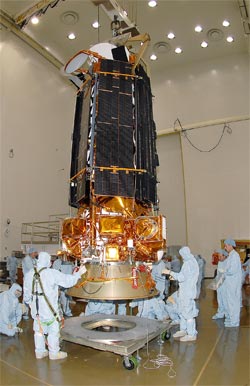
DoD has launched a new DMSP (Defense Meteorological Satellite Program) weather satellite - DMSP 5D-3 F17.

Particulars on this satellite and launch:
Intl Designator: 2006-050A
SSC#: 29522
Launch Date: 11/4/2006 at 1353 UTC
Launch Site: SLC6, Western Test Range, Vandenberg AFB, CA
Launch Vehicle: Boeing Delta 4M
Orbital parameters: 850 x 846-km, 98.8 deg inclination

This satellite is in a sun synchronous orbit and will be a morning imaging satellite. It will replace DMSP 5D-2 F13 (USA 109) launched 3/24/1995 at 1405 UTC (1995-015A/23533). That bird will now become the in-orbit backup for F17 once it becomes operational.

The Block 5D-3 series accommodates larger sensor payloads than earlier generations. They also feature a larger capability power subsystem; a more powerful on-board computer with increased memory -- allowing greater spacecraft autonomy -- and increased battery capacity that extends the mean mission duration. Starting with F-17, the attitude control subsystem has also been enhanced with the integration of a second inertial measurement unit using ring laser, versus mechanical, gyros to provide greater precision pointing flexibility.

DMSP is used for strategic and tactical weather prediction to aid the U.S. military in planning operations at sea, on land and in the air. Equipped with a sophisticated sensor suite that can image visible and infrared cloud cover and measure precipitation, surface temperature, and soil moisture, the satellite collects specialized global meteorological, oceanographic, and solar-geophysical information in all weather conditions. The DMSP constellation comprises two spacecraft in near-polar orbits, C3 (command, control and communications), user terminals and weather centers. The most recent launch of a DMSP spacecraft took place on October 18, 2003 from Vandenberg Air Force Base, on the final Titan II booster flown.

Including DMSP F-17, four satellites remain to be launched and are maintained at Space Systems' operations in Sunnyvale, Calif. for storage, functional testing, and upgrading. The spacecraft are shipped to Vandenberg for launch when requested by the Air Force. Since 1965, 43 Lockheed Martin DMSP satellites have been launched successfully by the U.S. Air Force. Now in its fourth decade of service, the DMSP has proven itself to be a valuable tool in scheduling and protecting military operations on land, at sea and in the air. The Space and Missile Systems Center at Los Angeles Air Force Base, Calif. manages the DMSP program. This satellite is operated for DoD by NOAA who is also responsible for the NOAA polar orbiters.

The next Delta launch will be of a GPS navigation satellite aboard a Delta II from Cape Canaveral Air Force Station, Fla., in mid-November.

Tuesday, November 07, 2006

More Spectrum Holes Reported and Active

Josh, another frequent reporter on the SoCalMilcom group, has monitored unid air-to-air activity on another one of my spectrum hole frequencies, 233.650 MHz in Southern California. More monitoring will be need to determine which agency/unit is using this former spectrum hole.

He uncovered the user of spectrum hole 268.050 MHz. That is a VMFA (AW)-225 air-to-air frequency. They are based out of MCAS Miramar.

And he has also uncovered an apparent Navy warship working aircraft on another spectrum hole, 376.250 MHz.

Nice to see four spectrum holes solved in one day.

New Saline MOA Discrete Discovered

Bryan Herbert, reporting on the SoCalMilcom group Monday (11-5-2006), passed along a new air-to-air discrete frequency for the Saline MOA (R-2508) of 360.425 MHz. This is another one of my spectrum hole frequencies, so another one has been taken off the list. Callsign Joshua passed this freq along to aircraft callsigns Coso, Hammer, Banger and unid tanker for operations inside the MOA boundary.

Thursday, November 02, 2006

New MARS VHF Frequencies Posted


Dan Myers posted the following new MARS VHF frequencies on the Milcom newsgroup. He obtained the list from Charles Hargrove's website at http://www.n2nov.net/phpbb/viewtopic.php?t=168

New Military Affiliate Radio System (MARS) VHF assignments (courtesy of narrowbanding) (MHz):

138.9750 139.0500 139.6625 140.6250 141.1250 142.1500 142.2750 142.6625 143.3500 143.4000 143.4500 143.9500 143.9750 148.0250 148.0500 148.3500 148.3750 148.4000 148.6500 148.9500 148.9750 149.1875 150.1250 150.4000 150.6250

The complete realignment of the 138-144/148-150.8 MHz DoD LMR bands continues here in the states -New CAP/MARS frequencies. Even if you don't live near a military facility, you should be searching the frequency ranges above using 12.5 kHz spacing on a regular basis. You might be surprised what you will hear. Note: both AM and narrowband FM modes are used in this band. There are very interesting military aircraft comms in these bands.

As always, if you hear something drop me a line. I would like to post what you are hearing.

Milsat 262.125 Downlink Carrying SOAR 160 Comms

On the Hearsat newsgroup, Allen Woodruff and Barney Hamlin made post on 30/31 Oct about an intercept they made on milsat downlink 262.125 MHz. Since it has generated some wide discussion across more than one newsgroup, I thought I would share my reply to them about what they heard.

Original post from Allen: "I got a rare catch on satcom today. around 5pm local I had 262.125 tuned in and I had units up in the clear. callsigns were Dog-25 and Nightstalker OPS. Dog-25 was in comms with nightstalker ops saying that he could not hear him with the cypher that he had loaded and didn't know what the problem was. later it looked like they got it to work, after that I heard nothing but encrypted comms on this frequency. if anyone would like to hear the audio clip I have uploaded to my web site. http://milsatcom.bravehost.com/index.html"

And from Barney Hamlin: "Still active with clear comms. "Gogo-43" calling"Spear-77" several times. Ivan Artner pointed out to me that this had to be from a CONUS sat since the Atlantic birds don't have atransponder using that frequency. The gentleman calling sounds like one of the people I heard the other night."

And my reply:

"Yes, this is definitely a CONUS bird, I just don't know if it is UFO Quebec or FLTSAT Charlie (which has been at the 100 deg position since I started monitoring milsat comms in the early 80s). As for Allen's intercept, Nightstalker Ops belongs to the 3-160 SOAR out of Hunter AAF. I have several intercepts from monitors in the area who have actually monitored comms from Nightstalker Ops on the uplink for this one 295.725 MHz. Over the last decade this satellite pair has been associated with DIRJIATF East (Key West FL) operations, but I am not sure if this is the case or if any of the SOAR 3-160 ops are associated with DIRJIATF East operations these days."

The current operations being heard in the clear on 262.125 definitely belong to the 3-160 SOAR out of Hunter AAF, Georgia. They appear to be operating primarily in the afternoon and evening hours east coast time.

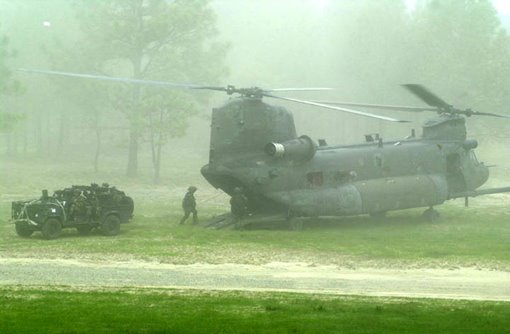
And the Dog and Raven callsigns are used by US Army MH-47 helicopters assigned to the 3-160 unit.

The Gogo and Spear callsigns might possibly be simulated assets. The Spear callsign has been associated with this function and JStars operations here in the southeast US over the last year or so. Not sure how this ties back with the 3-160 ops noted above, but this is the best info I have at this time.

INMARSAT Bird Retired Correction

On Oct 31, 2006, we reported this item from the SEESAT newsgroup, "Kevin Fetter reported on the SEESAT newsgroup that INMARSAT 2-F1 (20918) located at 143 deg east has been retired from service and moved into the geo graveyard."

This morning Chris Swan, Senior Satellite Controller, INMARSAT Ltd., dropped us some email that says that was in error. "We have in fact recently sent INMARSAT 2F3 to its graveyard orbit, 2F1 continues in geostationary orbit," writes Chris.

So there you have it straight from the horses mouth. Contrary to many reports, including information in The Satellite Encyclopedia, INMARSAT 2F3 (1991-084B/21814) is retired from service, and INMARSAT 2F1 (1990-093A/20918) is still operational.

Tuesday, October 31, 2006

What is in the November MT Milcom Column?

We have some really neat stuff in our November 2006 Monitoring Times Milcom column.

Titled MilSatcom - The Early Days, we cover the TACSATCOM and the LES 8/9 birds, including freq bandplans. Did you know that one of the LES birds is still operational and in active use by a North American military service? We have the details in the column.

We also cover the new Civil Air Patrol narrowband VHF frequencies, An extensive Search and Rescue frequency list (HF/VHF/UHF/Satellite), Tyndall AFB VHF aero freqs, and the major military communications bands (HF and VHF/UHF).

So as I have said before, "miss one issue of MT and you miss a lot."

More VLF Military Frequencies

From my personal logs, Trond Jacobsen (via UDXF) and a couple of anonymous contributors,
here are some more VLF military frequencies to keep an eye out for.

20.27 kHz NATO ICV-Isola di Tavolara, Italy STANAG 5030 MSK

20.50 kHz Russian Navy RJH63-Krasnodar N0N/A1A Morse ID
20.50 kHz Russian Navy RJH69-Vileeyka N0N/A1A Morse ID

20.90 kHz French Navy HWU-Le Blanc PSK 200/200 encrypted

23.00 kHz Russian Navy RJH63-Krasnodar N0N/A1A Morse ID
23.00 kHz Russian Navy RJH69-Vileeyka N0N/A1A Morse ID

23.40 kHz German Navy DHO38-Satherland-Ramsloh PSK 200/200 encrypted

25.00 kHz Russian Navy RAB99-Pokravka N0N/A1A Morse ID
25.00 kHz Russian Navy RJH63-Krasnodar N0N/A1A Morse ID
25.00 kHz Russian Navy RJH66-Chaldovar N0N/A1A Morse ID
25.00 kHz Russian Navy RJH69-Vileeyka N0N/A1A Morse ID

25.20 kHz USN NML4-La Moure, ND STANAG 5030 MSK

27.30 kHz Russian NavyF1B T600/Bee 36-50

583.0 kHz Russian Navy RMP-Kaliningrad A1A Morse ID

Russian High Command VLF Net Frequencies

The following frequencies are used by the Russian High Command VLF network:

18.1 kHz F1B FSK
21.1 kHz F1B FSK

Thanks to Trond J. and the UDXF gang.

Extracts from the Russian Red Star MOD Daily 10/30


Following extracts taken from articles on Russian MOD website, dated 30 Oct 2006. Translated by Old Crow and submitted to MT's Milcom Blog for information and interest.


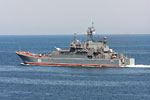
The Large Landing Ship "Yamal" of the Black Sea Fleet has returned from the Mediterranean Sea to the Fleet's main base at Sevastopol'. The ship visited the following Greek ports during its deployment: Kerkira, Patry (asspelt), Pilos and Piraeus. During the deployment, the ship steamed more than 2200 nautical miles. The Commander-in-Chief of the Russian Navy Admiral Vladimir Masorin congratulated the deployment commander, Rear Admiral Evgenij Khalajchev, the ship's commander Captain 1st Rank Igor' Gavrish, and all the Ship's Company on their safe return and thanked them for their expert and highly-professional activities in carrying out their assigned tasks.

Classified Miltary Satellites on Display


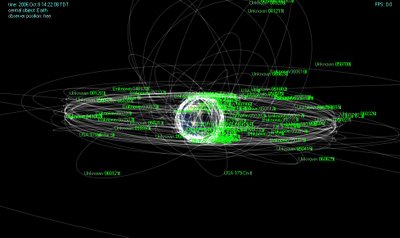
Dr. Marco Langbroek, from the Netherlands, recently posted to his blogspot a couple of interesting graphics. During a self proclaimed day of bordom, he created two plots of all the classified satellites listed in Mike McCant's classified TLE set. It is pretty neat to view. Be sure to click on the small images to enlarge. You can view these two graphics on Marco's blogspot at:

http://sattrackcam.blogspot.com/2006/10/quite-lot.html

INMARSAT Bird Retired

Kevin Fetter reported on the SEESAT newsgroup that INMARSAT 2-F1 (20918) located at 143 deg east has been retired from service and moved into the geo graveyard.

Sunday, October 29, 2006

New CAP Narrowband VHF Freqs Operational?

The August 2006 issue of the Civil Air Patrol North Central Region newsletter (http://ncr.cap.gov/images/ncr/pao/pdf/NCR_News_2006_08.pdf) had the following article on future CAP developments and a timeline regarding their new self proclaimed "sensitive" VHF frequencies:

From page nine of this newsletter:

"2007 may be the most demanding year in the history of CAP for the organization's Communications program. During the summer of 2007, every VHF-FM radio frequency used by CAP will be changed by order of the federal government, requiring changing out of every VHF “repeater” used by CAP and reprogramming of every corporate and member-owned radio used on the “CAP frequencies.”

"CAP's radio communications are regulated by the National Telecommunications Information Administration (NTIA), as opposed to civilian frequencies which are regulated by the Federal Communications Commission. During 2007, CAP will be implementing new technical standards required by the NTIA and the Air Force. Among the changes mandated by the new standards will be operation on new “narrow band” frequencies, meaning physically changing the hardware of every VHF radio repeater used by CAP, nationwide, including 75 in North Central Region. Between 1995 and 2006, CAP has received over $23 million dollars [This is our taxpayer money that funded this CAP frequency changeover-LVH] in Air Force funding to acquire new equipment meeting the more stringent technical standards, which will be fully implemented in 2007.

"The project was discussed during the Comm Manager's meeting on the wednesday of National Board, which included NCR Director of Communications LtCol. Mercer Richardson. According to that discussion, the typical wing will need to plan for the following steps:

• By April 1, 2006, each wing will receive their new repeaters. Each repeater, packaged for transport, will be the size of a refrigerator and will weigh 300 pounds. A forklift will probably be needed to unload the repeater, but once unpacked, it should be possible to transport with a handcart.

• At each repeater site, between April 1 and September 30, the old repeater must be removed from service and the new repeater, operating on new frequencies, must replace it.

• Prior to beginning the program of switching repeaters, every radio in the wing will need to be reprogrammed to include both “old” and “new” frequencies.

• After the last repeater has been switched out, every radio will have to be reprogrammed again to eliminate the “old” frequencies, which will become the territory of other federal agencies.

• Some repeater sites may need a formal process of coordinating frequencies with other users of the site.

• During the transition period, users from other agencies may appear on both the old and new frequencies. CAP must work with these other agencies to try to support our missions while not causing unnecessary interference to their missions.

• Current “old” CAP VHF-FM frequencies may not be used by CAP used after September 30, 2006. The overall project of converting to new frequencies will affect 587 repeaters across the country and thousands of individual radios, making it one of the biggest projects CAP has ever undertaken, as an organization.

"Mark Kunkowski, of CAP's National Technology Center, told comm managers in Reno that they need to be planning for this effort NOW in order to ensure a smooth conversion to the new frequencies. He said that the list of new frequencies should be ready to release to comm managers soon. In order to have access to the list of new frequencies, members must have agreed to the Non-Disclosure Agreement at the conclusion of the Operational Security training announced recently."

I have a complete list of all the new CAP VHF frequencies in the November issue of Monitoring Times magazine in my monthly Milcom column. These frequencies were posted to a publicly available website, and were NOT obtained directly through any official CAP sources.

So much for the big CAP secret frequencies! Did these folks honestly think that their frequencies were going to remain under wraps? How hard is it to hide VHF frequencies coming from a VHF repeater the size of a refrigerator? Duh! It is obvious that the people in the CAP National Technology Center need to learn a bit about VHF line of sight propagation. For a fee I will be more than happy to educate those who obviously are clueless.

Thursday, October 26, 2006

Hezbollah cracked the code - An Update

Frank Cardenas posted this update to a story we ran last month (and no we weren't the ones who said the Israeli mil was using Sincgars radios).

Courtesy of Frank and the Milcom newsgroup on qth.net:

"Recent media articles have claimed that Hezbollah had employed advanced technology to crack Israeli communications during the fighting in Lebanon. Based upon a story released by the Armed Forces Press Service, the articles have alleged that the Hezbollah used technology from Iran to thwart Israeli tank attacks. Some in the U.S. Arrmed Services have expressed the fear that Hezbollah or Iran has shared this technology with extremists in Iraq. But, the articles are wrong. The Israelis do not use the U.S. SINCGARS system, but instead another frequency-hopping technology. Frequency hopping means messages switch among dozens of frequencies each second to evade being jammed or intercepted. Israel's frequency-hopping radio does not have the U.S. frequency-hopping algorithm, and it does not use the U.S. transmission security devices. It is these features, in combination, that provide the robust protection for U.S. SINCGARS. Those pieces of the SINCGARS provide service members with assured communications security when they follow proper communications procedures."