Exercise Global Thunder is U.S. Strategic Command's annual field training and battle staff exercise, designed to exercise all mission areas with primary emphasis on nuclear command and control.
Global Thunder provides training opportunities for forces to deter, and if necessary, defeat a military attack against the United States - employing forces as directed by the president.
"Strategic deterrence, nuclear force employment, and command and control remain core missions for the Department of Defense," said Col. James Dawkins, 5th Bomb Wing commander. "This exercise demonstrates USSTRATCOM's ability to carry out its strategic nuclear deterrence mission."
The Global Thunder exercises are designed to reflect the ongoing evolution of USSTRATCOM and its components providing opportunities to incorporate the most current technology and techniques in support of these efforts.
Following traffic was monitored by Jeff Haverlah in Houston and is related to this exercise: Thanks for sharing with the rest of us Jeff.
1931z 27 Oct 12 11175.0 was active at 1900z and 1930z with ANGRY
MAN (good/fair levels here) with the "standing by for traffic" statement
(x2).
2005z 27 Oct 12 11175.0 was active at 2003z with ANDREWS (fair/good
levels) with a 6-character EAM (AMGY2H) "FOR YANKEE FORCE".
2026z 27 Oct 12 15016.0 was active at 2023z with ANDREWS (good
levels) bcsting a 6-character EAM (AMM6XU) "FOR YANKEE FORCE".
2231z 27 Oct 12 11175.0 was active at at 2030z with ANDREWS (good
levels) bcsting a 28-character EAM (VHHAFZ). At 2032z (after the completion
of the ANDREWS xmsn) ANGRY MAN was on frequency with the "standing by for
traffic statement". Nothing heard since until...
11175.0 was
active at 2230z with ANGRY MAN (fair/good) with the "standing by for traffic"
statement.
1935z 28 Oct 12 8992.0 was active at 1930z with CARPENTER (good
levels here) bcsting 32-character EAM (IEPION) with the character count
statement, closing with the "Standing by for traffic" statement (x2), and
out. Simulcasting same on at least 11175.0 (fair/good) with nothing heard on
4724.0 or 15016.0. H+00/h+30 active. Suspected 'glass activity.
2024z 28 Oct 12 11175.0 was active at 1956z with ANDREWS bcsting a
28-character EAM
(VH5VNQ).
At 1958z CARPENTER (guess; no id
given) keyed the 11175.0 in preparation for their H+00 EAM restoral. At 1959z
an unknown station (garbled id, good to fair levels; deep voice) called
"(sounded like "bowel" or "b-owl" aircraft) and requested they "check into
the net.
At 2000z CARPENTER (fair) was up with VH5VNQ but did not
close with the "standing by for traffic" statement. He dueled with ANDREWS
bcsting their H+00 restoral of VH5VNQ and the 28-character EAM
(VHPPQ7).
At the conclusion of the ANDREWS bcst, RED RIVER (now the
id is clearly heard) came up on freq with another call for "All (something;
could not make it out) check in with (sounded like "weather") on HF". RED
RIVER was then up with a string of multiple numbers, and then calling what
sounded
like "b-owl" aircraft again. He may have acknowledged a call from a
"b-owl ##".
At 2008z CARPENTER (fair/weak) was up on 11175.0 with
the "standing by for traffic statement" (x2) and out.
11175.0 was
active with (sounded like "broad pin" or ??; weak/fair but unable to get a
clear id) bcdsting VH5VNQ and VHPPQ7 and ending with the "standing by for
traffic statement." H+10/h+40 activity. Possible TACAMO LANT
activity.
At 2023z RED RIVER (good strong) called (unable to make
out) 11.
2051z 28 Oct 12 13200.0 was found active at 2045z while scrolling
through the HFGCS with (something; maybe AMBER) 14 (good/fair levels here)
bcsting a 274 message of ? groups (missed complete message). Last 10 groups:
XMP ROS XMZ WNB CTV XMP YTI HTF CTR WNB [note the repeats].
Immediately after 14's bcst AMBER 14 (good/strong levels) came up on 13200.0
with "This is AMBER 14 with an EXERCISE GLOBAL THUNDER 274 message of 21
groups" and into TYN XCE KSP RVO RAS GQE WNB YNL EJQ ROS XMP [maybe RMOS or
ROS] XMJ WNB CTV XMPYTI HTF YTI WNB XMP [again, note the repeats]. And
out.
274 messages (replaced 369 messages a bunch of years ago) are
sometimes heard; at least one instance of an "JCS Exercise Global Guardian"
EAM was heard in the late 90s during a GLOBAL GUARDIAN exercise; but what
is unusual (to me) is the use of 13200.0. I didn't hear these
stations
rolling through the other HFGCS freqs. Has 13200.0 become
"special"?
It also confirmed that this is a GLOBAL THUNDER 13 exercise
instead of a GLOBAL LIGHTNING 13 exercise presumed to be common at this time
of the year.
2110z 28 Oct 12 Post (nuclear) attack battle damage traffic. I've
never heard a stated GLASS EYE report during these exercises such as the
following until now.
13200.0 was active at 2054z with ANDREWS
bcsting a 28-character EAM (VHS7WL).
13200.0 was active at 2107z
with (could not make out id) 14 calling SKYMASTER with "GLASS EYE" (spoken)
"flash traffic": "FLASH 281930 FLASH KKOFF FLASH 1 FLASH 02 FLASH 7A FLASH
FLASH"; then repeated to SKYMASTER and gone. Apparently in the blind with no
heard response from any SKYMASTER. [Would that be KOFF?]
2141z 28 Oct 12 13200.0 was active at 2130z with ANDREWS' h+00/h+30
restoral of VHS7WL; VHPPQ7; VH5UNQ.
13200.0 was active at the
immediate completion of the ANDREWS' restoral with A**** 15 (sounds like
AGROM or AMBER; weak/fair) calling SKYMASTER "on 13200" with "274 message of
20 groups" and then into XQK LID Y?? HTF SNV HTF PNU TQA NGI XMP ??? MKD S?P
?H? XIX MKD WNB HTF YTI XMP, and repeated.
13200.0 was active at
2145z with A**** 14 (maybe AGROM (sounds like) 14) calling SKYMASTER with a
274 message of 28 groups and into DTP SAJ UQG RVO COS WNB YNL EYI TQC XMP ROS
XMA WNB YTI HTF YTI XMP MJB SNV GXP WNB CHL MKD XMP IVG ?NB VZR XMP and
repeated, and gone. Again, not the repeated groups. They rush through the
groups in their transmissions.. Lost the freq to a neighbor's TV at
2153z.
2244z 28 Oct 12 11175.0 was active at 2240z with BROAD BEAM (fair
levels here) "standing by for traffic" (x2) and out. H+10/h+40 activity.
2321z 28 Oct 12 11175.0 was active at 2259z with SIGONELLA (fair
levels here) with a test count and gone.
11175.0 was active at
2300z with CARPENTER (strong levels here) with the "standing by for traffic"
statement (x2) and out.
11175.0 was active at 2304z with BROAD BEAM
(fair levels) bcsting a 20-character EAM (IERZ2T) and simulcasting same on
4724.0 (weak), 8992.0 (good/strong), and 15016.0 (weak). I don't recall ever
hearing a player in these nets (at least since the major preamble "split" at
01 Oct 96)
transmitting this preamble series of strings
(6/20/variable).
11175.0 was active at 2310z with BROAD BEAM
"standing by for traffic" (x2) and out. No restoral string.
11175.0 was active at 2311z with OFFUTT (good levels) bcsting a "DTMF test
count" (short count) and gone.
8992.0 was active at 2334z with CARPENTER (strong levels here) bcsting the
20-character EAM (IERZ2T)[VRCYG26WYB7PC2] followed with the "standing by for
traffic" statement and out. (That suggests a h+04/h+34 window.)
8992.0 was active at 2337z with (maybe OFFUTT; not paying attention; good
levels) bcsting the 20-character EAM IERZ2T but with the reading including
the operator saying "item 13 garbled" in both readings of the string. (That
would be the "6".)
0003z 29 Oct 12 8992.0 was active at 0000z with SAM WORTH
(strong/good levels here) standing by for traffic (x2) and out. CARPENTER's
new day callsign.
Monday, October 29, 2012
Sunday, October 28, 2012
61,000 National Guard troops prep for Hurricane Sandy
By Steve Marshall and Air Force Tech. Sgt. John Orrell National Guard Bureau
ARLINGTON, Va. – National Guard members and residents along the East Coast prepared today for Hurricane Sandy, which gained strength as it churned toward the eastern seaboard.
The storm was barreling north from the Caribbean and was expected to make landfall early Tuesday near the Delaware coast, then hit two winter weather systems while moving inland, creating the potential for a monster storm, according to the Associated Press.
At least 61,000 National Guard members are on hand, Guard officials said today.
As of 1:30 p.m. EDT today, governors in Connecticut, Maryland, New Jersey, New York, North Carolina, Pennsylvania, and Virginia and the mayor of Washington D.C., have declared states of emergency.
In Delaware, Gov. Jack Martell advised residents, “Be prepared to leave and be prepared to stay.” Delaware state agencies are planning for the worst, Martell said Friday.
National Guard units in Connecticut, Delaware, Maryland, Massachusetts, New Jersey, New York, North Carolina, Pennsylvania, Virginia and the District of Columbia are coordinating with authorities in the event Sandy makes landfall as predicted.
North Carolina alone has 10,000 Citizen-Soldiers standing by if needed.
"We are monitoring Hurricane Sandy closely and coordinating with our federal, state and local partners to ensure a coordinated and efficient response," said Gen. Frank J. Grass, chief of the National Guard Bureau. "Units across the National Guard are making the necessary preparations to respond to the needs of any states affected by Hurricane Sandy; rest assured the National Guard is poised and ready to provide proven responders and capabilities."
According to National Weather Service officials, the Category I storm could weaken into a tropical storm before it hits land in the Northeast/New England coast, but it could drop as much as 10 inches of rain along the coast on its northerly trajectory. If it collides with arctic air moving from the north and an early winter storm moving from the west, Sandy could potentially turn into what some weather officials are calling the “perfect storm.”
In Delaware, the 142nd Aeromedical Evacuation Squadron has nurses and med techs already on standby, while the Air Guard is moving all flyable equipment out of the storm’s path over the weekend. The Army Guard will be sheltering helicopters until the storm passes, at which point they can fly into action as needed, Delaware National Guard officials said.
"We are joined in a cooperative effort - to save lives, protect property, and support recovery efforts," Gen. Grass said.
ARLINGTON, Va. – National Guard members and residents along the East Coast prepared today for Hurricane Sandy, which gained strength as it churned toward the eastern seaboard.
The storm was barreling north from the Caribbean and was expected to make landfall early Tuesday near the Delaware coast, then hit two winter weather systems while moving inland, creating the potential for a monster storm, according to the Associated Press.
At least 61,000 National Guard members are on hand, Guard officials said today.
As of 1:30 p.m. EDT today, governors in Connecticut, Maryland, New Jersey, New York, North Carolina, Pennsylvania, and Virginia and the mayor of Washington D.C., have declared states of emergency.
In Delaware, Gov. Jack Martell advised residents, “Be prepared to leave and be prepared to stay.” Delaware state agencies are planning for the worst, Martell said Friday.
National Guard units in Connecticut, Delaware, Maryland, Massachusetts, New Jersey, New York, North Carolina, Pennsylvania, Virginia and the District of Columbia are coordinating with authorities in the event Sandy makes landfall as predicted.
North Carolina alone has 10,000 Citizen-Soldiers standing by if needed.
"We are monitoring Hurricane Sandy closely and coordinating with our federal, state and local partners to ensure a coordinated and efficient response," said Gen. Frank J. Grass, chief of the National Guard Bureau. "Units across the National Guard are making the necessary preparations to respond to the needs of any states affected by Hurricane Sandy; rest assured the National Guard is poised and ready to provide proven responders and capabilities."
According to National Weather Service officials, the Category I storm could weaken into a tropical storm before it hits land in the Northeast/New England coast, but it could drop as much as 10 inches of rain along the coast on its northerly trajectory. If it collides with arctic air moving from the north and an early winter storm moving from the west, Sandy could potentially turn into what some weather officials are calling the “perfect storm.”
In Delaware, the 142nd Aeromedical Evacuation Squadron has nurses and med techs already on standby, while the Air Guard is moving all flyable equipment out of the storm’s path over the weekend. The Army Guard will be sheltering helicopters until the storm passes, at which point they can fly into action as needed, Delaware National Guard officials said.
"We are joined in a cooperative effort - to save lives, protect property, and support recovery efforts," Gen. Grass said.

The Department of Defense Prepares for Hurricane Sandy
At the direction of Secretary Panetta, the Department of Defense is
taking aggressive steps to support the Federal Emergency Management Agency
(FEMA) and State authorities as Hurricane Sandy moves northward.
With the goal of helping to save lives and property during the storm, the Secretary has agreed with the Governors of Maryland, New Hampshire, New York, New Jersey, Massachusetts and Rhode Island to appoint Dual Status Commanders as the storm approaches.
Dual Status Commanders are authorized to command both Federal and State National Guard forces. This special authority enables them to effectively integrate the defense support operations and capabilities that Governors request. The Secretary is prepared to quickly agree to similar requests from other States.
At the federal level, the Department's disaster preparedness and response efforts support the Department of Homeland Security and FEMA, and rapidly meet the requests for assistance they provide.
United States Northern Command (USNORTHCOM) is placing aviation assets such as light and medium lift helicopters and rescue teams on 24 hour Prepare to Deploy Order status in response to Hurricane Sandy. USNORTHCOM is also providing military installations for FEMA to use to conduct response operations, and is providing specialized planners who will help expedite DoD's response to requests for assistance.
The National Guard Bureau is in close coordination with Adjutants General (TAGs) and their disaster response teams in every East Coast state. These State National Guard organizations are coordinating with their respective state emergency management agencies and FEMA regions.
With the goal of helping to save lives and property during the storm, the Secretary has agreed with the Governors of Maryland, New Hampshire, New York, New Jersey, Massachusetts and Rhode Island to appoint Dual Status Commanders as the storm approaches.
Dual Status Commanders are authorized to command both Federal and State National Guard forces. This special authority enables them to effectively integrate the defense support operations and capabilities that Governors request. The Secretary is prepared to quickly agree to similar requests from other States.
At the federal level, the Department's disaster preparedness and response efforts support the Department of Homeland Security and FEMA, and rapidly meet the requests for assistance they provide.
United States Northern Command (USNORTHCOM) is placing aviation assets such as light and medium lift helicopters and rescue teams on 24 hour Prepare to Deploy Order status in response to Hurricane Sandy. USNORTHCOM is also providing military installations for FEMA to use to conduct response operations, and is providing specialized planners who will help expedite DoD's response to requests for assistance.
The National Guard Bureau is in close coordination with Adjutants General (TAGs) and their disaster response teams in every East Coast state. These State National Guard organizations are coordinating with their respective state emergency management agencies and FEMA regions.
Saturday, October 27, 2012
US Fleet Forces Sets Sortie Condition Alpha, Ships Getting Underway
 |
| A GOES-13 infrared satellite image of Hurricane Sandy provided by the U.S. Naval Research Laboratory (NRL) in Monterey, Calif., shows the storm at approximately 7:00 a.m. EST in the Atlantic Ocean. (U.S. Navy photo/Released) |
Adm. Bill Gortney, USFF commander, has directed ships to sortie between this afternoon and early tomorrow morning.
USS Ashland (LSD 48) and USS Carter Hall (LSD 50) will sortie from Joint Expeditionary Base Little Creek-Fort Story in Virginia Beach, Va.
The following ships will sortie from Naval Station Norfolk: USS Harry S. Truman (CVN 75), USS Bataan (LHD 5), USS San Antonio (LPD 17), USS Mesa Verde (LPD 19), USS Ashland (LSD 48), USS Carter Hall (LSD 50), USS Leyte Gulf (CG 55), USS Monterey (CG 61), USS Anzio (CG 68), USS Barry (DDG 52), USS Gonzales (DDG 66), USS Mahan (DDG 72), USS Bulkeley (DDG 84), USS Mason (DDG 87), USS Bainbridge (DDG 96), USS Gravely (DDG 107), USS Ross (DDG 71), USS Nicholas (FFG 47), USNS Patuxent (T-AO 201), USNS Medgar Evers (T-AKE 13), USNS William McClean (T-AKE 12).
USS Wasp (LHD 1), USS Taylor (FFG 50) and USNS Kanawha (T-AO 196) are already underway in the USFF Area of Responsibility.
"Based on the current track of the storm, we made the decision to begin to sortie the fleet," said Gortney. "The current timeline allows them enough time to transit safely out of the path of the storm."
The Navy orders a sortie during potentially extreme weather conditions to reduce the risk of significant damage to ships and piers during high winds and seas.
Some ships will not get underway, due to various maintenance availabilities, and are taking extra precautions to avoid potential damage. Commanding officers have a number of options when staying in port, depending on the severity of the weather. Some of these options include adding additional mooring and storm lines, dropping the anchor, and disconnecting shore power cables.
As a precautionary measure, Commander Navy Installations Command ordered all installations in the Hampton Roads area to set Tropical Cyclone Condition Three as Hurricane Sandy is forecast to bring high winds and rain to the Mid-Atlantic coast. Tropical Cyclone Condition Three means destructive winds of greater than 50 knots associated with a tropical system, are expected within 48 hours.
A variety of information is available in support of family readiness during hurricane
season including:
- Navy Family Accountability and Assessment System, http://go.usa.gov/kQ4, which provides a standardized method for the Navy to account, manage and monitor the recovery process for personnel and their families affected and/or scattered by a wide-spread catastrophic event.
-U.S. Fleet Forces planning preparedness Web site to help families with hurricane and destructive weather planning, http://www.public.navy.mil/usff/Pages/disaster_preparedness.aspx.
- State of Virginia Emergency Management, http://www.vaemergency.gov/readyvirginia, which has many resources for planning and preparing emergency kits, developing evacuation plans and addressing specific special needs for children, the elderly and others.
- Virginia Department of Transportation Hurricane Evacuation Guide, http://www.virginiadot.org/travel/hurricane_defauLT.asp, which provides more detailed information for preparing for a hurricane, hurricane evacuation and public shelters in Virginia.
Ballistic Missile Defense System Successfully Conducts Largest Missile Defense Flight Test in History
 |
| MECK ISLAND, Republic of the Marshall Islands (Oct. 25, 2012) A Terminal High Altitude Area Defense (THAAD) interceptor missile is launched from Meck Island to intercept a ballistic missile target during a Missile Defense Agency integrated flight test. Americas Sailors are Warfighters, a fast and flexible force deployed worldwide. Join the conversation on social media using #warfighting. (U.S. Navy photo/Released) |
PEARL HARBOR, Hawaii (NNS) -- The Missile Defense Agency (MDA) successfully conducted the largest, most complex missile defense flight test ever attempted, Oct. 24.
MDA, Soldiers from the 94th and 32nd Army Air and Missile Defense Command (AAMDC); Sailors aboard USS Fitzgerald (DDG 62); and Airmen from the 613th Air and Space Operations Center conducted test, resulting in the simultaneous engagement of five ballistic missile and cruise missile targets.
An integrated air and ballistic missile defense architecture used multiple sensors and missile
defense systems to engage multiple targets at the same time. All targets were successfully launched and initial indications are that the Terminal High Altitude Area Defense (THAAD) system successfully intercepted its first medium-range ballistic target in history, and Patriot Advanced Capability-3 (PAC-3) near simultaneously destroyed a short-range ballistic missile and a low flying cruise missile target over water.
The live-fire demonstration, conducted at U.S. Army Kwajalein Atoll/Reagan Test Site, Hickam Air Force Base, and surrounding areas in the western Pacific, stressed the performance of the Aegis Ballistic Missile Defense (BMD), THAAD, and Patriot weapon systems.
An Extended Long Range Air Launch Target (E-LRALT) missile was air-dropped over the broad ocean area north of Wake Island from a U.S. Air Force C-17 aircraft, staged from Joint Base Pearl Harbor-Hickam, Hawaii. The AN/TPY-2 X-band radar, located with the THAAD system on Meck Island, tracked the E-LRALT and a THAAD interceptor successfully intercepted the medium-range ballistic missile. THAAD was operated by Soldiers from the 32nd AAMDC.
Another short-range ballistic missile was launched from a mobile launch platform located in the broad ocean area northeast of Kwajalein Atoll. The Patriot system, manned by Soldiers of the 94th AAMDC, detected, tracked and successfully intercepted the target with a PAC-3 interceptor.
USS Fitzgerald successfully engaged a low flying cruise missile over water. The Aegis system also tracked and launched an SM-3 Block 1A interceptor against a short-range ballistic missile. However, despite indication of a nominal flight of the SM-3 Block 1A interceptor, there was no indication of an intercept of the SRBM.
FTI-01 was a combined developmental and operational test. Soldiers, Sailors, and Airmen from multiple Combatant Commands operated the systems and were provided a unique opportunity to refine operational doctrine and tactics. Program officials continue to assess and evaluate system performance based upon telemetry and other data obtained during the test.
Ballistic Missile Defense System programs have completed 56 successful hit-to-kill intercepts in 71 flight test attempts since 2001.
Friday, October 26, 2012
Truman, CVW-3 Sharpen #Warfighting Skills
By Mass Communication Specialist Seaman Taylor DiMartino, USS Harry S. Truman Public Affairs
USS TRUMAN, At Sea (NNS) -- The aircraft carrier USS Harry S. Truman (CVN 75) completed a 24-day underway Oct. 25 that tested the skills of every Sailor and Marine aboard.
For the first time in almost two years, Carrier Air Wing (CVW) 3 Sailors and Marines embarked Truman prior to Truman's Oct. 2 underway to prepare for Harry S.
Truman Strike Group's upcoming deployment.
Capt. Mike Wallace, CVW-3's commander, said Truman's underway gave the air wing an opportunity to test and improve various skills across each of its squadrons.
Including a focus on the timeliness of launches and recoveries, Wallace said increased attention was placed on flight operations such as airborne refueling and individual unit-level training.
"This is the first time the ship and air wing have operated together as a team since December 2010," said Wallace. "This underway included a high number of cyclic operations. We were launching and recovering aircraft for 12 hours at a time, refining the pilots' skills as they took off and landed on the carrier."
In total, CVW-3 pilots completed more than 1,300 launches and recoveries even as Truman Sailors and CVW-3 personnel participated in a multitude of shipboard training scenarios, both on the flight deck and in the hangar bay.
"The most noticeable part of our integration was that our Sailors and Marines were making flight operations look easy every time," said Cmdr. Paul Crump, Truman's air officer. "While working on the flight deck, there are so many variables, so many things that can happen, yet each launch and recovery was executed safely, quickly, and effectively."
Crump said the carrier's underway consisted of seamless teamwork between Truman's air department Sailors and CVW-3 as they conducted drills that simulated aircraft crashes and fires, barricade drills and mass casualty drills on the flight deck.
"CVW-3 Sailors have been enthusiastic, motivated and willing partners in every way," said Crump. "It's great to see how far this team has come in only a single underway. As we moved on to more complicated operations, CVW-3 and air department Sailors were performing with practiced regularity. The flight deck and hangar bays have evolved to pro-active environments rather than reactive ones."
Wallace agreed, noting the professionalism every Sailor and Marine displayed while conducting air operations.
"This has given us the chance to practice critical skills that we will have to demonstrate during actual missions while on deployment," said Wallace. "It's all about refining our proficiencies. We can't build upon the complexity of our mission execution until we have a solid foundation."
According to Wallace, the foundation could not have been built without the help of every Sailor and Marine aboard Truman.
"I could not be happier with the team we have built within Harry S. Truman Strike group," said Wallace. "We tell ourselves every day how blessed we are to have great people who get along and work hard together and truly understand that it's a team sport."
After disembarking, CVW-3 is scheduled to conduct advanced tactical training in Fallon, Nev., until mid-December.
Truman is scheduled to continue training in preparation for an upcoming composite training unit exercise.
For the first time in almost two years, Carrier Air Wing (CVW) 3 Sailors and Marines embarked Truman prior to Truman's Oct. 2 underway to prepare for Harry S.
Truman Strike Group's upcoming deployment.
Capt. Mike Wallace, CVW-3's commander, said Truman's underway gave the air wing an opportunity to test and improve various skills across each of its squadrons.
Including a focus on the timeliness of launches and recoveries, Wallace said increased attention was placed on flight operations such as airborne refueling and individual unit-level training.
"This is the first time the ship and air wing have operated together as a team since December 2010," said Wallace. "This underway included a high number of cyclic operations. We were launching and recovering aircraft for 12 hours at a time, refining the pilots' skills as they took off and landed on the carrier."
In total, CVW-3 pilots completed more than 1,300 launches and recoveries even as Truman Sailors and CVW-3 personnel participated in a multitude of shipboard training scenarios, both on the flight deck and in the hangar bay.
"The most noticeable part of our integration was that our Sailors and Marines were making flight operations look easy every time," said Cmdr. Paul Crump, Truman's air officer. "While working on the flight deck, there are so many variables, so many things that can happen, yet each launch and recovery was executed safely, quickly, and effectively."
Crump said the carrier's underway consisted of seamless teamwork between Truman's air department Sailors and CVW-3 as they conducted drills that simulated aircraft crashes and fires, barricade drills and mass casualty drills on the flight deck.
"CVW-3 Sailors have been enthusiastic, motivated and willing partners in every way," said Crump. "It's great to see how far this team has come in only a single underway. As we moved on to more complicated operations, CVW-3 and air department Sailors were performing with practiced regularity. The flight deck and hangar bays have evolved to pro-active environments rather than reactive ones."
Wallace agreed, noting the professionalism every Sailor and Marine displayed while conducting air operations.
"This has given us the chance to practice critical skills that we will have to demonstrate during actual missions while on deployment," said Wallace. "It's all about refining our proficiencies. We can't build upon the complexity of our mission execution until we have a solid foundation."
According to Wallace, the foundation could not have been built without the help of every Sailor and Marine aboard Truman.
"I could not be happier with the team we have built within Harry S. Truman Strike group," said Wallace. "We tell ourselves every day how blessed we are to have great people who get along and work hard together and truly understand that it's a team sport."
After disembarking, CVW-3 is scheduled to conduct advanced tactical training in Fallon, Nev., until mid-December.
Truman is scheduled to continue training in preparation for an upcoming composite training unit exercise.
Thursday, October 25, 2012
Last T-AKE Class Ship Accepted by Military Sealift Command

By Sarah Burford, Military Sealift Command Pacific Public Affairs
SAN DIEGO (NNS) -- Military Sealift Command accepted delivery of its newest dry cargo/ammunition ship, USNS Cesar Chavez (T-AKE 14), during a short ceremony at the General Dynamics NASSCO Ship Yard San Diego, Oct. 24.
The ship, which was christened May 5 in San Diego, honors Cesar Chavez, an American farm worker, labor leader and civil rights activist who co-founded the National Farm Workers Association, which later became the United Farm Workers. He is well known for his use of non-violent tactics that made the farm workers' struggle a moral cause with nationwide support.
"This is an historic day for Military Sealift Command, as we accept into our fleet the last ship in the T-AKE program," said Capt. Sylvester Moore, commander, Military Sealift Command Pacific. "Like the 13 ships that came before it, USNS Cesar Chavez will be an important component in support of the United States Navy ships and missions around the world. Whether we are supporting an aircraft carrier or transporting humanitarian assistance and disaster relief supplies, the T-AKEs and all MSC underway replenishment ships bring to life the motto: MSC delivers," he said.
With a crew of 125 civil service mariners working for MSC and 11 U.S. Navy Sailors who provide operational support and supply coordination, the 689-foot long Chavez is the 14th and final of the dry cargo/ammunition ships and is slated for use by MSC's Combat Logistics Force, or CLF.
CLF ships deliver ammunition, food, fuel and other supplies to U.S. and allied ships at sea, enabling the Navy to maintain a worldwide forward presence. The first 11 dry cargo/ammunition ships are currently operating as part of MSC's Combat Logistics Force,
delivering vital fuel, equipment and supplies to Navy warships at sea. The remaining three ships the T-AKE class are expected to be assigned to maritime prepositioning squadrons, which strategically place combat cargo at sea for rapid delivery to warfighters ashore.
"The delivery of Chavez marks a significant milestone for MSC - we are now at full capacity with our dry-cargo and ammunition ships and stand ready to support a wide-range of Department of Defense requirements," said Rear Adm. Mark Buzby, commander, Military Sealift Command. "The T-AKEs, and the professional mariners who operate them, are a true testament to MSC's ability to operate forward and provide an unprecedented level of service and support to our warfighters worldwide," he said.
T-AKEs are the newest class of Combat Logistics Force ships built for MSC. They replace MSC's aging, single-mission supply ships such as Kilauea-class ammunition ships and Mars- and Sirius-class combat stores ships as they reach the end of their service lives.
MSC operates approximately 110 non-combatant, civilian-crewed ships that replenish U.S. Navy ships, conduct specialized missions, and strategically preposition combat cargo at sea around the world and move military cargo and supplies used by deployed U.S. forces and coalition partners.
The ship, which was christened May 5 in San Diego, honors Cesar Chavez, an American farm worker, labor leader and civil rights activist who co-founded the National Farm Workers Association, which later became the United Farm Workers. He is well known for his use of non-violent tactics that made the farm workers' struggle a moral cause with nationwide support.
"This is an historic day for Military Sealift Command, as we accept into our fleet the last ship in the T-AKE program," said Capt. Sylvester Moore, commander, Military Sealift Command Pacific. "Like the 13 ships that came before it, USNS Cesar Chavez will be an important component in support of the United States Navy ships and missions around the world. Whether we are supporting an aircraft carrier or transporting humanitarian assistance and disaster relief supplies, the T-AKEs and all MSC underway replenishment ships bring to life the motto: MSC delivers," he said.
With a crew of 125 civil service mariners working for MSC and 11 U.S. Navy Sailors who provide operational support and supply coordination, the 689-foot long Chavez is the 14th and final of the dry cargo/ammunition ships and is slated for use by MSC's Combat Logistics Force, or CLF.
CLF ships deliver ammunition, food, fuel and other supplies to U.S. and allied ships at sea, enabling the Navy to maintain a worldwide forward presence. The first 11 dry cargo/ammunition ships are currently operating as part of MSC's Combat Logistics Force,
delivering vital fuel, equipment and supplies to Navy warships at sea. The remaining three ships the T-AKE class are expected to be assigned to maritime prepositioning squadrons, which strategically place combat cargo at sea for rapid delivery to warfighters ashore.
"The delivery of Chavez marks a significant milestone for MSC - we are now at full capacity with our dry-cargo and ammunition ships and stand ready to support a wide-range of Department of Defense requirements," said Rear Adm. Mark Buzby, commander, Military Sealift Command. "The T-AKEs, and the professional mariners who operate them, are a true testament to MSC's ability to operate forward and provide an unprecedented level of service and support to our warfighters worldwide," he said.
T-AKEs are the newest class of Combat Logistics Force ships built for MSC. They replace MSC's aging, single-mission supply ships such as Kilauea-class ammunition ships and Mars- and Sirius-class combat stores ships as they reach the end of their service lives.
MSC operates approximately 110 non-combatant, civilian-crewed ships that replenish U.S. Navy ships, conduct specialized missions, and strategically preposition combat cargo at sea around the world and move military cargo and supplies used by deployed U.S. forces and coalition partners.
National Guard will bolster inauguration with more than 6,000 Airmen and Soldiers
WASHINGTON - The District of Columbia National Guard is well underway in the planning for the 2013 Presidential Inauguration. More than 6,000 National Guard airmen and soldiers from at least 11 states and two territories are expected to provide critical support to include crowd management, traffic control, communications, emergency services and ceremonial duties. “The National Guard is home to a wide variety of capabilities, which can seamlessly integrate with our inter-agency partners for the inauguration,” said Maj. Gen. Errol R. Schwartz, Commanding General, District of Columbia National Guard. “We are proud to support the peaceful transition of power and ensure safety and the well-being of our fellow Americans during this nationally symbolic event.”
In addition to supporting local law enforcement with crowd management and traffic control, the National Guard will provide mission critical capabilities including medevac support, chemical, biological, radiological, nuclear and explosive detection and 24/7 F-16 fighter alert over the National Capital Region.
Military involvement in the Presidential Inauguration dates back to April 30, 1789, when members of the U.S. Army, National Guard, and revolutionary war veterans escorted George Washington to his first inauguration ceremony.
The D.C. National Guard has participated in every inauguration since the 1861 Abraham Lincoln inauguration, where President Lincoln received his first salute from a D.C. Guardsman.
Military support to the inauguration honors the commander in chief, recognizes civilian control of the military and celebrates democracy.
In addition to supporting local law enforcement with crowd management and traffic control, the National Guard will provide mission critical capabilities including medevac support, chemical, biological, radiological, nuclear and explosive detection and 24/7 F-16 fighter alert over the National Capital Region.
Military involvement in the Presidential Inauguration dates back to April 30, 1789, when members of the U.S. Army, National Guard, and revolutionary war veterans escorted George Washington to his first inauguration ceremony.
The D.C. National Guard has participated in every inauguration since the 1861 Abraham Lincoln inauguration, where President Lincoln received his first salute from a D.C. Guardsman.
Military support to the inauguration honors the commander in chief, recognizes civilian control of the military and celebrates democracy.
Navy to Christen Submarine Minnesota
The Navy will christen its newest attack submarine Minnesota,
Saturday, Oct. 27, during a 10 a.m. EDT ceremony at Newport News Shipbuilding, a
division of Huntington Ingalls Industries, in Newport News, Va.
Adm. Kirk Donald, Director of Naval Nuclear Propulsion, will deliver the ceremony's principal address. Ellen Roughead, wife of former Chief of Naval Operations Adm. Gary Roughead and a Minnesota native, will serve as ship's sponsor and break a champagne bottle against a plate welded to the hull, and officially christen the ship 'Minnesota.'
Minnesota, the 10th ship of the Virginia class is named in honor of the state's citizens and their continued support to our nation's military. Minnesota has a long tradition of honoring its veterans of wars past and present. The state is proud to be home to 46 Medal of Honor recipients that span from the Civil War to the Vietnam War.
"There is a special relationship between a state and its namesake ship," said Secretary of the Navy Ray Mabus. "Naming this submarine Minnesota not only salutes the proud history of military support and contributions made by the people of Minnesota, but will also serve as a testament to the U.S. Navy's enduring bond with the great state of Minnesota for decades to come."
This will be the third ship to bear the state name. The first USS Minnesota, a sailing steam frigate, was commissioned in 1857 and served during the Civil War, remaining in service until her decommissioning in 1898. The second Minnesota was commissioned in 1907. On Dec. 16, 1907 she departed Hampton Roads as one of the 16 battleships of the Great White Fleet sent by then-President Theodore Roosevelt on a voyage around the world. She continued her service through World War I, and was decommissioned in 1921.
Minnesota will provide the Navy with the capabilities required to maintain the nation's undersea supremacy well into the 21st century. She will have improved stealth, sophisticated surveillance capabilities and special warfare enhancements that will enable her to meet the Navy's multi-mission requirements.
Designated SSN 783, Minnesota is built to excel in anti-submarine warfare; anti-ship warfare; strike warfare; special operations; intelligence, surveillance, and reconnaissance; irregular warfare; and mine warfare missions. Capable of operating in both the world's shallow littoral regions and deep waters, Minnesota will directly enable five of the six Navy maritime strategy core capabilities - sea control, power projection, forward presence, maritime security, and deterrence.
The 7,800-ton Minnesota is built under a teaming arrangement between General Dynamics Electric Boat and Huntington Ingalls Industries. A crew of approximately 134 officers and enlisted personnel will operate the 377-foot long, 34-foot beam vessel, which will be able to dive to depths of greater than 800 feet and operate at speeds in excess of 25 knots submerged. Minnesota is designed with a nuclear reactor plant that will not require refueling during the planned life of the ship - reducing lifecycle costs while increasing underway time.
Adm. Kirk Donald, Director of Naval Nuclear Propulsion, will deliver the ceremony's principal address. Ellen Roughead, wife of former Chief of Naval Operations Adm. Gary Roughead and a Minnesota native, will serve as ship's sponsor and break a champagne bottle against a plate welded to the hull, and officially christen the ship 'Minnesota.'
Minnesota, the 10th ship of the Virginia class is named in honor of the state's citizens and their continued support to our nation's military. Minnesota has a long tradition of honoring its veterans of wars past and present. The state is proud to be home to 46 Medal of Honor recipients that span from the Civil War to the Vietnam War.
"There is a special relationship between a state and its namesake ship," said Secretary of the Navy Ray Mabus. "Naming this submarine Minnesota not only salutes the proud history of military support and contributions made by the people of Minnesota, but will also serve as a testament to the U.S. Navy's enduring bond with the great state of Minnesota for decades to come."
This will be the third ship to bear the state name. The first USS Minnesota, a sailing steam frigate, was commissioned in 1857 and served during the Civil War, remaining in service until her decommissioning in 1898. The second Minnesota was commissioned in 1907. On Dec. 16, 1907 she departed Hampton Roads as one of the 16 battleships of the Great White Fleet sent by then-President Theodore Roosevelt on a voyage around the world. She continued her service through World War I, and was decommissioned in 1921.
Minnesota will provide the Navy with the capabilities required to maintain the nation's undersea supremacy well into the 21st century. She will have improved stealth, sophisticated surveillance capabilities and special warfare enhancements that will enable her to meet the Navy's multi-mission requirements.
Designated SSN 783, Minnesota is built to excel in anti-submarine warfare; anti-ship warfare; strike warfare; special operations; intelligence, surveillance, and reconnaissance; irregular warfare; and mine warfare missions. Capable of operating in both the world's shallow littoral regions and deep waters, Minnesota will directly enable five of the six Navy maritime strategy core capabilities - sea control, power projection, forward presence, maritime security, and deterrence.
The 7,800-ton Minnesota is built under a teaming arrangement between General Dynamics Electric Boat and Huntington Ingalls Industries. A crew of approximately 134 officers and enlisted personnel will operate the 377-foot long, 34-foot beam vessel, which will be able to dive to depths of greater than 800 feet and operate at speeds in excess of 25 knots submerged. Minnesota is designed with a nuclear reactor plant that will not require refueling during the planned life of the ship - reducing lifecycle costs while increasing underway time.
Tuesday, October 23, 2012
#Warfighting: Bonhomme Richard ARG, 31st MEU Complete PHIBLEX
 |
| Landing Craft Air Cushion (LCAC) 29 prepares to enter the well deck of the amphibious assault ship USS Bonhomme Richard (LHD 6). Bonhomme Richard recently completed Amphibious Landing Exercise, an annual bilateral exercise designed to improve interoperability, increase readiness and develop professional and personal relationships between U.S. forces and the Armed Forces of the Philippines. (U.S. Navy photo by Mass Communication Specialist 1st Class Michael Russell/Released) |
By Mass Communication Specialist 3rd Class Karen Blankenship, Amphibious Squadron 11 Public Affairs
SUBIC BAY, Philippines (NNS) -- The Bonhomme Richard Amphibious Ready Group (ARG) and embarked Marines from the 31st Marine Expeditionary Unit (MEU) departed from Subic Bay, Philippines Oct. 20 after completing the Amphibious Landing Exercise (PHIBLEX).
PHIBLEX is an annual bilateral exercise held in conjunction with the Armed Forces of the Philippines (AFP) and is designed to improve interoperability, increase readiness and develop professional and personal relationships between U.S. and Philippine forces.
"Our historical relationship with the Republic of the Philippines is important," said Lt. Col. Troy Roesti, executive officer of the 31st MEU. "The resounding success of PHIBLEX 13 served to strengthen and reinforce the bonds of friendship and cooperation between our two countries."
PHIBLEX lasted 10 days and was conducted at sea and ashore in the Republic of the Philippines. The bilateral training covered many different aspects of military operations, including humanitarian assistance and disaster relief missions and combined arms live-fire exercises.
"The value of this partnered training is immeasurable," said Roesti. "The resounding success, camaraderie and esprit de corps experienced during PHIBLEX 13 will serve as a benchmark for future exercises and training opportunities with our friends in the Philippines."
Marines and Sailors from the 31st MEU also visited five schools in Margulo, Magsaysay and Puerta Princesa. During these visits service members helped clean the schools by removing weeds and brush and by picking up trash. They also had the chance to interact with the children at the schools by playing games and talking with them.
"Getting to interact with the Filipino children goes beyond just playing games with them," said Lance Cpl. Cameron Wright, a heavy equipment operator with the 31st MEU. "They'll remember our visits and the various medical and engineering projects we've done with them, which all goes toward fostering a stronger relationship that goes beyond military-to-military training. These are lifelong bonds for the future."
Exercises like PHIBLEX help strengthen the ties between the U.S. and its partners and allies in the Pacific region.
"The partnered training during this exercise allowed U.S. Marines and Sailors, alongside Republic of the Philippine marines, sailors, soldiers and airmen, to teach and learn from each other, practice newly acquired skills and then demonstrate their unique capabilities," said Roesti. "The Marines and Sailors of the 31st MEU leave PHIBLEX 13 better trained and with memories that will not be forgotten."
The Bonhomme Richard ARG, commanded by Capt. Cathal S. O'Connor, is comprised of amphibious assault ship USS Bonhomme Richard (LHD 6), amphibious dock landing ship USS Tortuga (LSD 46) and amphibious transport dock ship USS Denver (LPD 9) and is currently operating in the 7th Fleet Area of Responsibility.
PHIBLEX is an annual bilateral exercise held in conjunction with the Armed Forces of the Philippines (AFP) and is designed to improve interoperability, increase readiness and develop professional and personal relationships between U.S. and Philippine forces.
"Our historical relationship with the Republic of the Philippines is important," said Lt. Col. Troy Roesti, executive officer of the 31st MEU. "The resounding success of PHIBLEX 13 served to strengthen and reinforce the bonds of friendship and cooperation between our two countries."
PHIBLEX lasted 10 days and was conducted at sea and ashore in the Republic of the Philippines. The bilateral training covered many different aspects of military operations, including humanitarian assistance and disaster relief missions and combined arms live-fire exercises.
"The value of this partnered training is immeasurable," said Roesti. "The resounding success, camaraderie and esprit de corps experienced during PHIBLEX 13 will serve as a benchmark for future exercises and training opportunities with our friends in the Philippines."
Marines and Sailors from the 31st MEU also visited five schools in Margulo, Magsaysay and Puerta Princesa. During these visits service members helped clean the schools by removing weeds and brush and by picking up trash. They also had the chance to interact with the children at the schools by playing games and talking with them.
"Getting to interact with the Filipino children goes beyond just playing games with them," said Lance Cpl. Cameron Wright, a heavy equipment operator with the 31st MEU. "They'll remember our visits and the various medical and engineering projects we've done with them, which all goes toward fostering a stronger relationship that goes beyond military-to-military training. These are lifelong bonds for the future."
Exercises like PHIBLEX help strengthen the ties between the U.S. and its partners and allies in the Pacific region.
"The partnered training during this exercise allowed U.S. Marines and Sailors, alongside Republic of the Philippine marines, sailors, soldiers and airmen, to teach and learn from each other, practice newly acquired skills and then demonstrate their unique capabilities," said Roesti. "The Marines and Sailors of the 31st MEU leave PHIBLEX 13 better trained and with memories that will not be forgotten."
The Bonhomme Richard ARG, commanded by Capt. Cathal S. O'Connor, is comprised of amphibious assault ship USS Bonhomme Richard (LHD 6), amphibious dock landing ship USS Tortuga (LSD 46) and amphibious transport dock ship USS Denver (LPD 9) and is currently operating in the 7th Fleet Area of Responsibility.
Monday, October 22, 2012
N/MC MARS using 1950s era encryption for OTA traffic

Well, within a minute or two I have the answer to the N/MC MARS encryption method. Oh lordy, I forgot to sign the super secret handshake before I posted this. Tin foil hat in hand see CHNAVMARCORMARS message below dated 10-4-2012:
DE NNN0ASA 068
R 041200Z OCT 2012
FM NNN0ASA VA
TO NNN0ALL
BT
UNCLAS
SUBJ: CHNAVMARCORMARS INFO BCST 40-12
1. KL-7 SIMULATOR: SEVERAL AGENCIES HAVE ASKED FOR SOME MEANS OF
PROTECTING SENSITIVE DATA WHEN TRANSMITTED OVER THE AIR. NNN0ASG SIX
HAS FOUND A 1950'S ERA ENCRYPTION DEVICE SIMULATOR PROGRAM, THE KL-7
SIMULATOR, THAT PRODUCES FIVE-LETTER CODED GROUPS WITH THE EQUIVALENT
OF 151-BIT KEY ENCRYPTION. OBVIOUSLY, THIS PROGRAM CANNOT BE USED TO
SEND CLASSIFIED MATERIAL SINCE IT IS NOT APPROVED BY THE NATIONAL
SECURITY AGENCY, BUT IT CAN PROVIDE A MEANS OF HIDING DATA FROM ALL
BUT THE MOST SERIOUS HACKERS. THE PROGRAM LINK AND A SERIES OF SIX
TRAINING LECTURES HAS BEEN POSTED ON A YAHOO GROUPS WEBSITE:
HTTP://GROUPS.YAHOO.COM/GROUP/MARS_ENCRYPTION/
MEMBERSHIP TO THIS WEBSITE IS CURRENTLY LIMITED TO VALIDATED NAVY-
MARINE CORPS MARS MEMBERS. CHECK IT OUT. WE OLD-TIMERS WILL
APPRECIATE THE SIMULATOR PROGRAM'S SOUNDS THAT EMULATE THE ORIGINAL
MACHINE. ALL THAT IS NEEDED IS THE SMELL OF OIL AND OZONE.
The MARS Folks Get Stranger and Stranger
Just when you thought it was safe to ditch the tin foil hat, the Navy/MC MARS nets have stepped up to the plate with a new super secret squirrel method of operation (encypting message text). Here is an interesting intercept monitoring by our good friend Gray Ghost. Anyone have any ideas on what method these guys are using to encrpt their text?
=================================
Net: Navy/MC Region 4 Tennessee MARS 4H2B net Freq: 4038.5 USB
Mode: MT63 / 1K
TOI: 220103Z Oct 12
=================================
625
R 212122Z OCT 2012
FM NNN0FAA TN
TO NNN0ASG SIX
INFO NNN0AS4 GA
NNN0GBU TN
NNN0ANX TN
GR 83
BT
UNCLAS EFTO
HMDOGQX CLPDVJU
UAXEB WGVAR MZPQZ MADDC VLPXL BLPVC HAIWY IDJHD ZVQQZ JDGMC
VHPVH LLMPX TYNIM DNRHA AWYWX IDYNX KATZD YSHTX WCJDK MRZSZ
JNJHQ EEVWW WJAOF YHMOB VFSTB RKRKW AEEHK VEFBX ZHXIT RLYCI
ZHOHQ HERIA KPEHV BWJTC TUGZR ACAKT VYLZT XTOCZ CRCWW EBSAF
WEAQH OPYKD LBYEC KUNNI BLSYE RHEBL LXUZQ MZDNE CIMRD RRTUM
VRJYI CKUFB GEYWI YLLCE WFZMC BTUOB IDUUU MDHKY UXYQX YSECU
CKTQW AEVFH UQHQF PFWUM ZLKAN OWGMF SOYXZ SBZNN APEDY OAPPF
AMVZF PXJIX QTWDB CVPOA WCDQX ALRHI MHQZB JGMSX VUSYN KPTSJ
TIAEB
BT
NNNN
=============================================================
Net: Navy/MC Region 4 MARS 4X9B net
Freq: 3390.0 USM
Mode: MT63 / 1K
TOI: 210108Z Oct 12
*DE NN0RBD*
DE NNN0FAA 613
R 182238Z OCT 2012
FM NNN0FAA TN
TO NNN0ASG SIX SC
INFO NNN0AS4 GA
NNN0GBU TN
NNN0ANX TN
GR 48
BT
UNCLAS EFTO
TRAINING
GCGJ RKGUL XOFQF NCSLY IJWQC EGZAB OKPQK LIFAQ ZRNJV APFVK
SJJSD YUFBV UDWYK IVUDH SCONE NMLXM OFZUK EVKSS CBPJU RYMEA
TPKIV DBEBF DBIYE PTCGD WEHTX XTTPS VMHOL NRIEZ RCCQE UWSFC
TQGPI JDCBF OZUDL SDZXH DTLYG AALQC LVZKN HBUDL EPBTT SUCBZ
FQVKK LVOFF QKXOB FEOMO XKADQ YYGNU DGKGZ TEOJG
BT
NNNN
*EOT*
=================================
=================================
Net: Navy/MC Region 4 Tennessee MARS 4H2B net Freq: 4038.5 USB
Mode: MT63 / 1K
TOI: 220103Z Oct 12
=================================
625
R 212122Z OCT 2012
FM NNN0FAA TN
TO NNN0ASG SIX
INFO NNN0AS4 GA
NNN0GBU TN
NNN0ANX TN
GR 83
BT
UNCLAS EFTO
HMDOGQX CLPDVJU
UAXEB WGVAR MZPQZ MADDC VLPXL BLPVC HAIWY IDJHD ZVQQZ JDGMC
VHPVH LLMPX TYNIM DNRHA AWYWX IDYNX KATZD YSHTX WCJDK MRZSZ
JNJHQ EEVWW WJAOF YHMOB VFSTB RKRKW AEEHK VEFBX ZHXIT RLYCI
ZHOHQ HERIA KPEHV BWJTC TUGZR ACAKT VYLZT XTOCZ CRCWW EBSAF
WEAQH OPYKD LBYEC KUNNI BLSYE RHEBL LXUZQ MZDNE CIMRD RRTUM
VRJYI CKUFB GEYWI YLLCE WFZMC BTUOB IDUUU MDHKY UXYQX YSECU
CKTQW AEVFH UQHQF PFWUM ZLKAN OWGMF SOYXZ SBZNN APEDY OAPPF
AMVZF PXJIX QTWDB CVPOA WCDQX ALRHI MHQZB JGMSX VUSYN KPTSJ
TIAEB
BT
NNNN
=============================================================
Net: Navy/MC Region 4 MARS 4X9B net
Freq: 3390.0 USM
Mode: MT63 / 1K
TOI: 210108Z Oct 12
*DE NN0RBD*
DE NNN0FAA 613
R 182238Z OCT 2012
FM NNN0FAA TN
TO NNN0ASG SIX SC
INFO NNN0AS4 GA
NNN0GBU TN
NNN0ANX TN
GR 48
BT
UNCLAS EFTO
TRAINING
GCGJ RKGUL XOFQF NCSLY IJWQC EGZAB OKPQK LIFAQ ZRNJV APFVK
SJJSD YUFBV UDWYK IVUDH SCONE NMLXM OFZUK EVKSS CBPJU RYMEA
TPKIV DBEBF DBIYE PTCGD WEHTX XTTPS VMHOL NRIEZ RCCQE UWSFC
TQGPI JDCBF OZUDL SDZXH DTLYG AALQC LVZKN HBUDL EPBTT SUCBZ
FQVKK LVOFF QKXOB FEOMO XKADQ YYGNU DGKGZ TEOJG
BT
NNNN
*EOT*
=================================
Eglin begins AFMC exercise
EGLIN AIR FORCE BASE, Fla. -- Eglin begins participating in the Air Force Materiel Command's Exercise Global Thunder/Vigilant Shield 13 from Oct. 22 - 26. During this period, the installation might experience some delays or short closures in areas due to exercise requirements. The installation will try to keep impacts to an absolute minimum.
Sunday, October 21, 2012
Russian military reported on several successful combat training launches of strategic missiles

Смотрите оригинал материала на http://www.1tv.ru/news/techno/218047
So, with the cosmodrome "Plesetsk" launched intercontinental missile "Topol". As noted in the military, she was struck by the high degree of accuracy in the Kamchatka conditional target range "Kura". Another ballistic - was launched from a nuclear submarine Pacific Fleet "Saint George". The aim was also affected.
Successful cruise missiles and had shot the famous Tu-160 and Tu-95 MS. While crews spent in the air for about 15 hours.
The Defense Ministry said that these launches have confirmed the reliability of the strategic triad of Russia - SRF, nuclear missile submarines and missile range aircraft.
A bit more info and a translation

From our old friend the Old Crow on the UDXF group:
Following information is noted on Russian MOD website dated 20 October 2012. It adds a little more to the story unfolding concerning activities by the Strategic Triad of the Russian Armed Forces. Which activity - or at least the Strategic Air Forces part of it - was reflected in the collection of morse communications by a number of UDXF monitors. The additional information apparently reveals that the Russians themselves used one of the Cruise Missiles launched by a Ehngel's-based TU95MS (Bear H) located some 800 Km away as a target for 2 SAMs fired by an Air-Defence PANTsIR' "C" located on the PEMBA Range. The ALCM was said to have been destroyed.
Details:
The active phase of combat training operations within the Armed Forces of the Russian Federation is bringing to an end the Summer training period and the 2012 training year.
On the 19 October, on the PEMBA range - situated within the Republic of KOMI, the capability of the newest Anti-Air Missile/Gun Complex - the Pantsir'"C" to intercept an actual live Cruise Missile was assessed for the first time. Earlier crew training by the teams manning this newest complex being delivered to our army had been limited to the use of training version imitation Cruise Missile targets.
The launch of the Cruise Missile was accomplished by the crew of a Long Range Aviation TU-95MS bomber against a target which was located at a distance of 800 Km. The combat team of the Anti-Air Missile/Gun Complex Pantsir"C" successfully complied with the assigned mission and, not allowing the destruction of the target under their protection, destroyed the target (ie. the ALCM) using two AA missiles.
For several days prior to this event, personnel and equipment from Air/Space Defence Units were transported over several thousand Km into the PEMBA Range area by aircraft of Military Transport Aviation forces (VTA). They carried out further moves under their own resources - moving themselves several kilometres as part of the training. The combat teams and their vehicles assumed the duty of protecting a "dummy" administrative object. The actual protected object was the administrative building serving the Range area.
This training, carried out at the northern PEMBA Range has confirmed the high-level tactical-technical characteristics of the newest complex and the level of training of the complex
combat teams...
Putin Flexes Muscle on Nukes
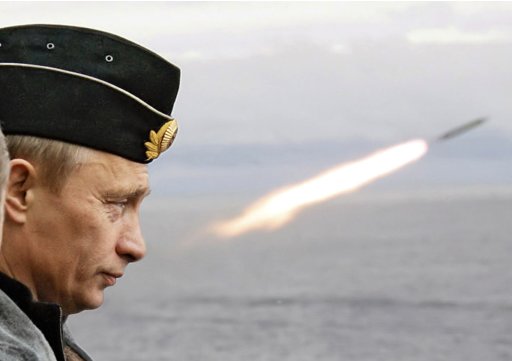
MOSCOW (Reuters) - President Vladimir Putin took a leading role in the latest tests of Russia's strategic nuclear arsenal, the most comprehensive since the 1991 Soviet collapse, the Kremlin said on Saturday.
The exercises, held mostly on Friday, featured prominently in news reports on state television which seemed aimed to show Russians and the world that Putin is the hands-on chief of a resurgent power.
Tests involving command systems and all three components of the nuclear "triad" - land and sea-launched long-range nuclear missiles and strategic bombers - were conducted "under the personal leadership of Vladimir Putin", the Kremlin said.
An RS-12M Topol Intercontinental Ballistic Missile was launched from the Plesetsk site in northern Russia, and a submarine test-launched another ICBM from the Sea of Okhotsk, the Defence Ministry said.
Long-range Tu-95 and Tu-160 bombers fired four guided missiles that hit their targets on a testing range in the northwestern Komi region, it said.
"Exercises of the strategic nuclear forces were conducted on such a scale for the first time in the modern history of Russia," the Kremlin statement said.
The exercises included tests of communications systems and "new algorithms" for command and control, it said.
Friday, October 19, 2012
Forth Worth Arrives in San Diego: Maiden Voyage Complete

By Mass Communication Specialist 2nd Class (SW/AW) Rosalie Garcia, Naval Surface Force, U.S. Pacific Fleet Public Affairs
SAN DIEGO (NNS) -- The Freedom-class littoral combat ship USS Fort Worth (LCS 3) arrived in San Diego Oct. 18, completing the ship's maiden voyage to her homeport.
The ship, named for Fort Worth, Texas, the 17th largest city in the United States and the 5th largest city in Texas, was built in Marinette, Wis., and was commissioned in Galveston, Texas, Sept 22.
After commissioning, Fort Worth departed Galveston and steamed through the Gulf of Mexico, Caribbean Sea and Panama Canal into the Pacific Ocean, completing more than 11,000 miles on her maiden voyage.
Fort Worth Blue Crew Commanding Officer Cmdr. Randy Blankenship, said the blue crew, teamed with the Anti-Submarine Warfare Mission Package crew members, is excited to be reuniting with their families as they deliver the ship to the San Diego fleet.
"Our Sailors have done an amazing job operating this ship for the very first time and flawlessly executing so many challenging evolutions with absolute professionalism and pride," said Blankenship. "I am exceptionally proud of the effort this team has put forth, and they deserve full and unique recognition for this accomplishment."
Fort Worth is outfitted with reconfigurable mission packages, which can be changed out quickly, and focus on three mission areas: mine countermeasures, surface warfare and anti-submarine warfare.
"This is definitely a ship that 20 years from now, we will invent a weapon or capability that we haven't even thought of that will be able to go on the ship because of how the ship has been designed to carry a payload," said Commander, Naval Surface Force, U.S. Pacific Fleet, Vice Adm. Tom Copeman. "The ship is a different way of how we've designed to deliver combat capabilities to the fleet."
Fort Worth is 390 feet in length, with a steel mono hull, aluminum structure and is the third littoral combat ship in the fleet. It has a displacement of approximately 3,000 metric tons fully loaded, is capable of speeds in excess of 40 knots, and can operate in water less than 20-feet deep. Propelled by four water jets in addition to two diesel and two gas turbine engines, the ship boasts a range of over 3,500 nautical miles.
The ship, named for Fort Worth, Texas, the 17th largest city in the United States and the 5th largest city in Texas, was built in Marinette, Wis., and was commissioned in Galveston, Texas, Sept 22.
After commissioning, Fort Worth departed Galveston and steamed through the Gulf of Mexico, Caribbean Sea and Panama Canal into the Pacific Ocean, completing more than 11,000 miles on her maiden voyage.
Fort Worth Blue Crew Commanding Officer Cmdr. Randy Blankenship, said the blue crew, teamed with the Anti-Submarine Warfare Mission Package crew members, is excited to be reuniting with their families as they deliver the ship to the San Diego fleet.
"Our Sailors have done an amazing job operating this ship for the very first time and flawlessly executing so many challenging evolutions with absolute professionalism and pride," said Blankenship. "I am exceptionally proud of the effort this team has put forth, and they deserve full and unique recognition for this accomplishment."
Fort Worth is outfitted with reconfigurable mission packages, which can be changed out quickly, and focus on three mission areas: mine countermeasures, surface warfare and anti-submarine warfare.
"This is definitely a ship that 20 years from now, we will invent a weapon or capability that we haven't even thought of that will be able to go on the ship because of how the ship has been designed to carry a payload," said Commander, Naval Surface Force, U.S. Pacific Fleet, Vice Adm. Tom Copeman. "The ship is a different way of how we've designed to deliver combat capabilities to the fleet."
Fort Worth is 390 feet in length, with a steel mono hull, aluminum structure and is the third littoral combat ship in the fleet. It has a displacement of approximately 3,000 metric tons fully loaded, is capable of speeds in excess of 40 knots, and can operate in water less than 20-feet deep. Propelled by four water jets in addition to two diesel and two gas turbine engines, the ship boasts a range of over 3,500 nautical miles.
#Warfighting: USS Nimitz, CSG 11 begins Composite Training Unit Exercise
By Mass Communication Specialist 3rd Class (SW) Carla Ocampo, USS Nimitz Public Affairs
USS NIMITZ, At Sea (NNS) -- USS Nimitz (CVN 68), Carrier Strike Group (CSG) 11 and embarked Carrier Air Wing (CVW) 11 began Composite Training Unit Exercise (COMPTUEX) Oct. 17.
COMPTUEX is an 18-day exercise required for each CSG, and designed to drill every warfare area including sub surface, surface and air, to practice responses to situations that may occur on deployment.
Embarked Strike Force Training Pacific evaluators will test the CSG on its integrated operational capabilities through a series of simulations.
This is the first time the strike group has worked together since Rim of the Pacific (RIMPAC).
"It's unusual that we have done some integrated training," said Cmdr. Larry Sidbury, Nimitz operations officer. "We had the opportunity to work together in RIMPAC where the whole CSG participated. During a normal turnaround cycle we would not have gotten an opportunity."
COMPTUEX is broken up into phases. Phase one provides a detailed schedule of events (SOE) and specific task training for CSG and warfare commanders. Phase two consists of real-world exercises and no SOE.
"No doubt each of these phases will challenge our ability to effectively manage and employ our limited resources," said Rear Adm. Peter Gumataotao, commander, CSG 11. "We need to embrace a fundamental mindset shift from training to certification."
Nimitz will simulate a straits transit with other ships from the strike group, participate in replenishments at sea, vertical replenishments, and run many general quarters drills.
"It's going to be a busy time because we're going to get exposed to every mission area in such a condensed amount of time," said Sidbury. "With the amount of work that needs to be accomplished during this time, I think it's going to push people to a fairly high OPTEMPO [operations tempo]."
Unit specific training will allow the separate strike group assets to practice their roles individually, while other situations will test the strike group's ability to react as a single force.
"Give 100 percent because the next time we sail, we may be standing in harm's way," said Gumataotao. "Execute as you have diligently trained for this moment and continue to make me proud."
After successful completion of COMPTUEX, Nimitz and the rest of the CSG will move on to the final exam, joint task force exercise, preparing Nimitz for her 2013 deployment.
CSG 11 is made up of Nimitz, CVW-11, guided-missile cruiser USS Princeton (CG 5), and Destroyer Squadron 23; guided-missile destroyers USS Higgins (DDG 76), USS Shoup (DDG 86), USS Stockdale (DDG 106) and USS William P. Lawrence (DDG 110).
COMPTUEX is an 18-day exercise required for each CSG, and designed to drill every warfare area including sub surface, surface and air, to practice responses to situations that may occur on deployment.
Embarked Strike Force Training Pacific evaluators will test the CSG on its integrated operational capabilities through a series of simulations.
This is the first time the strike group has worked together since Rim of the Pacific (RIMPAC).
"It's unusual that we have done some integrated training," said Cmdr. Larry Sidbury, Nimitz operations officer. "We had the opportunity to work together in RIMPAC where the whole CSG participated. During a normal turnaround cycle we would not have gotten an opportunity."
COMPTUEX is broken up into phases. Phase one provides a detailed schedule of events (SOE) and specific task training for CSG and warfare commanders. Phase two consists of real-world exercises and no SOE.
"No doubt each of these phases will challenge our ability to effectively manage and employ our limited resources," said Rear Adm. Peter Gumataotao, commander, CSG 11. "We need to embrace a fundamental mindset shift from training to certification."
Nimitz will simulate a straits transit with other ships from the strike group, participate in replenishments at sea, vertical replenishments, and run many general quarters drills.
"It's going to be a busy time because we're going to get exposed to every mission area in such a condensed amount of time," said Sidbury. "With the amount of work that needs to be accomplished during this time, I think it's going to push people to a fairly high OPTEMPO [operations tempo]."
Unit specific training will allow the separate strike group assets to practice their roles individually, while other situations will test the strike group's ability to react as a single force.
"Give 100 percent because the next time we sail, we may be standing in harm's way," said Gumataotao. "Execute as you have diligently trained for this moment and continue to make me proud."
After successful completion of COMPTUEX, Nimitz and the rest of the CSG will move on to the final exam, joint task force exercise, preparing Nimitz for her 2013 deployment.
CSG 11 is made up of Nimitz, CVW-11, guided-missile cruiser USS Princeton (CG 5), and Destroyer Squadron 23; guided-missile destroyers USS Higgins (DDG 76), USS Shoup (DDG 86), USS Stockdale (DDG 106) and USS William P. Lawrence (DDG 110).
Navy to Christen Amphibious Assault Ship America

WASHINGTON (NNS) -- The Navy will christen the amphibious assault ship, America (LHA 6), Oct. 20, during a 10 a.m. CDT ceremony in Pascagoula, Miss.
The Commandant of the Marine Corps Gen. James F. Amos will deliver the ceremony's principal address. Mrs. Lynne Pace, wife of former Chairman of the Joint Chiefs of Staff Gen. Peter Pace, will serve as the ship's sponsor.
From the American Revolution through the first Gulf War, three warships have sailed with the name America. The first America was a 74-gun ship-of-the-line built for use by the Continental Navy and then presented to the king of France as a gift to show appreciation for his country's service to the new nation. The second America transported troops during World War I. The third ship to bear the name was a Kitty-Hawk class aircraft carrier that supported operations from the Vietnam War through Operation Desert Storm. America will be the fourth U.S. Navy ship to bear this name.
"The LHA 6 will inherit and continue the proud tradition of distinguished service that has long been associated with ships bearing the name America," said Secretary of the Navy Ray Mabus. "For decades to come, the America Class will give sailors and Marines highly capable, flexible and advanced platforms for executing the complete spectrum of operations."
The future USS America will be the first ship of its class, replacing the Tawara class of amphibious assault ships. As the next generation "big-deck" amphibious ship, LHA 6 will be optimized for aviation, capable of supporting current and future aircraft such as the tilt-rotor MV-22 Osprey and Joint Strike Fighter. The LHA 6 will use the same gas turbine propulsion plant, zonal electrical distribution system, and electric auxiliary system built for USS Makin Island (LHD 8). This unique auxiliary propulsion system is designed for fuel efficiency.
The LHA 6 will provide a flexible, multi-mission platform with capabilities that span the range of military operations -- from forward deployed crisis response to forcible entry operations. The ship also will provide forward presence and power projection as an integral part of joint, interagency and multinational maritime expeditionary forces.
The America will operate for sustained periods in transit to, and operations, in an amphibious objective area to include: embarking, transporting, controlling, inserting, sustaining and extracting elements of a marine air-ground task force, and supporting forces by helicopters and tilt rotors supported by Joint Strike Fighters F-35B.
Although the America will not include a well deck, the ship includes additional aviation spaces and will have an increased aviation capacity: enlarged hangar deck, realignment and expansion of the aviation maintenance facilities, a significant increase in available stowage for parts and support equipment, and increased aviation fuel capacity.
The ship's keel was laid July 17, 2009, and the shipbuilder plans to deliver the America in late 2013. The USS America will be homeported in San Diego.
Built by Ingalls Shipbuilding, a division of Huntington Ingalls Industries in Pascagoula, Miss., the ship will be 844 feet in length, with a 106-foot beam, and have a displacement of approximately 44,971 long tons.
#Warfighting: John C. Stennis Strike Group Enters US 5th Fleet

JOHN C. STENNIS, At Sea (NNS) -- The John C. Stennis Carrier Strike Group (JCSSG), entered the U.S. 5th Fleet Area of Responsibility (AOR), Oct. 17.
The JCSSG takes the place of the Enterprise Carrier Strike Group, which departed U.S. 5th Fleet AOR to return to the United States where flagship USS Enterprise (CVN 65) will be deactivated after more than 50 years of service.
"We're looking forward to working with our partner nations and ensuring the vital sea lanes of this region remain free for all maritime traffic," said Rear Adm. Chuck Gaouette, commander, JCSSG. "We have trained for a wide variety of contingencies, from supporting coalition ground troops in Afghanistan to conducting humanitarian assistance operations, and I'm confident this strike group will accomplish any mission that we are asked to execute."
JCSSG deployed four months ahead of schedule, to support combatant commander requirements for U.S. assets in the region.
While en route to 5th Fleet, the JCSSG conducted integrated training within the strike group, as well as combined operations in the U.S. 7th Fleet with the George Washington Carrier Strike Group. The JCSSG also had two port visits in 7th Fleet, Sepangar, Malaysia and Phuket, Thailand.
The JCSSG consists of the aircraft carrier USS John. C. Stennis (CVN 74), Carrier Air Wing 9, Destroyer Squadron 21 and guided-missile cruiser USS Mobile Bay (CG 53).
Subscribe to:
Posts (Atom)