Our friendly Tacsat 4 (2011-052A) DoD Milsat is on an ascending pass towards
apogee right now and located 11,900 km in altitude just south of Puerto
Rico. It's 253.000 MHz downiink is active with AM ATC traffic picked off by its
uplink. The 253.000 MHz downlink is a flame thrower here in Btown right now.
None of the other known UHF downlinks are currently active.
Wednesday, February 20, 2013
Saturday, February 16, 2013
Russian Bear Bombers Over Guam
 |
| Russian TU-95 Bear Strategic Bomber (Photo courtesy of DoD) |
Noted military reporter Bill Gertz on the Washington Free Beacon website is reporting that two Russian nuclear-armed bombers circled the western Pacific island of Guam this week in the latest sign of Moscow’s growing strategic assertiveness toward the United States.
The Russian Tu-95 Bear-H strategic bombers were equipped with nuclear-tipped cruise missiles and were followed by U.S. jets as they circumnavigated Guam on Feb. 12 local time—hours before President Barack Obama’s state of the union address.
Air Force Capt. Kim Bender, a spokeswoman for the Pacific Air Force in Hawaii, confirmed the incident to the Washington Free Beacon and said Air Force F-15 jets based on Andersen Air Force Base, Guam, “scrambled and responded to the aircraft.”
“The Tu-95s were intercepted and left the area in a northbound direction. No further actions occurred,” she said. Bender said no other details would be released “for operational security reasons.”
You can read the entire story by clicking here.

Friday, January 18, 2013
The CHM Inaugural Scanning Guide - now online!
If you are in the DC Area for the POTUS Inaug on Monday, be sure to get your free copy of the Capitol Hill Monitor group DC Area frequency guide. You can download that 12 page pdf at http://henney.com/chm/0113/chm0113.pdf.
Navy at Travis quietly keeps communications open with subs
 |
| Lt. Cmdr. Jason Anstead gestures toward a E-6 Mercury communications plane used by the Navy VQ-3 detachment unit based at Travis Air Force Base. The plane trails a five-mile-long antenna out of its rear, in order to communicate with submarines on missions in the Pacific. (Robinson Kuntz/Daily Republic) |
Editor Note: For my west coast friends keep a watch on 279.800 MHz.
Article by Ian Thompson/Daily Republic
TRAVIS AIR FORCE BASE — Whenever the Pentagon wants to call one of its nuclear subs in the Pacific, the call goes through the quiet Navy professionals whose E-6B Mercury communication aircraft fly out of their unobtrusive alert facility on Travis’ south side.
Like fishermen, the aircrew of Travis’ VQ-3 detachment spends long hours out over the Pacific, catching messages with a five-mile trailing antenna that will then be sent to the subs cruising safely and silently under water within 1,000 miles of the aircraft.
“We are one big relay platform,” said VQ-3 Detachment Officer in Charge Navy Lt. Cmdr. Jason Anstead.
The unit’s unofficial name, TACAMO, stands for Take Charge and Move Out. It was born in July 1963 when the director of naval communications for the chief of naval operations used those words to start work on coming up with a better way to communicate with the Navy’s nuclear submarines.
This system had to be capable of surviving any hostile military action, something ground-based communications sites were incapable of doing, according to Anstead.
The result was the creation of Strategic Communications Wing 1, which is headquartered at Tinker Air Force Base, Okla., and oversees three fleet air reconnaissance squadrons. One of those, VQ-3, has the detachment, which is stationed on the south side of Travis Air Force Base’s runway. It’s sister unit, VQ-4, has a detachment that is stationed on the East Coast at Naval Air Station Patuxent River, Md.
You can read the entire article online on the Daily Republic website at
http://www.dailyrepublic.com/news/military/navy-at-travis-quietly-keeps-communications-open-with-nations-submarines/
Wednesday, December 19, 2012
US UHF Milsat Pirate Busted
Many of us who monitoring Milsat activity are well aware of the hijinks involving Brazilian (aka Portuguese speaking) pirates transmitting over our UHF milsats. Well one another one of them has been busted, and no he was not in South America, but right here in the United States, New Jersey and an Extra Class Amateur Radio Operator to boot.
So who is our winner of the "Bonehead of 2012 award?" Here is part of the story courtesy of the ARRL website:
FCC Finds New Jersey Ham Violated Communication Act, Reduces Forfeiture from $20,000 to $16,000
After unsuccessfully appealing to the FCC to cancel his $20,000 forfeiture, Joaquim Barbosa, N2KBJ, of Elizabeth, New Jersey was issued a Forfeiture Order stating that he must pay $16,000 for “willfully and repeatedly violating Section 301 of the Communications Act of 1934, as amended by operating a radio transmitting equipment on the frequency 296.550 MHz without Commission authorization.”
The FCC noted in the Forfeiture Order that based on the examination process involved in pursuing an amateur license, “amateur licensees are expected to have an understanding of radio operations and pertinent FCC regulations, including Part 97 of the FCC’s rules governing the Amateur Radio Service. Licensed amateur operators know that they are authorized to operate only on the frequencies listed in Section 97.301 of the rules, as designated by their operator class and license. Pursuant to the Table of Allocations, the 267-322 MHz band -- the band that Barbosa was operating in -- is allocated solely for federal government use, which we continue to believe Barbosa knew (or should have known) was not authorized for non-government use.”
Barbosa’s Amateur Radio license expired August 31, 2008, but his timely filed renewal application was listed as “Offlined for Enforcement Bureau Action” in the ULS. As such, Barbosa was legally allowed to operate while his case was undergoing the enforcement proceedings.
You can read the complete bizarre story on Barbosa and why he thought he could operate on a DoD Milsat uplink/downlink on the ARRL website at:
http://www.arrl.org/news/fcc-finds-new-jersey-ham-violated-communication-act-reduces-forfeiture-from-20-000-to-16-000
And what is 296.550 MHz? From my MilcomMP database:
So N2KBJ guess we won't be seeing you hand around the ham bands in the future. Just curious how is that Brazilian milsat license you got working out for you?
As old P.T. Barnum you to say, "There's a sucker born every minute" or you may better recognize it in your 296.550 MHz native tongue, "há um otário a cada minuto nasce."
So who is our winner of the "Bonehead of 2012 award?" Here is part of the story courtesy of the ARRL website:
FCC Finds New Jersey Ham Violated Communication Act, Reduces Forfeiture from $20,000 to $16,000
After unsuccessfully appealing to the FCC to cancel his $20,000 forfeiture, Joaquim Barbosa, N2KBJ, of Elizabeth, New Jersey was issued a Forfeiture Order stating that he must pay $16,000 for “willfully and repeatedly violating Section 301 of the Communications Act of 1934, as amended by operating a radio transmitting equipment on the frequency 296.550 MHz without Commission authorization.”
The FCC noted in the Forfeiture Order that based on the examination process involved in pursuing an amateur license, “amateur licensees are expected to have an understanding of radio operations and pertinent FCC regulations, including Part 97 of the FCC’s rules governing the Amateur Radio Service. Licensed amateur operators know that they are authorized to operate only on the frequencies listed in Section 97.301 of the rules, as designated by their operator class and license. Pursuant to the Table of Allocations, the 267-322 MHz band -- the band that Barbosa was operating in -- is allocated solely for federal government use, which we continue to believe Barbosa knew (or should have known) was not authorized for non-government use.”
Barbosa’s Amateur Radio license expired August 31, 2008, but his timely filed renewal application was listed as “Offlined for Enforcement Bureau Action” in the ULS. As such, Barbosa was legally allowed to operate while his case was undergoing the enforcement proceedings.
You can read the complete bizarre story on Barbosa and why he thought he could operate on a DoD Milsat uplink/downlink on the ARRL website at:
http://www.arrl.org/news/fcc-finds-new-jersey-ham-violated-communication-act-reduces-forfeiture-from-20-000-to-16-000
And what is 296.550 MHz? From my MilcomMP database:
296.5500 FLTSAT Charlie Navy Fleet Relay (25 kHz) Channel 04 Uplink
The downlink for this uplink is 255.550 MHz.
Here are a couple of the notes in this regard from my database about this 255.550
downlink/296.550 uplink
255.5500 Portuguese pirates music and comms (also noted using DStar
digital comms)
255.5500 Portuguese milsat downlink pirates, whistlingSo N2KBJ guess we won't be seeing you hand around the ham bands in the future. Just curious how is that Brazilian milsat license you got working out for you?
As old P.T. Barnum you to say, "There's a sucker born every minute" or you may better recognize it in your 296.550 MHz native tongue, "há um otário a cada minuto nasce."
Wednesday, December 12, 2012
North Korea Launches a Unha-3 and what into orbit?

North Korea successfully launched a Unha-3 three stage rocket on Wednesday from its west coast launch site. The rocket, which North Korea says put a weather satellite into orbit, has been labeled by the United States, South Korea and Japan as a test of technology that could one day deliver a nuclear warhead capable of hitting targets as far away as the continental United States.
"The satellite has entered the planned orbit," a North Korean television news reader clad in traditional Korean garb announced, after which the station played patriotic songs with the lyrics "Chosun (Korea) does what it says."
The Unha-3 rocket fired just before 9:49 a.m. local time (0049 GMT), and was detected heading south by a South Korean destroyer patrolling the Yellow Sea. Japanese officials said the first rocket stage fell into the Yellow Sea west of the Korean Peninsula; a second stage fell into the Philippine Sea hundreds of kilometers (miles) farther south.
The North American Aerospace Defense Command (NORAD), later confirmed that "initial indications are that the missile deployed an object that appeared to achieve orbit," the first time an independent body has verified North Korean claims.
USSTRATCOM statement on N-Korea launch
NORAD and USNORTHCOM Public Affairs
http://www.norad.mil/News/2012/121112b.html
December 11, 2012
PETERSON AIR FORCE BASE, Colo. - North American Aerospace Defense Command officials acknowledged today that U.S. missile warning systems detected and tracked the launch of a North Korean missile at 7:49 p.m. EST. The missile was tracked on a southerly azimuth. Initial indications are that the first stage fell into the Yellow Sea. The second stage was assessed to fall into the Philippine Sea. Initial indications are that the missile deployed an object that appeared to achieve orbit. At no time was the missile or the resultant debris a threat to North America.
NORAD and USNORTHCOM Public Affairs
http://www.norad.mil/News/2012/121112b.html
December 11, 2012
PETERSON AIR FORCE BASE, Colo. - North American Aerospace Defense Command officials acknowledged today that U.S. missile warning systems detected and tracked the launch of a North Korean missile at 7:49 p.m. EST. The missile was tracked on a southerly azimuth. Initial indications are that the first stage fell into the Yellow Sea. The second stage was assessed to fall into the Philippine Sea. Initial indications are that the missile deployed an object that appeared to achieve orbit. At no time was the missile or the resultant debris a threat to North America.

North Korea's rocket launches
Dec 2012: North Korea launches three-stage rocket, says it successfully put a satellite into orbit; US defense officials confirm object in orbit.Apr 2012: Three-stage rocket explodes just after take-off, falls into sea.
Apr 2009: Three-stage rocket launched; North Korea says it was a success, US says it failed and fell into the sea.
Jul 2006: North Korea test-fires a long-range Taepdong-2 missile; US said it failed shortly after take-off.
Air Force sends mystery mini-shuttle back to space

The Air Force launched the unmanned spacecraft Tuesday aboard an Atlas V rocket with an on-time liftoff at 1:03 p.m. at Launch Complex 41.
The Atlas rocket and its Centaur upper stage performed flawlessly through the first 17 minutes and 34 seconds. The mission then switched into a classified mode, and an information blackout followed.
It's the second flight for this original X-37B spaceplane. It circled the planet for seven months in 2010. A second X-37B spacecraft spent more than a year in orbit. The two previous secret flights were in roughly 200-plus-mile-high orbits. These spacecraft are capable of autonomous atmospheric reentry and landing. The first two missions concluded on a runway at Vandenberg Air Force Base in California.
The military isn't saying much if anything about this new secret mission. But one scientific observer, Harvard University's Jonathan McDowell of the Harvard-Smithsonian Center for Astrophysics, speculates the spaceplane is carrying sensors designed for spying and likely is serving as a testbed.
Friday, December 07, 2012
U.S. warships moving to monitor North Korea's planned rocket launch
 |
A satellite image showing North
Korea's Dongchang-ri missile launch site Photo:
EPA/YONHAP/GOOGLE
|
Reuters is reporting that the United States is shifting warships into position to track and possibly defend against a planned North Korean rocket launch while urging Pyongyang to cancel its second such attempt this year, the head of the U.S. Pacific Command said on Thursday.
"It should seem logical that we'll move them around so we have the best situational awareness," he said. "To the degree that those ships are capable of participating in ballistic missile defense, then we will position them to be able to do that."The United States and many other countries view it as a test of a long-range, nuclear-capable ballistic missile that would violate U.N. resolutions and further destabilize the Korean Peninsula. The North Korean launch attempt in April failed
Meanwhile in Japan, the order to destroy the missile should any part of it threaten to fall onto Japanese territory was issued after a meeting of the Security Council of Japan met in the morning and was informed that North Korea has begun has filling a fuel tank alongside the launch pad at the Sohae Satellite Launching Station in preparation for the launch.
Japan has already deployed Patriot Advanced Capability-3 missile batteries in
Tokyo, as well as in Okinawa and at locations along the northern and eastern
coasts facing the Korean Peninsula.
Three Japanese destroyers equipped with the advanced Aegis detect-and-destroy
weapons system have been deployed in the Sea of Japan.
Pyongyang claims the launch is an attempt to put an earth-observation
satellite into orbit. But analysts and foreign governments share the belief that
the it is part of North Korea's development of long-range missiles.
The head of US forces in Japan, Lt. Gen. Salvatore Angelella, told reporters
on Thursday that the launch threatens the stability of the region..
Wednesday, November 21, 2012
Israeli HF Military Frequencies

Given the current hostilities over in the Middle East (Israel and the Gaza Strip), here are a few of the recently monitored HF Israeli military frequencies.
4XZ Israeli Navy Haifa
2253.0 4XZ: Israeli Navy Haifa ISR 188-110 MPSK proprietary waveform
2680.0 4XZ: Israeli Navy Haifa ISR CW VVV DE 4XZ
4331.0 4XZ: Israeli Navy Haifa ISR CW VVV DE 4XZ
4595.0 4XZ: Israeli Navy Haifa ISR CW VVV DE 4XZ
6379.0 4XZ: Israeli Navy Haifa ISR CW VVV DE 4XZ
6607.0 4XZ: Israeli Navy Haifa ISR CW VVV DE 4XZ
7857.0 4XZ: Israeli Navy Haifa ISR 188-110 MPSK proprietary waveform
7954.0 4XZ: Israeli Navy Haifa ISR 188-110 MPSK proprietary waveform
9390.0 4XZ: Israeli Navy Haifa ISR 188-110 MPSK proprietary waveform
10341.0 4XZ: Israeli Navy Haifa ISR 188-110 MPSK proprietary waveform
11153.0 4XZ: Israeli Navy Haifa ISR 188-110 MPSK proprietary waveform
13514.0 4XZ: Israeli Navy Haifa ISR 188-110 MPSK proprietary waveform
Israeli Air Force (ALE/USB)
3823.0 3865.0 4507.0 4681.0 4700.0 5048.5 5123.0 5129.0 5133.0 5209.0 5269.0 5456.0 5470.0 5478.0 5500.0 5581.0 5662.0 6224.0 6265.0 6288.0 6372.0 6487.0 6631.0 6736.0 6742.0 6840.0 6878.0 6898.0 6921.0 6925.0 6933.0 6992.0 7460.0 7467.0 7630.0 7641.5 7651.0 7778.0 7780.0 7848.0 7950.0 7957.0 7965.0 7967.0 8035.0 8063.0 8100.0 8135.0 8165.0 8234.0 8323.0 8441.0 8521.0 8541.0 8556.0 8622.0 8847.0 8858.0 9135.0 9219.0 9227.0 10614.0 10642.0 11491.0 12143.0 12251.0 13032.0 13291.0 19223.0 19326.0 22850.0 kHz
Israeli Air Force ALE addresses:
035 CH-53-2000 118 Squadron Tel Nof AB, Israel
046 F-16D Block 30 109 Squadron Ramat David AB, Israel
082 Aircraft Unknown Squadron Aircraft
100 F-16A 140 Squadron Nevatim AB, Israel
220 F-15I 69 Squadron Hatserim AB, Israel
227 F-15I 69 Squadron Hatserim AB, Israel
420 KC-130H Kamaf 103/131 Squadron Tel Aviv-Lod AB/Ben Gurion IAP, ISR
427 C-130H Kamaf 103/131 Squadron Tel Aviv-Lod AB/Ben Gurion IAP, ISR
428 C-130H Kamaf 103/131 Squadron Tel Aviv-Lod AB/Ben Gurion IAP, ISR
436 KC-130H Kamaf 103/131 Squadron Tel Aviv-Lod AB/Ben Gurion IAP, ISR
436 KC-130H Kamaf 103/131 Squadron Tel Aviv-Lod AB/Ben Gurion IAP, ISR
619 F-16D 105 Squadron Hatzor AB, Israel
642 F-16D 105 Squadron Hatzor AB, Israel
651 F-16D 105 Squadron Hatzor AB, Israel
667 F-16D 105 Squadron Hatzor AB, Israel
A506 Gnd Stn
AA1 Gnd Stn 103 Squadron (C-130E/K/C-130H) Nevatim AB, ISR
AA2 Gnd Stn
AA3 Gnd Stn
AA4 Gnd Stn
AA5 Gnd Stn
AA6 Gnd Stn
AA7 Gnd Stn
AA8 Gnd Stn
AA9 Gnd Stn
AAA Gnd Stn Air Force Headquarters Tel Aviv, Israel
ACC Gnd Stn Air Force Headquarters Tel Aviv, Israel
ACCES1 Gnd Stn Air Force Headquarters Tel Aviv, Israel
AE2 Gnd Stn Air Force Headquarters Tel Aviv, Israel
AMM Gnd Stn
ARC Gnd Stn
AS5 Gnd Stn Air Force Headquarters Tel Aviv, Israel
B19 Aircraft
B28 Aircraft
B36 Aircraft
B84 Aircraft
BAA Gnd Stn
BB1 Gnd Stn 124 Squadron (UH-60A/S-70A) Palachim AB, Israel
BB2 Gnd Stn 160 Squadron (AH-1E/F) Palachim AB, Israel
BB3 Gnd Stn 161 Squadron (AH-1E/F) Ovda AB, Israel
BB4 Gnd Stn
BB5 Gnd Stn
BB7 Gnd Stn
C14 AH-1F Tsefa C 160 Squadron Palachim AB, Israel
C21 AH-1S Tsefa A 160 Squadron Palachim AB, Israel
C29 Aircraft Aircraft
C35 UH-60A Yanshuf 3 123 Squadron Aircraft
C36 Aircraft Aircraft
C44 AH-64D Saraf 113 Squadron Aircraft
C46 AH-64D Saraf 113 Squadron Hatzerim AB, Israel
C52 AH-64D Saraf 113 Squadron Aircraft
C54 AH-64D Saraf 113 Squadron Aircraft
C62 S-70A Yanshuf 123 Squadron Hatzerim AB, Israel
C79 AH-64D Saraf 113 Squadron Aircraft
C83 Tzukit FTS Hatzerim AB, Israel
DD1 Gnd Stn 103 Squadron (C-130E/K/C-130H) Tel Aviv-Lod AB/Ben Gurion IAP, ISR
DD2 Gnd Stn 131 Squadron (C-130E/K/C-130H) Tel Aviv-Lod AB/Ben Gurion IAP, ISR
DD3 Gnd Stn
DD6 Gnd Stn
DD7 Gnd Stn
DD8 Gnd Stn
DDD Gnd Stn
E69 Aircraft
GB2 Gnd Stn 131 Squadron (C-130E/K/C-130H) Tel Aviv-Lod AB/Ben Gurion IAP, ISR
GT4 Gnd Stn 131 Squadron (C-130E/K/C-130H) Tel Aviv-Lod AB/Ben Gurion IAP, ISR
GT6 Gnd Stn 131 Squadron (C-130E/K/C-130H) Tel Aviv-Lod AB/Ben Gurion IAP, ISR
K20 KC-130H Kamaf 103/131 Squadron Tel Aviv-Lod AB/Ben Gurion IAP, ISR
K22 KC-130H Kamaf 103/131 Squadron Tel Aviv-Lod AB/Ben Gurion IAP, ISR
K27 C-130H Kamaf 103/131 Squadron Tel Aviv-Lod AB/Ben Gurion IAP, ISR
K28 C-130H Kamaf 103/131 Squadron Tel Aviv-Lod AB/Ben Gurion IAP, ISR
K35 C-130H Karnaf 103/131 Squadron Tel Aviv-Lod AB/Ben Gurion IAP, ISR
K36 KC-130H Kamaf 103/131 Squadron Tel Aviv-Lod AB/Ben Gurion IAP, ISR
K45 KC-130H Kamaf 103/131 Squadron Tel Aviv-Lod AB/Ben Gurion IAP, ISR
KH1 Gnd Stn
KN1 Gnd Stn
M46 Boeing B-707 (Phalcon) 120 Squadron Tel Aviv-Lod AB/Ben Gurion IAP, ISR
M48 Boeing B-707 (EC-707 Re'em) 120 Squadron Tel Aviv-Lod AB/Ben Gurion IAP, ISR
M60 Boeing B-707 (EC-707 Re'em) 120 Squadron Tel Aviv-Lod AB/Ben Gurion IAP, ISR
M64 Boeing B-707 (EC-707 Re'em) 120 Squadron Tel Aviv-Lod AB/Ben Gurion IAP, ISR
M72 Boeing B-707 (EC-707 Re'em) 120 Squadron Tel Aviv-Lod AB/Ben Gurion IAP, ISR
M75 Boeing B-707 (EC-707 Re'em) 120 Squadron Tel Aviv-Lod AB/Ben Gurion IAP, ISR
MN1 Gnd Stn
NAK Gnd Stn
NT1 Gnd Stn
NT2 Gnd Stn
O13 Gnd Stn
R10 Aircraft
R17 Aircraft
R27 Aircraft
R67 Aircraft
RAM Gnd Stn Ramat David AB, Israel
S15 Aircraft
S19 Aircraft
S27 Aircraft
S30 Aircraft
S45 Aircraft
S53 Aircraft
SA3 Gnd Stn
T22 Aircraft
T26 Aircraft
TKM Gnd Stn
TS1 Gnd Stn
TS2 Gnd Stn
TS3 Gnd Stn
TSM Gnd Stn
TSR Gnd Stn
TYS Gnd Stn
W68 Aircraft
W69 Aircraft
W72 Aircraft
XT9 Gnd Stn
XXX Gnd Stn
Y12 Aircraft
Y14 Aircraft
Y20 Aircraft
Y22 Aircraft
Y36 Aircraft
Y37 Aircraft
Y45 Aircraft
Y50 Aircraft
Y80 Aircraft
YN1 Gnd Stn
YN2 Gnd Stn
ZM6 Gnd Stn
I will add to this frequency list as new frequencis are monitored. Any updates, corrections, and additions are always appreciated. Sent email to the address in the masthead.
Army FM 11-490-7
Dear Milcom MP Readers,
I'm looking for an electronic copy of Army FM 11-490-7. If you have one that you can share, please contact me at the address in the header of this blog.
I appreciate your help in this matter. 73 de Larry
I'm looking for an electronic copy of Army FM 11-490-7. If you have one that you can share, please contact me at the address in the header of this blog.
I appreciate your help in this matter. 73 de Larry
Tuesday, November 20, 2012
Chinese Diplo Comms?
Eddy Waters on the UDXF newsgroup passed along the following intercepts a couple of days ago. Does anyone knowfor sure who in China originates these transmissions?
10265.97 :China 4+4 75/3000 LSB four number group messages 1135 (17 November 2012)
11141.97 :China 4+4 75/3000 LSB four number group messages 1052 (17 November 2012)
13931.97 :China 4+4 75/3000 LSB four number group messages 1112 (17 November 2012)
Thanks Eddie for sharing with the rest of us.
And from MT's Digital Digest guru Mike Chase-Ortiz:
10803.0 :China 4+4 HF modem, tfc UNID Chinese Diplo (on LSB)
So are these Diplo or Military comms? Anyone know for sure?
10265.97 :China 4+4 75/3000 LSB four number group messages 1135 (17 November 2012)
11141.97 :China 4+4 75/3000 LSB four number group messages 1052 (17 November 2012)
13931.97 :China 4+4 75/3000 LSB four number group messages 1112 (17 November 2012)
Thanks Eddie for sharing with the rest of us.
And from MT's Digital Digest guru Mike Chase-Ortiz:
10803.0 :China 4+4 HF modem, tfc UNID Chinese Diplo (on LSB)
So are these Diplo or Military comms? Anyone know for sure?
Thursday, November 15, 2012
Heavy Airlift Wing is fully operational
TALLINN, Estonia (AFNS) -- Col. Keith P. Boone, Strategic Airlift Capability Heavy Airlift Wing commander, declared the multinational wing has achieved a full operational capability status.
In a statement to the SAC steering board and NATO Airlift Management Organization Board of Directors at a semi-annual meeting in Tallinn, Estonia, Boone stated "as the HAW commander I have the privilege to declare that effective 14 November 2012 the Strategic Airlift Capability Heavy Airlift Wing has reached full operational capability."
The SAC is a cooperative effort of 12 nations: Bulgaria, Estonia, Finland, Hungary, Lithuania, the Netherlands, Norway, Poland, Romania, Slovenia, Sweden and the United States. Its operational arm, the HAW, is stationed at Papa Air Base, Hungary, and flies worldwide missions with Boeing C-17 Globemaster III aircraft.
The HAW was activated on July 27, 2009, and reached initial operational capability on May 25, 2010. During this initial period the wing not only became a well-trained international military airlift unit, but also proved capable of supporting the participating nations with strategic airlift missions in all major operational areas.
As preconditions to be fully operational, the wing can safely and effectively conduct the entire range of missions assigned to it with three C-17 aircraft, full manning, sufficient infrastructure and logistical sustainment. The wing is supported by the participating SAC nations, the host nation of Hungary, the NATO Airlift Management Program and Boeing Field Services. Post-FOC, the HAW is able to produce the annual flight hours required by the SAC member nations.
Boone lauded the unit when he said, "The men and women of the Heavy Airlift Wing, along with their families, have worked exceptionally hard to build a team that is second to none. Together with the mission partners here at Papa Air Base and around the world, we have forged a great example of pooling and sharing, smart defense, and smart support. I am extremely proud to lead such a diverse, talented, and focused bunch of professionals.
"FOC is a significant achievement in the short history of the HAW. The future remains before us, and it is bright indeed. We might be 12 nations, but we are one team, one mission, one vision!"
Since the delivery of the first aircraft in July 2009, the HAW has flown more than 8,000 flight hours, delivered more than 24,000 tons of cargo and moved more than 32,000 passengers for the SAC nations across six continents, including missions to Haiti, Afghanistan, Pakistan, and South Africa.
In a statement to the SAC steering board and NATO Airlift Management Organization Board of Directors at a semi-annual meeting in Tallinn, Estonia, Boone stated "as the HAW commander I have the privilege to declare that effective 14 November 2012 the Strategic Airlift Capability Heavy Airlift Wing has reached full operational capability."
The SAC is a cooperative effort of 12 nations: Bulgaria, Estonia, Finland, Hungary, Lithuania, the Netherlands, Norway, Poland, Romania, Slovenia, Sweden and the United States. Its operational arm, the HAW, is stationed at Papa Air Base, Hungary, and flies worldwide missions with Boeing C-17 Globemaster III aircraft.
The HAW was activated on July 27, 2009, and reached initial operational capability on May 25, 2010. During this initial period the wing not only became a well-trained international military airlift unit, but also proved capable of supporting the participating nations with strategic airlift missions in all major operational areas.
As preconditions to be fully operational, the wing can safely and effectively conduct the entire range of missions assigned to it with three C-17 aircraft, full manning, sufficient infrastructure and logistical sustainment. The wing is supported by the participating SAC nations, the host nation of Hungary, the NATO Airlift Management Program and Boeing Field Services. Post-FOC, the HAW is able to produce the annual flight hours required by the SAC member nations.
Boone lauded the unit when he said, "The men and women of the Heavy Airlift Wing, along with their families, have worked exceptionally hard to build a team that is second to none. Together with the mission partners here at Papa Air Base and around the world, we have forged a great example of pooling and sharing, smart defense, and smart support. I am extremely proud to lead such a diverse, talented, and focused bunch of professionals.
"FOC is a significant achievement in the short history of the HAW. The future remains before us, and it is bright indeed. We might be 12 nations, but we are one team, one mission, one vision!"
Since the delivery of the first aircraft in July 2009, the HAW has flown more than 8,000 flight hours, delivered more than 24,000 tons of cargo and moved more than 32,000 passengers for the SAC nations across six continents, including missions to Haiti, Afghanistan, Pakistan, and South Africa.
Saturday, November 10, 2012
Vigilant Guard exercise ends as "successful mission"
By Cpl. Clay Beyersdorfer Missouri National Guard
JEFFERSON CITY, Mo. - The Missouri National Guard's Vigilant Guard training exercise concluded Wednesday, after a five day period that was a response to a simulated earthquake that took place along the New Madrid fault line.
Vigilant Guard was a worst-case scenario natural disaster exercise that was a response to the last ten years in the state of Missouri, which saw flooding, ice storms and the Joplin tornado, said Maj. Gen. Stephen L. Danner, adjutant general of the Missouri National Guard.
"More than 4,600 Soldiers, Airmen and civilian partners participated in this exercise, which is one of the largest Missouri has ever organized," Danner said. "It was an outstanding opportunity for our force to test our processes and capabilities. The Missouri National Guard is the most seasoned, battle-tested force we've ever fielded, but we are always looking for ways to
improve ourselves so we can better serve the state."
Col. William Blaylock, the Director of Strategic Plan and Exercises for the Missouri National Guard, was also pleased with the results of the Vigilant Guard exercise.
"From a soldier-standpoint and even the civilians, we have had tremendous cooperation and participation," Blaylock said. "Missouri Guard soldiers and soldiers in general are trained to rise to the occasion when orders are not given, and everyone has done a great job in that sense."
In Columbia, Soldiers and Airmen worked alongside civilian agencies including Missouri Task Force 1, a FEMA urban search and rescue team, to practice skills including search and extraction and decontamination. The training was especially realistic because it included role players who acted as victims.
The teams in Columbia reported to the Guard's Joint Operations Center, or, JOC, in Jefferson City. The JOC is the central nerve hub of the Missouri National Guard. Danner recently expanded the JOC to give the Soldiers, Airmen and civilians working within a more effective working environment.
Vigilant Guard was the Guard's first opportunity to utilize the new facility, said Maj. Brett Cooper, chief of current operations in the Joint Operations Center.
"It was a wise decision to move from what we were using previously to where we are today," Cooper said. "It's really going to benefit the citizens, which is ultimately why we're here and why we're working together today."
Columbia saw a variety of staged missions, including search and rescue from destroyed buildings, decontamination from chemical waste outbreak, as well as medical treatment tents for civilian who were suffering from different injuries sustained due to the mock earthquake.
In Jefferson City, the 1438th Engineer Company completed a successful bridge building exercise along the river, which saw pieces of bridging be loaded into the water, and be pieced together.
The unit also completed a similar exercise the previous day at the Macon Training Site.
Similar missions also took place around the southeastern portion of the state, which is where the mock 6.7 magnitude earthquake took place.
Not only were Guardsmen working hard to support the simulated exercise, but members of the 735th Field Service Company Family Readiness Group worked to secure supplies for those participating in Vigilant Guard, coordinating donations from multiple vendors that were sold at the training exercises in Columbia, to help raise money for Missouri Guardsmen and their families.
"Our job as soldiers in the Missouri National Guard is to protect and defend this state, and this exercise is training for that mission," Blaylock said. "We work with civilians and other state agencies to ensure we are protecting and taking care of the citizens of the state of Missouri."
JEFFERSON CITY, Mo. - The Missouri National Guard's Vigilant Guard training exercise concluded Wednesday, after a five day period that was a response to a simulated earthquake that took place along the New Madrid fault line.
Vigilant Guard was a worst-case scenario natural disaster exercise that was a response to the last ten years in the state of Missouri, which saw flooding, ice storms and the Joplin tornado, said Maj. Gen. Stephen L. Danner, adjutant general of the Missouri National Guard.
"More than 4,600 Soldiers, Airmen and civilian partners participated in this exercise, which is one of the largest Missouri has ever organized," Danner said. "It was an outstanding opportunity for our force to test our processes and capabilities. The Missouri National Guard is the most seasoned, battle-tested force we've ever fielded, but we are always looking for ways to
improve ourselves so we can better serve the state."
Col. William Blaylock, the Director of Strategic Plan and Exercises for the Missouri National Guard, was also pleased with the results of the Vigilant Guard exercise.
"From a soldier-standpoint and even the civilians, we have had tremendous cooperation and participation," Blaylock said. "Missouri Guard soldiers and soldiers in general are trained to rise to the occasion when orders are not given, and everyone has done a great job in that sense."
In Columbia, Soldiers and Airmen worked alongside civilian agencies including Missouri Task Force 1, a FEMA urban search and rescue team, to practice skills including search and extraction and decontamination. The training was especially realistic because it included role players who acted as victims.
The teams in Columbia reported to the Guard's Joint Operations Center, or, JOC, in Jefferson City. The JOC is the central nerve hub of the Missouri National Guard. Danner recently expanded the JOC to give the Soldiers, Airmen and civilians working within a more effective working environment.
Vigilant Guard was the Guard's first opportunity to utilize the new facility, said Maj. Brett Cooper, chief of current operations in the Joint Operations Center.
"It was a wise decision to move from what we were using previously to where we are today," Cooper said. "It's really going to benefit the citizens, which is ultimately why we're here and why we're working together today."
Columbia saw a variety of staged missions, including search and rescue from destroyed buildings, decontamination from chemical waste outbreak, as well as medical treatment tents for civilian who were suffering from different injuries sustained due to the mock earthquake.
In Jefferson City, the 1438th Engineer Company completed a successful bridge building exercise along the river, which saw pieces of bridging be loaded into the water, and be pieced together.
The unit also completed a similar exercise the previous day at the Macon Training Site.
Similar missions also took place around the southeastern portion of the state, which is where the mock 6.7 magnitude earthquake took place.
Not only were Guardsmen working hard to support the simulated exercise, but members of the 735th Field Service Company Family Readiness Group worked to secure supplies for those participating in Vigilant Guard, coordinating donations from multiple vendors that were sold at the training exercises in Columbia, to help raise money for Missouri Guardsmen and their families.
"Our job as soldiers in the Missouri National Guard is to protect and defend this state, and this exercise is training for that mission," Blaylock said. "We work with civilians and other state agencies to ensure we are protecting and taking care of the citizens of the state of Missouri."
Analysts keep close eye on China's mystery space plane
 |
| A close-up of China's robotic Shenlong space plane prototype tucked beneath a Chinese H-6 bomber for glide testing in December 2007. (Source Chinese Internet) |
Story By Leonard David, Space.com
As the next secretive flight of the U.S. Air Force's robotic X-37B mini-shuttle draws closer, analysts are keeping a close eye on China’s own potential space plane, the Shenlong.
Last year several Chinese media outlets reported a test flight of the Shenlong space plane that apparently included its airdrop from an H-6 bomber. But the nature of the Shenlong project's testing, as well as what the robot vehicle truly represents, remains sketchy.
Several China watchers in the U.S. have taken a stab at what the Shenlong (Mandarin for "Divine Dragon) might mean, with some experts conjecturing that the craft is simply a tit-for-tat response to the unmanned X-37B space plane.
You can read the rest of this story by clicking here.
 |
| This December 2007 image shows China's robotic Shenlong space plane prototype carried by an H-6 bomber during testing.(Source Chinese Internet) |
Thursday, November 08, 2012
China submarines to soon carry nukes, draft U.S. report says
 |
| A Pair of Type-094 Jin-Class Submarines |
By Jim Wolf, Reuters Washington, D.C.
(Reuters) - China appears to be within two years of deploying submarine-launched nuclear weapons, adding a new leg to its nuclear arsenal that should lead to arms-reduction talks, a draft report by a congressionally mandated U.S. commission says.
China is alone among the original nuclear weapons states to be expanding its nuclear forces, the report said. The others are the United States, Russia, Britain and France.
Beijing is "on the cusp of attaining a credible nuclear triad of land-based intercontinental ballistic missiles, submarine-launched ballistic missiles, and air-dropped nuclear bombs," the report says.
China has had a largely symbolic ballistic missile submarine capability for decades but is only now set to establish a "near-continuous at-sea strategic deterrent," the draft said.
Chinese President Hu Jintao has made it a priority to modernize the country's navy. China launched its first aircraft carrier, purchased from Ukraine and then refurbished, in September.
The deployment of a hard-to-track, submarine-launched leg of China's nuclear arsenal could have significant consequences in East Asia and beyond. It also could add to tensions between the United States and China, the world's two biggest economies.
Any Chinese effort to ensure a retaliatory capability against a U.S. nuclear strike "would necessarily affect Indian and Russian perceptions about the potency of their own deterrent capabilities vis-à-vis China," the report said, for instance.
Beijing already has deployed two of as many as five of a new class of nuclear-powered ballistic missile submarine. The JIN-class boat is due to carry the JL-2 submarine-launched ballistic missile with an estimated range of about 7,400 km (4,600 miles).
The new submarines and the JL-2 missile will give Chinese forces its "first credible sea-based nuclear capability," the U.S. Defense Department said in its own 2012 annual report to Congress on military and security developments involving China.
You can read the whole article by Reuters by clicking here.
Related artcle - Waypoint or Destination? The Jin-Class Submarine and China’s Quest for Sea-Based Nuclear Deterrence Publication: China Brief Volume: 12 Issue: 15 by Benjamin S. Purser, III and Michael S. Chase

Wednesday, November 07, 2012
Nuclear treaty monitoring aircraft visits Patrick AFB
by Susan A. Romano AFTAC Public Affairs
PATRICK AIR FORCE BASE, Fla. -- Special equipment operators from the Air Force Technical Applications Center's Detachment 1 visited Oct. 25 and invited base personnel to tour the detachment's flying workhorse, the WC-135 Constant Phoenix.
The detachment, which is located at Offutt AFB, Neb., is responsible for operating and maintaining the advanced atmospheric research equipment aboard the specially-configured WC-135 aircraft in support of the U.S. Atomic Energy Detection System.
USAEDS is a global network of nuclear detection sensors that monitor underground, underwater spaced based or atmospheric events. AFTAC is the sole Department of Defense agency tasked with operating the USAEDS for nuclear event detection, which is directly linked to the center's nuclear treaty monitoring mission.
The Air Force has two specially-configured WC-135s in its inventory. Interestingly, the jet that visited Patrick AFB, #667, was also the aircraft that was tasked to assist during Operation Tomodachi, the DoD's response to the earthquake and tsunami relief efforts in Japan in March 2011.
During the very early stages of the nuclear meltdown of the Fukushima Nuclear Power Plant on the Pacific coast of Japan, the WC-135 flew nine missions and analyzed 660 samples, which were forwarded to national laboratories for further examination and analysis. Fukushima was the largest nuclear disaster since Chernobyl in 1986, where the WC-135 also played a major role in tracking radioactive debris from that plant's disaster.
"One of the great success stories for Det. 1 was the fact that AFTAC's analysis of the Tomodachi airborne samples enabled our scientists to develop plume models that provided scientific evidence for senior leaders to make critical decisions regarding the evacuation of Americans in Japan," said Lt. Col. John Baycura, detachment commander. "We were able to collect, analyze and disseminate data that was considered the best in the nation - and was provided to the highest levels of our government."
Their efforts paid off: AFTAC's Tomodachi team was nominated for the prestigious Samuel J. Heyman Service to America medal, a national level award that recognizes significant contributions by those in federal service.
As people made their way through and around the aircraft on Patrick's flightline, crewmembers briefed visitors on the features and capabilities of the atmospheric collection suite, which allows the mission crew to detect radioactive 'clouds' in real time.
"Our aircraft is equipped with external flow devices that allow us to collect airborne particulate on filter paper and a compressor system for whole air samples," said Staff Sgt. Matt Wilkens, Det. 1 Noncommissioned Officer in Charge of current operations. "The particulate samples are collected using a device that works like an old Wurlitzer jukebox. An arm grabs the paper from its slot and moves it to the exterior of the fuselage. After exposure, it is returned to the filter magazine where a new paper is selected for use. It's a simple, yet effective, concept."
The WC-135 has been in the Air Force inventory since 1965 and currently supports the Limited Test Ban Treaty of 1963, which prohibits any nation from testing nuclear weapons above ground. The Constant Phoenix is the only aircraft in the USAF that conducts air sampling operations. The cockpit crews are from the 45th Reconnaissance Squadron at Offutt AFB.
"I was really impressed and really glad I had a chance to see the plane in person," said Yamilka Camacho, AFTAC Human Resources assistant. "I've been working at AFTAC for three years and knew what the Constant Phoenix' mission was, but getting to see it up close and listen to the crew talk about the equipment really put it all in perspective for me."
PATRICK AIR FORCE BASE, Fla. -- Special equipment operators from the Air Force Technical Applications Center's Detachment 1 visited Oct. 25 and invited base personnel to tour the detachment's flying workhorse, the WC-135 Constant Phoenix.
The detachment, which is located at Offutt AFB, Neb., is responsible for operating and maintaining the advanced atmospheric research equipment aboard the specially-configured WC-135 aircraft in support of the U.S. Atomic Energy Detection System.
USAEDS is a global network of nuclear detection sensors that monitor underground, underwater spaced based or atmospheric events. AFTAC is the sole Department of Defense agency tasked with operating the USAEDS for nuclear event detection, which is directly linked to the center's nuclear treaty monitoring mission.
The Air Force has two specially-configured WC-135s in its inventory. Interestingly, the jet that visited Patrick AFB, #667, was also the aircraft that was tasked to assist during Operation Tomodachi, the DoD's response to the earthquake and tsunami relief efforts in Japan in March 2011.
During the very early stages of the nuclear meltdown of the Fukushima Nuclear Power Plant on the Pacific coast of Japan, the WC-135 flew nine missions and analyzed 660 samples, which were forwarded to national laboratories for further examination and analysis. Fukushima was the largest nuclear disaster since Chernobyl in 1986, where the WC-135 also played a major role in tracking radioactive debris from that plant's disaster.
"One of the great success stories for Det. 1 was the fact that AFTAC's analysis of the Tomodachi airborne samples enabled our scientists to develop plume models that provided scientific evidence for senior leaders to make critical decisions regarding the evacuation of Americans in Japan," said Lt. Col. John Baycura, detachment commander. "We were able to collect, analyze and disseminate data that was considered the best in the nation - and was provided to the highest levels of our government."
Their efforts paid off: AFTAC's Tomodachi team was nominated for the prestigious Samuel J. Heyman Service to America medal, a national level award that recognizes significant contributions by those in federal service.
As people made their way through and around the aircraft on Patrick's flightline, crewmembers briefed visitors on the features and capabilities of the atmospheric collection suite, which allows the mission crew to detect radioactive 'clouds' in real time.
"Our aircraft is equipped with external flow devices that allow us to collect airborne particulate on filter paper and a compressor system for whole air samples," said Staff Sgt. Matt Wilkens, Det. 1 Noncommissioned Officer in Charge of current operations. "The particulate samples are collected using a device that works like an old Wurlitzer jukebox. An arm grabs the paper from its slot and moves it to the exterior of the fuselage. After exposure, it is returned to the filter magazine where a new paper is selected for use. It's a simple, yet effective, concept."
The WC-135 has been in the Air Force inventory since 1965 and currently supports the Limited Test Ban Treaty of 1963, which prohibits any nation from testing nuclear weapons above ground. The Constant Phoenix is the only aircraft in the USAF that conducts air sampling operations. The cockpit crews are from the 45th Reconnaissance Squadron at Offutt AFB.
"I was really impressed and really glad I had a chance to see the plane in person," said Yamilka Camacho, AFTAC Human Resources assistant. "I've been working at AFTAC for three years and knew what the Constant Phoenix' mission was, but getting to see it up close and listen to the crew talk about the equipment really put it all in perspective for me."
Monday, November 05, 2012
Russian Sub Skirts Coast - Russian attack sub detected near East Coast

Story by
A Russian nuclear-powered attack submarine cruised within 200 miles of the East Coast recently in the latest sign Russia is continuing to flex its naval and aerial power against the United States, defense officials said.
The submarine was identified by its NATO designation as a Russian Seirra-2 class submarine believed to be based with Russia’s Northern Fleet. It was the first time that class of Russian submarine had been detected near a U.S. coast, said officials who spoke on condition of anonymity because of the sensitive nature of anti-submarine warfare efforts.
One defense official said the submarine was believed to have been conducting anti-submarine warfare efforts against U.S. ballistic and cruise missile submarines based at Kings Bay, Georgia.
A second official said the submarine did not sail close to Kings Bay and also did not threaten a U.S. aircraft carrier strike group that was conducting exercises in the eastern Atlantic.
Kings Bay Naval Submarine Base, north of Jacksonville, Fla., is homeport for two guided missile submarines and six nuclear missile submarines. The submarines are known to be a target of Russian attack submarines.
Meanwhile, the officials also said that a Russian electronic intelligence-gathering vessel was granted safe harbor in the commercial port of Jacksonville, Fla., within listening range of Kings Bay.
The Russian AGI ship, or Auxiliary-General Intelligence, was allowed to stay in the port to avoid the superstorm that battered the U.S. East Coast last week. A Jacksonville Port Authority spokeswoman had no immediate comment on the Russian AGI at the port.
“A Russian AGI and an SSN in the same geographic area as one of the largest U.S. ballistic missile submarine bases—Kings Bay—is reminiscent of Cold War activities of the Soviet navy tracking the movements of our SSBN’s,” said a third U.S. official, referring to the designation for ballistic missile submarines, SSBN.
You can read the rest of Bill's story by clicking here.
The Sierra II (Project 945.A - Кондор/Kondor) class has a considerably larger sail which is 16.5 ft (5.0 m) longer than the Sierra I type. The sail also has a curious flat, square leading edge. The masts are offset on the starboard side to make way for two escape pods in the sail. The starboard side also has a 10-point environment sensor fitted at right angles to the front end of the sail. Also, the Sierra II type has a much larger pod on its after fin. The pod houses the Skat 3 passive very low frequency towed array.
Submarines in class:
- B-534 Nizhniy Novgorod - commissioned Dec 1990, active
- B-336 Pskov - commissioned 1993, active

Enterprise Ends 51-Year Career at Sea

Article courtesy of Military.com| by Richard Sisk
The aircraft carrier USS Enterprise (CVN 65) returned to homeport at Naval Station Norfolk, Va., for the last time Sunday under its own power, ending a storied era of service at sea in all the nation’s wars and conflicts since the Cuban Missile Crisis 50 years ago.
Thousands of family members and spectators were on hand as tugboats nudged the Navy’s first nuclear carrier dockside and the ship’s crew began the delicate work of shutting down her eight reactors.
“Homecoming will no doubt be a bittersweet day,” said Capt. William C. Hamilton, the ship’s commander, before the Enterprise arrived from her 25th and last deployment. “To know that it is the last time Enterprise will be underway through her own power makes our return very sentimental.”
On her last journey, the Enterprise cruised nearly 81,000 miles in a 238-day deployment to the Persian Gulf and her aircraft flew more than 2,000 sorties in support of Operation Enduring Freedom in Afghanistan.
This has not been a victory lap for Enterprise, by any means,” said Rear Adm. Ted Carter, commander of the Enterprise Carrier Strike Group. “This has been a full combat operation. It’s been a business as usual kind of deployment.”
The decommissioning of the Enterprise will leave the Navy with 10 carriers and likely make deployments longer and turnarounds quicker for the carrier fleet, as the Navy has committed to a two-carrier deployment to the Persian Gulf region indefinitely to counter the threat from Iran.
The aircraft carrier Gerald R. Ford, now under construction, is slated to replace the Enterprise in 2015.
The official inactivation ceremony for Enterprise will take place on Dec. 1. The carrier will remain at Norfolk for about six months to have equipment off-loaded and then will be towed to the Huntington Ingalls docks in Newport News, Va., to defuel its nuclear reactors.
The ship will later be towed again to the Puget Sound Nava Shipyard in Washington state to be dismantled and have its metal sold for scrap. The entire process will take about four years, the Navy has said.
Enterprise has achieved a number of firsts since putting to sea in 1961. She was the first nuclear-powered carrier and was key to America’s initial response to 9/11. The Enterprise was returning from a Persian Gulf deployment in September 2001 when the carrier was ordered to reverse course and launch the first strike sorties against al-Qaida in Afghanistan.
As she returned to Norfolk this time, Enterprise was the second oldest commissioned ship in the Navy after the three-masted wood frigate Constitution (Old Ironsides), which was launched in 1797.
Thursday, November 01, 2012
McGuire continues recovery efforts, FEMA base of operations
by 2nd Lt. Alexis McGee Joint Base McGuire-Dix-Lakehurst Public Affairs
JOINT BASE MCGUIRE-DIX-LAKEHURST, N.J. (AFNS) -- Joint Base McGuire-Dix-Lakehurst personnel are continuing with recovery efforts and expect to resume most operations Wednesday.
Impact from the storm includes fallen trees, scattered debris, some property damage, minor flooding and power outages.
"The entire joint base's preparation efforts went a long way toward mitigating serious damage," said Maj. Chris Wedewer, 87th Civil Engineer Squadron, operations flight chief. "A majority of the facilities and base housing units on McGuire and Lakehurst have full power. Several power lines were downed by the storm and as a result, most of Dix remains without power. The downed power lines do pose a hazard, but we're working to get them repaired as soon as possible."
The base continues to house 300 U.S. Coast Guard recruits from Cape May, N.J., in addition to providing an installation support base for FEMA Region II and III. FEMA Region II serves New Jersey and New York while FEMA Region III serves Washington D.C., Delaware, Maryland, Pennsylvania, Virginia and West Virginia.
"FEMA will continue recovery efforts for the central and southern New Jersey area from JB MDL as long as necessary," said Bill Douglass, external affairs specialist at FEMA, Region II. "FEMA will also be actively engaged throughout New York, just as it was through much of last year and this, helping communities recover from Hurricane Irene and Tropical Storm Lee in both New York and New Jersey."
In spite of current limitations, base personnel will resume normal operating hours Wednesday.
"The efforts by a small group of people were phenomenal," said Col. Jeffery Doll, Army Support Activity-Dix commander. "I fully expect the recovery effort at our ranges to be completed within 24 hours and for training to resume once power is restored to our facilities."
Evacuated aircraft are also preparing to return to the installation from their temporary shelter locations.
"We're just thankful our folks weathered the storm without serious injury and that we continue to support recovery operations in the local area by hosting the FEMA team here," said Col. John Wood, Joint Base McGuire-Dix-Lakehurst commander.
JOINT BASE MCGUIRE-DIX-LAKEHURST, N.J. (AFNS) -- Joint Base McGuire-Dix-Lakehurst personnel are continuing with recovery efforts and expect to resume most operations Wednesday.
Impact from the storm includes fallen trees, scattered debris, some property damage, minor flooding and power outages.
"The entire joint base's preparation efforts went a long way toward mitigating serious damage," said Maj. Chris Wedewer, 87th Civil Engineer Squadron, operations flight chief. "A majority of the facilities and base housing units on McGuire and Lakehurst have full power. Several power lines were downed by the storm and as a result, most of Dix remains without power. The downed power lines do pose a hazard, but we're working to get them repaired as soon as possible."
The base continues to house 300 U.S. Coast Guard recruits from Cape May, N.J., in addition to providing an installation support base for FEMA Region II and III. FEMA Region II serves New Jersey and New York while FEMA Region III serves Washington D.C., Delaware, Maryland, Pennsylvania, Virginia and West Virginia.
"FEMA will continue recovery efforts for the central and southern New Jersey area from JB MDL as long as necessary," said Bill Douglass, external affairs specialist at FEMA, Region II. "FEMA will also be actively engaged throughout New York, just as it was through much of last year and this, helping communities recover from Hurricane Irene and Tropical Storm Lee in both New York and New Jersey."
In spite of current limitations, base personnel will resume normal operating hours Wednesday.
"The efforts by a small group of people were phenomenal," said Col. Jeffery Doll, Army Support Activity-Dix commander. "I fully expect the recovery effort at our ranges to be completed within 24 hours and for training to resume once power is restored to our facilities."
Evacuated aircraft are also preparing to return to the installation from their temporary shelter locations.
"We're just thankful our folks weathered the storm without serious injury and that we continue to support recovery operations in the local area by hosting the FEMA team here," said Col. John Wood, Joint Base McGuire-Dix-Lakehurst commander.
Wednesday, October 31, 2012
HMS Bounty Lost at Sea Update
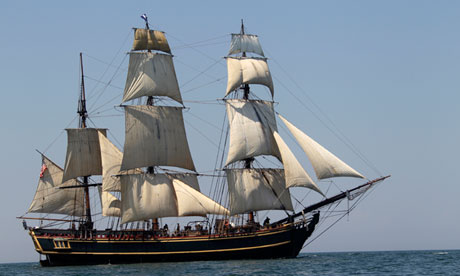
One of two missing crew members from the replica tall ship HMS Bounty has been recovered hours after the US coastguard rescued 14 of her colleagues following a decision to abandon the vessel in the path of hurricane Sandy. You can view US Coast Guard video/audio of the SAR by clicking here.
zczc fa21
unclassified//
msgid/genadmin/nga navsafety wa dc//
rmks/
hydrolant 2536/12(11,12,26).
wrn n atlc.
distresss sig received on 406 mhz from 180 foot s/v hms bountywin 34-11.7n 074-17.5w at 290106z oct. vessels in vicinity requested to keep a sharp lookout, assist if possible. reports to rcc norfolk, inmarsat-c: 430370670, phone: 757 398 6390, fax: 757 398 6392, e-mail: d05-smb-d5cc uscg.mil.//
nnnn
For the complete story of this tragic loss click here
Subscribe to:
Posts (Atom)