Showing posts with label Russian Navy. Show all posts

Wednesday, June 19, 2019

Russia's Most Modern Warship And Its Escorts Have Entered The Caribbean Sea

Admiral Gorshkov frigate 03.jpg


The WarZone website is reporting one of Russia's newest warships, the first-in-class Project 22350 frigate Admiral Gorshkov, is sailing in the Caribbean and may be headed toward Cuba. The ship's presence in the region might incite the ire of the United States, especially if it also makes a visit to a port in Venezuela, where the U.S. government and Russia continue to support competing for political factions. Wherever it sails, its impact might be somewhat muted by the fact that the rest of its flotilla consists of three support ships, including a heavy tug that often shadowed the Russian Navy's accident-prone and now indefinitely out of commission aircraft carrier Admiral Kuznetsov. 

The Admiral Gorshkov transited from the Eastern Pacific Ocean into the Caribbean via the Panama Canal on June 17, 2019. The Russian Navy's Northern Fleet says that it expects the first-in-class Project 23120 multi-function logistics ship Elbrus, the medium ocean-going tanker Kama, and the heavy ocean-going tug Nikolay Chiker to all have crossed into the Caribbean by tomorrow, according to an official statement. There is no formal word yet on where the ships are headed. 

Read the rest of the story at https://www.thedrive.com/the-war-zone/28591/russias-most-modern-warship-and-its-escorts-have-entered-the-caribbean-sea

Friday, June 07, 2019

US and Russian warships almost collide in Philippine Sea

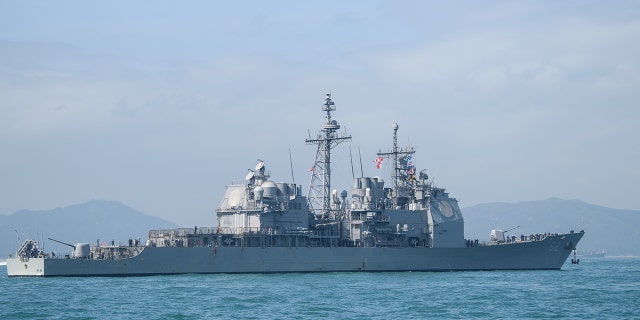
The USS Chancellorsville, a guided-missile cruiser, nearly collided with the Udaloy I DD 572 when it made an "unsafe maneuver", coming within 50 feet, according to the Navy's 7th Fleet in a statement<br data-cke-eol="1">


FoxNews is reporting that US and Russian warships almost collide in the Philippine Sea. The USS Chancellorsville, a guided-missile cruiser, nearly collided with the Udaloy I DD 572 when it made an "unsafe maneuver", coming within 50 to 100 feet, according to the Navy's 7th Fleet in a statement. This unsafe action forced Chancellorsville to execute all engines back full and to maneuver to avoid a collision,” said the Navy’s 7th Fleet in a statement.

Friday, August 31, 2018

Russia deploys large task group off Syria ahead of potential new Syria attacks

From Navaltoday.com

Russia has reportedly amassed a large task group in Syrian waters as Syrian president Bashar al-Assad mulls an assault on rebel positions in the northern Idlib province.
With over ten warships deployed to the Mediterranean Sea, this is Russia’s largest naval buildup since the country stated supporting the Syrian president in 2015.
According to Russian media reports, the buildup is in response to warnings from the US and allies against the use of chemical weapons. US national security adviser John Bolton told reporters last week that military intelligence suggested that Assad could use chemical weapons in the Idlib campaign.
“The US will respond to any verified chemical weapons use in Idlib or elsewhere in Syria in a swift and appropriate manner,” US State Department spokeswoman Heather Nauert said on Tuesday.
Russia’s naval task group off Syria is composed of three Project 11356 frigates, destroyer Severomorsk, Sava-class cruiser Marshal Ustinov, corvette Vyshny Volochyok, frigate Pytlivy and two Kilo-class submarines – Kolpino and Veliky Novgorod, in addition to other landing and support ships.

The buildup was confirmed by NATO and the organization’s spokesperson, Oana Lungescu, said it was important that “all actors in the region exercise restraint”.

Saturday, April 08, 2017

Russian warship steams toward US destroyers that launched Syria strikes

Admiral Grigorovich


Fox News is reporting that one of the Russian Navy's most modern frigates  has entered the eastern Mediterranean Sea Friday and is heading toward the two U.S. Navy destroyers that launched missile strikes into Syria.

The Russian naval frigate, Admiral Grigorovich RFS-494, crossed through the Bosphorus Strait “a few hours ago” from the Black Sea, according to a U.S. defense official. 

The Admiral Grigorovich class (Фрегаты проекта 11356Р/М) is the latest class of frigates ordered by the Russian Navy for the Black Sea Fleet. Six ships (two batches of three ships) have been ordered so far to be built by the Yantar shipyard in Kaliningrad. Some reports indicate that the Grigorovich uses the CW call sign of RGR79 and a voice call sign of Buryevestnik.


Thursday, October 20, 2016

Russia taunts US with biggest military offensive since the Cold War

HMS Richmond
HMS Richmond escorting the Russian Task Group  Credit: Dez Wade /Royal Navy

From The UK Telegraph

Russia has begun its biggest surface deployment since the end of the Cold War as it aims to effectively end the war in Syria on the eve of the US election, NATO officials warned last night.


The Kremlin is sending the full might of its Northern Fleet and part of the Baltic Fleet to reinforce a final assault on the city of Aleppo in a fortnight, according to Western intelligence.


The final bombardment is designed to shore up the Assad regime by wiping out rebels – paving the way for a Russian exit from the civil war.


Click on pic to enlarge

Thursday, July 07, 2016

Russian Spy Ship Now Off Hawaii, U.S. Navy Protecting ‘Critical Information’

Courtesy of Sam LaGrone on the USNI website (https://news.usni.org/)

Moscow has dispatched a specialized spy ship off the coast of Hawaii with the likely mission to monitor the U.S. Navy led Rim of the Pacific 2016 exercise, USNI News has learned.

A Russian Navy Bal’zam-class, “auxiliary general intelligence ship recently arrived in international waters off Hawaii where exercise Rim of the Pacific is taking place,” U.S. Pacific Fleet spokesman Lt. Clint Ramsden told USNI News this week.

“The ship’s presence has not affected the conduct of the exercise and we’ve taken all precautions necessary to protect our critical information.”

While it wasn’t unusual at all in during the Cold War for Russian spy ships to linger off the coast of the U.S. to suck up signals intelligence information or monitor exercises like RIMPAC, the Russians have been lax in their surveillance until recently.

“It used to be that AGIs would deploy regularly off their ports and we would encounter them and they would operate very safely and professionally — mostly looking for signals intelligence,” Bryan Clark, a naval analyst at the Center for Strategic and Budgetary Assessments and former aide to retired Chief of Naval Operations Adm. Jonathan Greenert, told USNI News.

Following the March 2014 seizure of the Crimean region of Ukraine, the Russian Navy has operated more aggressively returning to levels not seen since the Cold War.

Given the participation of 25 countries, almost 50 of ships, more than 200 aircraft and 25,000 personnel operating during the exercise, it would make sense for the Russians to listen in, Clark said.
“It’s unusual now, only because they haven’t done it in a while,” he said.

The service did not provide additional information about the ship or its origin but naval analysts contacted by USNI News surmised the ship is the Project 1826 Bal’zam class ship Pribaltika (SSV-80) operating out of Vladivostok on Russia’s Pacific Coast.

Out of the Russian’s current crop of available ships designed to intercept and record the communications and electronic emissions – like radar signals — of potential adversaries, Pribaltika is the most likely ship the Russians would send to monitor RIMPAC, Chris Carlson, a retired U.S. Navy captain and naval analyst told USNI News on Wednesday.

“Given that Pribaltika is larger, has greater endurance and range, has undergone recent maintenance and has made a deployment to Hawaii in the past (2004), it makes the most sense that this is the ship the Russians [would] send,” Carlson said.

The Russians are developing more modern AGIs but “until more modern units such as the new Yuriy Ivanov-class (Project 18280) intelligence collection ships enter service during the next few years, it makes sense that the Russians would consider sending a vessel from the older Bal’zam-class to monitor U.S. and allied naval exercises,” Eric Wertheim — naval analyst and author of U.S. Naval Institute’s Combat Fleets of the World — told USNI News on Wednesday.

During RIMPAC 2014, the Chinese People’s Liberation Army Navy sent its own uninvited spy ship to monitor the exercise – in addition to four other Chinese ships the U.S. invited to participate in the exercise. The move – considered odd given China was included in almost all levels of the exercise by the U.S. – made international headlines and elicited defensive responses from Beijing.

Several sources told USNI News during this iteration of RIMPAC and there are no signs China has sent its own spy ship in addition to its five invited warships.

Undated photo of Russian spy ship Pribaltika (SSV-80) with its old hull number CCB-80. Sources confirmed the ship is operating off the coast of Hawaii.

Wednesday, September 23, 2015

Russian Kilo Class Sub is Back in Action

Photo courtesy of Russian Defense Ministry

MOSCOW (Sputnik) – The Russian Navy will accept its advanced diesel submarine into service a month ahead of schedule after extensive overhauls, a Navy spokesman said Tuesday.

Dygalo said the Vladikavkaz, a Kilo-class diesel submarine first commissioned by the Russian Navy in 1990, will return to service on Wednesday having had its military and performance characteristics significantly improved.

He cited Navy Deputy Commander Rear Adm. Viktor Bursuk as saying the overhaul included hull, equipment and other system repairs, as well as upgrades to communications, navigation, traffic control, naval combat data, propulsion control and other systems.

Vladikavkaz passed all the speed, handling, noise and many other parameters designated by the Navy during tests in early August 2015, the Navy spokesman added.
The ceremony marking the signing of the submarine’s handover is slated to take place at the Zvezdochka shipyard in north Russia in the presence of the Main Command of the Navy.

Kilo-class submarines, sometimes dubbed "Black Holes" for their ability to "disappear," are thought to be one of the quietest diesel-electric submarine classes in the world.

Monday, August 10, 2015

Russian naval fleet moored at the 4th Iranian naval zone

There is further information on this story posted this afternoon on the Washington Free Beacon website at http://freebeacon.com/national-security/russian-warships-dock-in-iran-for-war-training/

Astrakhan patrol ships "Makhachkala" & "Volgodonsk" are in Anzali, Iran.


Tehran. August 8. IRNA - On Sunday, Russian naval flotilla to enter the territorial waters of Iran and moored to the dock in the 4th naval zone, according to the Department of Public Relations of the Iranian Navy.

The expedition of the Russian Navy is aimed at strengthening the friendly relations between Iran and Russia. The report emphasized that the Caspian Sea should be a sea of ​​peace and friendship. This is the third time the Russian naval fleet comes into the territorial waters of Iran.

Earlier, in 2007 and 2014 two other Russian naval fleet had carried out such an expedition for the strengthening of the Russian-Iranian friendly relations.

Meanwhile, in 2013 the Iranian naval fleet came into the territorial waters of Russia and the port of Astrakhan.

Wednesday, January 21, 2015

The New Norm - Russian Spy Ship docks in Havana - Again!

The Viktor Leonov CCB-175 is docked at the port of Havana, on January 20, 2015 (AFP Photo/Francisco Jara)
AFP is reporting that the Russian intelligence warship Viktor Leonov CCB-175 docked in Havana on Tuesday, a day before the start of historic US-Cuba talks aimed at normalizing diplomatic relations.
 
There was nothing stealthy about the arrival of the Leonov, which was moored to a pier in Old Havana where cruise ships often dock. But the visit was not officially announced by Cuban authorities.

The Vishnya or Meridian-class intelligence ship, which has a crew of around 200, went into service in the Black Sea in 1988 before it was transferred seven years later to the northern fleet, according to Russian media.

The vessel previously docked in Havana in February and March last year, staying there for a few days. Those visits were also unannounced.

Tuesday, January 13, 2015

Top Gear Russia Magazine Accidentally Published An Image Of A Classified Submarine

Top Gear Russia Magazine Accidentally Published An Image Of A Classified Submarine courtesy of Business Insider
In a Business Insider article published online and written by Elena Holodny is reporting that the Russian edition of the automobile magazine published a photo of the classified "AC-12 Project," a nuclear deep-water submarine, nicknamed "Losharik" after a children's movie.

This was first reported by the unofficial blog of the Center for Analysis of Strategies and Technologies and picked up by Slon Media, which reached out to an expert for commentary.

Russia is in the midst of a serious military buildup. Among other things, the Russian military is upgrading its navy and by 2020 is hoping to add at least 16 new nuclear submarines to its Northern and Pacific fleets.

Click here for the original pictures, the entire article and comments from readers.


Saturday, December 06, 2014

Possible Land-Attack Cruise Missile Launch Scheduled for Next Week

The 7 Feet Beneath the Keel Blog is reporting that the Russians may be conducting a cruise missile launch over the Barents Sea Dec 8-10.


The blog reports while the launch platform is not yet known, there are at least two candidates, both of which are armed with the SS-N-30 land-attack cruise missile (range: 800nm-1,400nm, depending on the warhead payload):
Severodvinsk-class nuclear-powered cruise missile submarine "Severodvinsk"
Kilo-class diesel submarine "Novorossiysk", which arrived in Polyarnyy last month

For my Russian UDXF monitor friends it will be interesting to see if any VLF/MF/HF traffic is associated with this launch.

Monday, October 20, 2014

Swedish 'Cold War' thriller exposes Baltic Sea nerves over Russia

Swedish corvette HMS Stockholm patrols Jungfrufjarden in the Stockholm archipelago October 20, 2014. REUTERS/Anders Wiklund/TT News Agency
 
By Alistair Scrutton and Simon Johnson, Yahoo News website
 
STOCKHOLM (Reuters) - It has all the makings of a Cold War thriller -- an emergency military deployment with stealth ships and helicopters hunting for a foreign submarine in the Stockholm archipelago. Grainy photographs of a mysterious vessel. Sightings of a black-clad man wading in shallow coastal waters.
 
Whether it was caused by paranoia or a secret naval mission, Sweden's biggest military mobilization since the Cold War over the last three days has underscored growing concerns about Russian President Vladimir Putin's intentions in the Baltic Sea region.

In just over a month, an Estonian intelligence officer has been reported abducted by Russian forces, Finland has complained of Russian interference with one of its research vessels, and Sweden has lodged an official protest over a "serious violation" when Russian warplanes entered its air space.

With shades of Frederick Forsyth, the maritime mystery has fired the imagination of the region. Moscow has denied it has any submarine in mechanical trouble in Sweden's waters, but nervous governments fear that the Baltic Sea could become the next flashpoint with Russia after Ukraine.

"This may become a game-changer for the security in the whole Baltic Sea region," tweeted Edgars Rinkevics, foreign minister of Latvia, where officials say there has been a marked increase in Russian submarines and ships navigating close to their territorial waters. 

The search in the Baltic Sea, less than 30 miles (50 km) from Stockholm, began on Friday and reawakened memories of the final years of the Cold War, when Sweden repeatedly chased suspected Soviet submarines along its coast with depth charges.
But there have also been many false alarms. In the 1980s, the military on several occasions thought it had detected submarines, only to find the underwater sounds had been made by minks or otters.

The military say they are now looking for a submarine, a mini-submarine or even divers amid the thousands of islands near Stockholm, many of them popular holiday destinations. On Monday a no-fly zone was declared around the search area.

Thursday, February 27, 2014

Russian spy ship docked in Havana

A Soviet-made Lada limousine passes by Russian Vishnya (also known as Meridian) class warship CCB-175 Viktor Leonov, docked (Photo courtesy of the AFP)
The AFP is reporting that the Russian naval spy ship, the Viktor Leonov CCB-175 boat, measuring 91.5 meters (300 feet) long and 14.5 meters wide, docked at the port of Havana's cruise ship area, near the Russian Orthodox Cathedral.

The Vishnya, or Meridian-class intelligence ship, which has a crew of around 200, went into service in the Black Sea in 1988 before it was transferred seven years later to the northern fleet, Russian media sources said.
 
Neither Cuban authorities nor state media have mentioned the ship's visit, unlike on previous tours by Russian warships.
 
The ship is reportedly armed with 30mm guns and anti-aircraft missiles.
 

Friday, December 20, 2013

Aircraft carriers of Russia's Northern Fleet head to Atlantic and Mediterranean Sea

A group of the Russian Northern Fleet's aircraft carriers embarked on a deployment to the Northeast Atlantic and the Mediterranean Sea on Tuesday, in accordance with the Russian Navy's combat training plan.

"The naval group includes the heavy aircraft carrying cruiser Soviet Union Fleet Admiral Kuznetsov, the large anti-submarine ship Admiral Levchenko, the large assault ship Olenegorsky Gornyak, as well as support vessels such as the rescue towboat Nikolai Chiker and the tankers Sergei Osipov and Kama," the Northern Fleet's spokesman, Captain 1st Rank Vadim Serga, told Interfax-AVN on Tuesday.

http://rbth.co.uk/news/2013/12/17/aircraft_carriers_of_russias_northern_fleet_head_to_atlantic_and_mediter_32653.html

Sunday, September 08, 2013

Troubled Waters -- Eastern Med/Syria Crisis Deepens

There is a lot of military hardware either sailing to or in the Eastern Med right now. MilcomMP has been going over all the reports and here is what we have been able to gleam from them.


Russian Destroyer Nastoychivy 610 (Photo by  CDR JAMIE MORRISON, USN 2005)

Russia is sending two destroyers, including the Nastoychivy, the flagship of the Baltic Fleet, and the Moskva missile cruiser (the Black Fleet flagship) to the region, according to an Interfax report, citing an unidentified Navy official.

The Moskva, set to arrive in a little over a week’s time, will take over operations from a naval unit in the region.

"The plans of the naval unit under the command of Rear Admiral Valery Kulikov had to be changed a little. Instead of visiting a Cape Verde port, the cruiser Moskva is heading to the Strait of Gibraltar. In about ten days, it will enter the eastern Mediterranean, where it will replace the destroyer Admiral Panteleyev as the flagship of the operative junction of the Russian Navy," a source told Interfax on Wednesday.

Panteleyev incidentally, only arrived in the east Mediterranean Sea on Wednesday after leaving the Far-Eastern port city of Vladivostok on March 19 to join the Russian standing naval force as its flagship.

Russian Missile Cruiser Moskva, flagship of the Black Sea fleet

That follows last week’s dispatch of a reconnaissance ship to the eastern Mediterranean, four days after the deployment of an anti-submarine ship and a missile cruiser to the area, which were reported by Interfax. Syria hosts Russia’s only military facility outside the former Soviet Union, at the port of Tartus.

Kashin Class Destroyer Smetlivy in the Red Sea

Two days ago the RIA-Novosti agency said two ships from Russia's Black Sea Fleet, the frigate Smetlivy would leave for the Mediterranean on September 12-14, and the corvette Shtil and missile boat Ivanovets would approach Syria at the end of the month. RIA is also reporting that the landing ship Nikolai Filchenkov is heading for the Eastern Med. There is an interesting article at http://defense-update.com/20130907_45211.html on the mission of the Nikolai Filchenkov going to Syria.

Russian Landing Ship Nikolai Filchenkov

According to AFP, three ships from Russia’s Black Sea Fleet sailed through Turkey’s Bosphorus Strait on Thursday Sep 6: the SSV-201 intelligence-gathering ship Priazovye, and the landing ships Minsk and Novocherkassk.


Russian Intel Gathering Ship Priazovye SSV-201

So let's see what we have here, if all of these reports are all accurate: RFS Nastoychivy 610, the flagship of the Baltic Fleet, the Moskva missile cruiser, the frigate Smetlivy, the SSV-201 intelligence-gathering ship Priazovye, the landing ship Minsk, the landing ship Novocherkassk, the landing ship Nikolai Filchenkov, the corvette Shtil, the missile boat Ivanovets, and probably some unknown number of Russian submarines that hang around their high value units like Moskva.

Russian Land Ship Minsk

Russian Landing Ship Novocherkassk

Russia is temporarily bolstering its naval presence in the region to improve its surveillance capability over U.S. ships and submarines deployed in the area and to ensure security for Russian citizens residing in Syria, according to a Russian official who asked not to be named, citing government policy.

According to the Russian news outlet Telegrafist.org, the People’s Liberation Army dispatched the Jinggangshan amphibious dock landing ship and the vessel was seen passing through the Red Sea towards the Suez Canal, the waterway in Egypt that leads to the Mediterranean Sea and waters off the coast of Israel, Lebanon and Syria.
 
Chinese Jinggangshan Amphibious Dock Landing Ship
 
According to the report, the ship has not been sent to engage in any aggressive actions but is merely there to “observe” the actions of Russian and US warships. However, the Jinggangshan is equipped for combat, has conventional armaments and secondary cannons, and was utilized as part of a “show of force” in maneuvers aimed at defending the South China Sea earlier this year.
 
The report states that additional PLA warships have also been sent to the region but that their identity is unknown.

Five U.S. Arleigh Burke destroyers (USS Ramage, USS Mahan, USS Gravely, USS Barry and the USS Stout, which may be relieving the Mahan) and an amphibious ship USS San Antonio are currently positioned in the eastern Mediterranean awaiting strike orders from DoD.

The USS San Antonio, with several helicopters and hundreds of Marines on board, is “on station in the Eastern Mediterranean” but “has received no specific tasking,” a defense official told the AFP news agency on condition of anonymity.

The USS Nimitz and three other warships from its Carrier Strike Group are also stationed in the nearby Red Sea. The other ships in the strike group are the cruiser USS Princeton and the destroyers USS William P. Lawrence, USS Stockdale and USS Shoup.

A US military official said the carrier strike group has not been assigned a mission, but was shifted in the event its resources are needed to “maximize available options.”
 
The USS Harry S. Truman aircraft carrier and strike group is also in the northern Arabian Sea.

Another media report on naval assets in the area can be found at http://rt.com/news/naval-forces-syria-strike-514/.

That is probably the most fire power concentrated in that area of the world since the end of the Cold War.

Monday, November 05, 2012

Russian Sub Skirts Coast - Russian attack sub detected near East Coast


Story by  on the Washington Free Beacon website

A Russian nuclear-powered attack submarine cruised within 200 miles of the East Coast recently in the latest sign Russia is continuing to flex its naval and aerial power against the United States, defense officials said.

The submarine was identified by its NATO designation as a Russian Seirra-2 class submarine believed to be based with Russia’s Northern Fleet. It was the first time that class of Russian submarine had been detected near a U.S. coast, said officials who spoke on condition of anonymity because of the sensitive nature of anti-submarine warfare efforts.

One defense official said the submarine was believed to have been conducting anti-submarine warfare efforts against U.S. ballistic and cruise missile submarines based at Kings Bay, Georgia.
A second official said the submarine did not sail close to Kings Bay and also did not threaten a U.S. aircraft carrier strike group that was conducting exercises in the eastern Atlantic.

Kings Bay Naval Submarine Base, north of Jacksonville, Fla., is homeport for two guided missile submarines and six nuclear missile submarines. The submarines are known to be a target of Russian attack submarines.

Meanwhile, the officials also said that a Russian electronic intelligence-gathering vessel was granted safe harbor in the commercial port of Jacksonville, Fla., within listening range of Kings Bay.
The Russian AGI ship, or Auxiliary-General Intelligence, was allowed to stay in the port to avoid the superstorm that battered the U.S. East Coast last week. A Jacksonville Port Authority spokeswoman had no immediate comment on the Russian AGI at the port.

“A Russian AGI and an SSN in the same geographic area as one of the largest U.S. ballistic missile submarine bases—Kings Bay—is reminiscent of Cold War activities of the Soviet navy tracking the movements of our SSBN’s,” said a third U.S. official, referring to the designation for ballistic missile submarines, SSBN.

You can read the rest of Bill's story by clicking here.

The Sierra II (Project 945.A - Кондор/Kondor) class has a considerably larger sail which is 16.5 ft (5.0 m) longer than the Sierra I type. The sail also has a curious flat, square leading edge. The masts are offset on the starboard side to make way for two escape pods in the sail. The starboard side also has a 10-point environment sensor fitted at right angles to the front end of the sail. Also, the Sierra II type has a much larger pod on its after fin. The pod houses the Skat 3 passive very low frequency towed array.

Submarines in class:

Tuesday, August 14, 2012

Silent Running - Russian attack submarine sailed in Gulf of Mexico undetected for weeks

By Bill Gertz, the Washington Free Beacon

A Russian nuclear-powered attack submarine armed with long-range cruise missiles operated undetected in the Gulf of Mexico for several weeks and its travel in strategic U.S. waters was only confirmed after it left the region, the Washington Free Beacon has learned.

It is only the second time since 2009 that a Russian attack submarine has patrolled so close to U.S. shores.

The stealth underwater incursion in the Gulf took place at the same time Russian strategic bombers made incursions into restricted U.S. airspace near Alaska and California in June and July, and highlights a growing military assertiveness by Moscow.

The fact that the Akula was not detected in the Gulf is cause for concern, U.S. officials said.

The officials who are familiar with reports of the submarine patrol in the Gulf of Mexico said the vessel was a nuclear-powered Akula-class attack submarine, one of Russia’s quietest submarines.

One official said the Akula operated without being detected for a month.

“The Akula was built for one reason and one reason only: To kill U.S. Navy ballistic missile submarines and their crews,” said a second U.S. official.

“It’s a very stealthy boat so it can sneak around and avoid detection and hope to get past any protective screen a boomer might have in place,” the official said, referring to the Navy nickname for strategic missile submarines.

The U.S. Navy operates a strategic nuclear submarine base at Kings Bay, Georgia. The base is homeport to eight missile-firing submarines, six of them equipped with nuclear-tipped missiles, and two armed with conventional warhead missiles.

“Sending a nuclear-propelled submarine into the Gulf of Mexico-Caribbean region is another manifestation of President Putin demonstrating that Russia is still a player on the world’s political-military stage,” said naval analyst and submarine warfare specialist Norman Polmar.

read the entire article at http://freebeacon.com/silent-running/

Friday, July 20, 2012

Blog Logs: Russian Navy HF Comms - 7/20/2012

Courtesy of Wolfgang near Munich and the UDXF newsgroup (thanks for sharing your findings with all of use Wolfgang):

08345.0 RKO81: Rus Navy Ship Lena RUS 0605 CW rmp de RKO81 qsa? qtc k rko81 776 21 20 1001 776 = for rid38 rjh74 rjh45 = 20061 99541 100047 41597 7320 10140 40106 52030 70322 ......40403 88000 80000 20017 = + rko81 2012-07-20

08345.0 RKO81: Rus Navy Ship Lena RUS 1205 CW qtc to rmp rko81 935 21 20 1600 935 = for rid38 rjh45 rjh74 = 20121 99534 10035 41598 53305 10200 40132 52010 70111 8553/ 22253 00150 29901 328// 40402 88000 80000 20017 = + rko81 2012-07-20

10543.0 RCV: unid rus navy UKR 0816 CW qtc to rgz59 rcv 186 28 20 1002 186 = rkt = 11111 08751 44170 ... 2012-07-20

12464.0 RMYZ: unid rus navy RUS 0714 CW clg rcv qsa? qtc k 861 20 20 1113 861 = rkt = 58354 45507 ... 42556 20018 = + rmyz k 2012-07-20

12464.0 RCJG: unid rus navy RUS 0715 CW clg rcv qsa? qtc k rcjg 233 3 20 1110 233 = ... 01040 20002 = + rcjg k - 0725z qsa? qtc k rcjg 372 21 20 1120 372 = 87206 61167 ... 12600 20020 = + rcjg k 2012-07-20

12464.0 RMUW: unid rus navy RUS 0724 CW qso rcv qsl 186 k 2012-07-20

12464.0 RFH70: unid rus navy RUS 0729 CW qso rcv qyt4 qsx 9852/15544 k - qyt4 sk - qsl 186 k - 2012-07-20

12464.0 RMPV: unid rus navy RUS 0736 CW clg rit qsa3 qru k 2012-07-20

12464.0 RGZ59: unid rus navy RUS 0815 CW clg rcv qsa2 k qsl 186 no k 0824z qsl 186 qru k 2012-07-20

12464.0 RGR70: unid rus navy RUS 0810 CW qso rcv qsl ?? fm raa k 2012-07-20

12464.0 RGZ58: unid rus navy RUS 1140 CW tfc to rcv: rgz58 390 ?? 20 1520 390 = sml = mmmmm eimäü grölf ... 2012-07-20

12464.0 RHY47: unid rus navy RUS 1139 CW riw de rhy47 qsa? k (very strong sig!) 2012-07-20

12464.0 RCJE: unid rus navy RUS 1214 CW qtc to rcv 194 19 20 1600 3 sml for rjh45 rje73 = 20121 99349 10346 41897 52307 10324 40073 51021 70318 86122 22252 00274 29901 32320 88000 20015 = + rcje k 2012-07-20

Wednesday, July 18, 2012

Russian Naval Comms/Russian Ships in Cyprus

From Tom (T) and the UDXF newsgroup (thanks for sharing with the rest of us Tom)

Tanker Lena is making its way out of the Baltic.

8345.0 RKO81: Russian Navy Tanker Lena. RUS/CIS Navy 0605 CW Tfc to RIT RKO81 848 20 18 1000 848 = FOR RJD38 RJH74 RJH45 = 18061 99548 10125 41597 62809 10150 40106 54006 70222 8652/ 22253 00150 20305 30000 88000 80000 18016 = + RKO81 K 2012-07-18 (Tom)

54.8N 12.5E Heading South West at 11-15 Knots

A Russian frigate from the Black Sea Fleet “Smetlivy” left the Syrian Port of Tartus in April 2012


Elements of the Black Sea Fleet have visited Cyprus.

'Russian Navy warships docked at Limassol port over the weekend for the first time in at least ten years.

The Russian frigate Smetlivy docked at Limassol port on Sunday at 9.30am to re-supply with food and water and rest its crew before heading off in the afternoon at 5.30pm.

Yesterday, a Russian tug boat Shakhter also docked at Limassol port at 7.56am and is due to leave today. Both ships are part of the Black Sea Fleet and according to reports, are on their way to Syria. Russia has a naval base at the Syrian port of Tartus, the only naval facility outside of the former Soviet Union. '

http://www.cyprus-mail.com/russian/russian-warships-limassol-port/20120717

Tuesday, July 17, 2012

Russian naval squadrons meet in Atlantic Part Deux

Photo Photo: RIA Novosti

Editor Note: And then we have this TASS report via the Voice of Russia website that says they may indeed conduct a port visit at Tartus.


Naval squadrons of Russia’s Northern and Baltic Fleets have met in the North Atlantic.

The Russian Defence Ministry points out that the two will merge into one group under a single command by Tuesday night. Russia’s Black Sea Fleet squadron is due to join the group later.

The combined naval group has been set the task of joint sailing and manoeuvring, and driving away mock enemy submarines and aircraft. The group may call at Syria’s seaport of Tartus, a Russian Navy sustainment centre, to replenish their stocks of water and fuel. Russian naval ships in the Mediterranean can use Tartus as a base.

TASS, RIA