Welcome to the Milcom Monitor Post sponsored by Teak Publishing (Copyright © 2006-2023 Teak Publishing). All rights are reserved. Redistribution of these pages in any format without prior permission is prohibited. Links to individual stories are permitted without permission. The comment section on this blog is closed, but you can pass along material or comments via email MilcomMP at gmail dot com. If you submit material for this blog and want to remain anonymous, indicate that in your message.
Milcom Monitoring Post Profiles
- Home
- What are Emergency Action Messages (EAM)? Updated 20 September 2021
- UFO Milsat Program
- Fleetsatcom System
- UHF 225-380 MHz Milcom Spectrum Holes: Updated 24 July 2019
- Civilian Air Cargo/Airline/Military Call Signs
- Intl HF Aero Civ/Gov/Mil Frequency List
- USN Aircraft Modex Numbers
- University of Twente Wide Band WebSDR Netherlands
- U.S. Military ALE Addresses
- DoD Air Refueling Frequencies - Update 15 Jul 2016
- COTHEN HF Network – Last Update 23 May 2023
- Monitoring the Civil Air Patrol Auxiliary Update 10 Sep 2016
- US Coast Guard Asset Guide - Update 24 May 2023
- The Spectrum Monitor e-Zine Milcom Column Index - Update 17 January 2022
- The Milcom MT Files (1998-2013) Articles Index
Showing posts with label VHF High Band. Show all posts
Wednesday, October 15, 2014
Midwest Aerial Refueling VHF/UHF Formation Freqs
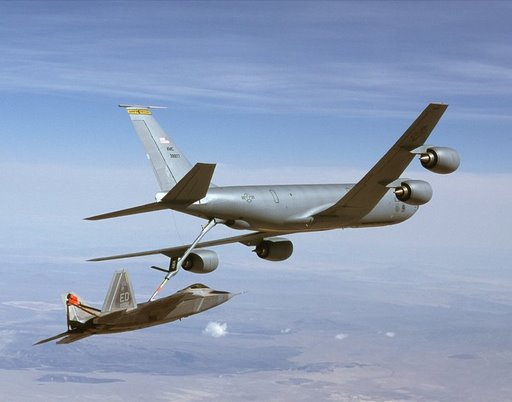
While digging around the net (I do that a lot), found the following frequencies assigned to the 22ARW out of McConnell AFB for use by their KC-135 tanker cell formations for use in the following states AR CO KS LA MO NE NM OK and TX.
They are authorized 138.5500 MHz (AM), 225.4500 and 225.5000 MHz. I have an indication that more than the 22 ARW may use these freqs. Reports from monitors are appreciated on these freqs and the units that may be using them.
Labels:
22ARW,
Aerial Refueling,
KC-135,
McConnell AFB KS,
UHF Mil,
VHF High Band
Friday, August 24, 2012
New USAF Thunderbird VHF Frequency

Our good friend in the Northeast and MT contributor US Kevin Burke has uncovered and confirmed a new USAF Thunderbird Flight Demonstration Team VHF frequency - 141.175 MHz.
Here are some other VHF Air frequencies that you should have programmed in that scanner of you are a milair monitor:
138.4375 138.550 138.600 138.625 138.750 138.950 139.000 139.300* 139.600 139.700** 139.900 140.200 140.500 141.175 142.300* 142.600 142.700 142.800 142.900 143.000 143.600 143.725 143.750 MHz
* indicates a PTD freq
** indicated a Air Def freq
Saturday, August 06, 2011
CAP CAWG LMR Network

If you are interested in monitoring the new CAP LMR repeater network in California, jump over to our friends on the SoCalFedCom blog at
http://socalfedcom.blogspot.com/2009/10/california-civil-air-patrolcap.html.
You'll find quite a bit of info that will help your monitoring of this USAF auxiliary in California.
Wednesday, June 23, 2010
Civil Air Patrol Narrowbanding Project Not Going Well
The Civil Air Patrol has been trying to convert their VHF radio systems to comply with NTIA narrowband guidelines for the last few years. But things have not gone well and they still have not converted their VHF network over to the Congressionally mandated narrowband system.
According to one anonymous source, the CAP HQ has now given a deadline of 31 Aug 2010 for all the wing commanders and directors of communication across the country to get their narrowband repeaters on the air.
Wings first requested new nationally-funded repeaters in the 2004-2005 timeframe, and CAP bought some $5 million in repeaters based on those requests. There were delays in actually getting federal frequency assignments (because of the need to coordinate with Canada/Mexico). As a result many of those originally-approved repeater sites have been lost. Some of the CAP wings just moved slowly in getting their new narrowband repeaters on-the-air.
August 31 will mark two years from the final release of the new VHF narrowband frequencies to the wings and a year-and-a-half since the first CAP narrowband repeater went on the air.
According to one source the Air Force is putting it's foot down because every repeater NOT on the air is wasted taxpayer's dollars. Nobody is officially saying what will happen if the 31 Aug deadline is not met, but it is clear that wings that do not get their repeaters on by the deadline will face some sort of repercussions.
Bottom line is you will probably see new comms over the next few weeks popping up on the CAP's new VHF frequencies. We had an extensive article on all of this in the May 2010 MT Milcom column (if you miss one issue you miss a lot). But to help out those who don't subscribe, here are the frequencies to watch for CAP activity:
139.8750 141.0000 141.5750 143.5500 143.6250 143.600 143.7000
148.1250 148.1375 148.1500 149.2750 150.2250 150.5625
National CAP Plan (Supposedly Zone 1 in all the new ground-only radios)
141.5750 Simplex 127.3 Hz Command Control
141.0000 Simplex 131.8 Hz Command Control
149.2750 Simplex 141.3 Hz Air-to-Air
150.5625 Simplex 151.4 Hz Air-to-Air
150.2250 Simplex 162.2 Hz CAP Guard Channel
139.8750 Simplex 173.8 Hz Tactical/Miscellaneous use (also used on
the Canadian Border as an input to the 148.1250 repeaters)
148.1250 Simplex 100.0 Hz Primary Talk-Around
148.1500 Simplex 100.0 Hz Secondary Talk-Around
148.1375/143.6250 203.5 Hz Airborne/Tactical Repeater
148.1375/143.6250 192.8 Hz Airborne/Tactical Repeater
148.1375/143.6250 131.8 Hz Airborne/Tactical Repeater
148.1375/143.6250 162.2 Hz Airborne/Tactical Repeater
148.1250/143.5500 203.5 Hz Airborne/Tactical Repeater
148.1250/139.8750 Canadian Border repeaters
148.1500/143.7000 203.5 Hz Airborne/Tactical Repeater
148.1500/143.6000 Canadian Border repeaters
Again there is more to all this, but that is about 2,000 words in the MT May issue.
According to one anonymous source, the CAP HQ has now given a deadline of 31 Aug 2010 for all the wing commanders and directors of communication across the country to get their narrowband repeaters on the air.
Wings first requested new nationally-funded repeaters in the 2004-2005 timeframe, and CAP bought some $5 million in repeaters based on those requests. There were delays in actually getting federal frequency assignments (because of the need to coordinate with Canada/Mexico). As a result many of those originally-approved repeater sites have been lost. Some of the CAP wings just moved slowly in getting their new narrowband repeaters on-the-air.
August 31 will mark two years from the final release of the new VHF narrowband frequencies to the wings and a year-and-a-half since the first CAP narrowband repeater went on the air.
According to one source the Air Force is putting it's foot down because every repeater NOT on the air is wasted taxpayer's dollars. Nobody is officially saying what will happen if the 31 Aug deadline is not met, but it is clear that wings that do not get their repeaters on by the deadline will face some sort of repercussions.
Bottom line is you will probably see new comms over the next few weeks popping up on the CAP's new VHF frequencies. We had an extensive article on all of this in the May 2010 MT Milcom column (if you miss one issue you miss a lot). But to help out those who don't subscribe, here are the frequencies to watch for CAP activity:
139.8750 141.0000 141.5750 143.5500 143.6250 143.600 143.7000
148.1250 148.1375 148.1500 149.2750 150.2250 150.5625
National CAP Plan (Supposedly Zone 1 in all the new ground-only radios)
141.5750 Simplex 127.3 Hz Command Control
141.0000 Simplex 131.8 Hz Command Control
149.2750 Simplex 141.3 Hz Air-to-Air
150.5625 Simplex 151.4 Hz Air-to-Air
150.2250 Simplex 162.2 Hz CAP Guard Channel
139.8750 Simplex 173.8 Hz Tactical/Miscellaneous use
the Canadian Border as an input to the 148.1250 repeaters)
148.1250 Simplex 100.0 Hz Primary Talk-Around
148.1500 Simplex 100.0 Hz Secondary Talk-Around
148.1375/143.6250 203.5 Hz Airborne/Tactical Repeater
148.1375/143.6250 192.8 Hz Airborne/Tactical Repeater
148.1375/143.6250 131.8 Hz Airborne/Tactical Repeater
148.1375/143.6250 162.2 Hz Airborne/Tactical Repeater
148.1250/143.5500 203.5 Hz Airborne/Tactical Repeater
148.1250/139.8750 Canadian Border repeaters
148.1500/143.7000 203.5 Hz Airborne/Tactical Repeater
148.1500/143.6000 Canadian Border repeaters
Again there is more to all this, but that is about 2,000 words in the MT May issue.
Friday, August 07, 2009
Milair Frequency Changes - 8/7/2009
And the overhaul of the 138-144/148-150.8 MHz to a new bandplan continues. If you are not familiar with what is happening, I have written about this several times in my Monitoring Times Milcom column. In fact, I have some major updates on this and a new 380-400 MHz TRS in the southwest U.S. in my September Milcom column in Monitoring Times magazine. Miss one issue and you miss a lot that is NOT published on this blog or anywhere else. A MT Express (electronic edition) sub is only $19.95 a year (one heck of a bargain). You can order your sub at http://www.grove-ent.com/page81.html.
So now it is time again for a quick, one freq installment of our exclusive aero frequency changes, updates, listings and corrections from the Milcom MP Quik-Stop . . .
142.3000 Eglin AFB FL Pilot to Dispatcher (PTD), ex-139.3000 MHz
Based on previous moves from 139.3000 MHz to this frequency, I can now positively confirm that both 139.3000 MHz and 142.3000 MHz are AM mode Pilot to Dispatcher frequencies nationwide (within CONUS) and both should be part of your milair scanner loadout.
So now it is time again for a quick, one freq installment of our exclusive aero frequency changes, updates, listings and corrections from the Milcom MP Quik-Stop . . .
142.3000 Eglin AFB FL Pilot to Dispatcher (PTD), ex-139.3000 MHz
Based on previous moves from 139.3000 MHz to this frequency, I can now positively confirm that both 139.3000 MHz and 142.3000 MHz are AM mode Pilot to Dispatcher frequencies nationwide (within CONUS) and both should be part of your milair scanner loadout.
Tuesday, July 31, 2007
138-150 MHz DoD Bandplan Changing

Not only is the 225-400 MHz band being overhauled by DoD, but the 138-144/148-150.8 MHz band is also under change. Based on monitoring and other sources, it is now apparent that frequencies within this band are being set aside for certain functions instead of just a particular service.
In years past the frequencies in this band have been allocated to the services, who in turn determine who/what is allocated on each frequency they managed. Now based on recent changes we have monitored and had reported to us that this is no longer the case.
Long time reporter Jack NeSmith has uncovered the changes below through an official source. Old air-to-air (interflight) frequencies: 138.200 138.400 139.900 139.975 141.575 MHz. These frequencies are moving to new VHF AM interflight (air-to-air) frequencies: 141.650 141.950 143.150 143.250 143.700 MHz (AM)
Last year we first reported on this blog that DoD has setup 139.300 MHz (AM) as a VHF Pilot to Dispatch frequency nationwide.
All of the new freqs above should be programmed in your milcom scanner as part of your overall monitoring plan.
More as we compile it.
Tuesday, April 03, 2007
Shaw AFB Trunk Radio System Uncovered
My longtime friend Mac McCormick (http://kf4lmt.blogspot.com/) has now confirmed which base one of my previously unidentified VHF high band military trunk radio system is coming from. Here is what Mac passed along last weekend:
"Some months ago when I took a trip to Columbia, Larry Van Horn sent me some frequencies to try on a VHF TRS that was either at Shaw or McEntire; the location was unknown at that time. During the Columbia trip, VHF conditions were such that it was difficult to determine proximity. On my trip today (March 31), however, I was able to determine that it was at Shaw and was able to determine the settings and monitor it some. "
Shaw AFB TRS 9600 Baud Motorola
---------------------
SETTINGS & FREQUENCIES
Base Freq: 162.0000, Step: 12.5 kHz, Offset: 380
163.4625 Control Channel (9600 baud)
165.0125 Digital Voice
165.1875 Digital Voice
165.2250 Digital Voice
165.4125 Digital Voice
166.0000 Digital Voice
166.2250 Digital Voice
TALKGROUPS
19 Fire?-FIRE DEPARTMENT wkg RADIO MAINTENANCE
20 Unknown-ref to personnel not in uniform going to "the 79th side"
21 Unknown
25 Police? - SHAW wkg DELTA #, references to "the sub-station" (these just "sounded" like law enforcement
28 Squadron talkgroup?-unid passing aircraft maintenance codes, reference to sending someone to "the 79th side" (probably related to similar traffic on TG 20)
34 Tower/Ground Control?-BARRIER MAINTENANCE wkg SHAW TOWER, -unid ref switching runways
42 POL?-unid ref "amount needed" for aircraft 907
Thanks Mac for taking the time to check my hunch. And I will have more on this and other new military trunk radio systems in my June 2007 MT Milcom column.
"Some months ago when I took a trip to Columbia, Larry Van Horn sent me some frequencies to try on a VHF TRS that was either at Shaw or McEntire; the location was unknown at that time. During the Columbia trip, VHF conditions were such that it was difficult to determine proximity. On my trip today (March 31), however, I was able to determine that it was at Shaw and was able to determine the settings and monitor it some. "
Shaw AFB TRS 9600 Baud Motorola
---------------------
SETTINGS & FREQUENCIES
Base Freq: 162.0000, Step: 12.5 kHz, Offset: 380
163.4625 Control Channel (9600 baud)
165.0125 Digital Voice
165.1875 Digital Voice
165.2250 Digital Voice
165.4125 Digital Voice
166.0000 Digital Voice
166.2250 Digital Voice
TALKGROUPS
19 Fire?-FIRE DEPARTMENT wkg RADIO MAINTENANCE
20 Unknown-ref to personnel not in uniform going to "the 79th side"
21 Unknown
25 Police? - SHAW wkg DELTA #, references to "the sub-station" (these just "sounded" like law enforcement
28 Squadron talkgroup?-unid passing aircraft maintenance codes, reference to sending someone to "the 79th side" (probably related to similar traffic on TG 20)
34 Tower/Ground Control?-BARRIER MAINTENANCE wkg SHAW TOWER, -unid ref switching runways
42 POL?-unid ref "amount needed" for aircraft 907
Thanks Mac for taking the time to check my hunch. And I will have more on this and other new military trunk radio systems in my June 2007 MT Milcom column.
Subscribe to:
Posts (Atom)